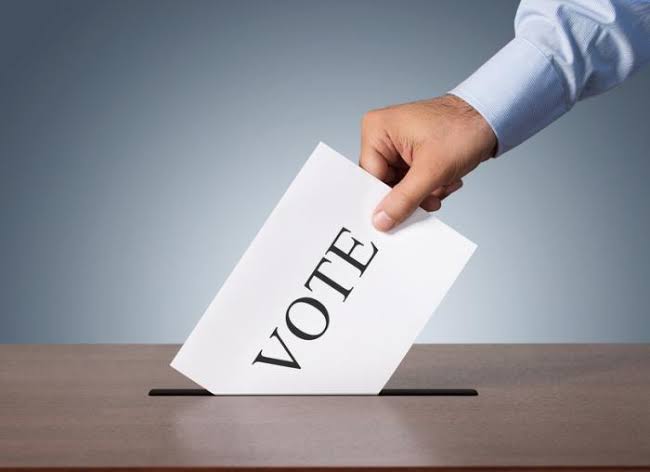
“Political culture” is a very loaded term, and some political scientists don’t know how to properly explain the term to laypeople without feeling like they’ve left something out.
In simple terms, political culture boils down to “how much the citizens of a country are involved in politics”. Not in the sense of running for office necessarily, but being informed on political issues and speaking out on injustices whenever they rear their ugly head.
In South Africa, do we have a strong or weak political culture? The answer depends on who you ask.
Some would say we have a strong political culture, because just about everybody has an opinion on the African National Congress (ANC) and their 25 years as the ruling party. They might point to service delivery protests, and the increasing engagement of most South Africans – along with our trademark Agrizzi-esque humour – on the various commissions of inquiry as evidence to this.
Some would point to the contrary. They might say that a strong political culture is directly influenced by the level and quality of education received by citizens. The higher it is, the stronger the culture. This is because more citizens are aware of the unsexy elements of our political system that aren’t reported on in our media. They’d point to our dismal education system as proof that our citizens are, quite frankly, uninformed. Not because of any flaws of their own, but because the education system does not give them the tools to think critically when they hand them matric certificates.
They might also acknowledge that while we have commissions of inquiry, many aren’t able to access these – either because of access or the aforementioned inability to comprehend. They then see a distilled version of the commissions in the media, where a lot of information is left out in an attempt to be brief and pithy. How can one then be politically informed in such a setting?
My personal opinion is more geared towards the latter. I don’t believe that enough young people leave secondary school with the tools required to properly participate in a democracy. It seems as if we are stuck in a pre-1994 mode of thought about democracy: that the only difference between a democracy and any other form of governance is that everybody can vote for the president or political party of their choice. Implicit in this is the claim that voting is the only tool citizens have in their arsenal to bring about organisational change.
All this, ironically enough, runs counter to the mass mobilisation programme instituted by organisations such as the UDF in the 1980s to directly oppose the apartheid regime. The political culture was much more participant than it is today. From the young to the old, there was an understanding that the apartheid government needed an amount of rebellion by all members of society. If everybody rejected Botha and his reforms, then not only did Botha have no legitimacy as President of the country, he also would face sharp criticism from his Western buddies who turned a blind eye to apartheid. This was a fantastic form of critical thinking that wasn’t dependent on education, but just the lived realities of the time and the intense struggle towards getting the vote.
Then we got the vote, and we reverted back to the status quo wherein the vote is our only mode of participating in our democracy, save for inane Twitter discussions where character assassinations are the norm rather than the exception.
It is true that our education system has failed most South Africans, especially poor black South Africans who are dependent on public education and fee-free schools. It is also true that regardless of this, those of us in the know need to mobilise the masses, and inject a good dose of participation rather than apathy within our citizenry. All of us are affected by the failures of the ruling party, whether we acknowledge this or not. Whatever our mode of action – protest, voting for another party or voicing our displeasure on social media – we cannot afford to leave it up to the polls to decide. All this is true. Yet another thing is true – we need to vote.
In my previous blog post, I referenced conversations I had with friends who would vote for the ANC despite their “sins of incumbency”, because of the perceived lack of opposition parties. I disagreed with their assessment, but I respected it. I respected it, because we might have many ways to participate in the political arena. We may sign petitions that align with our causes. We may join civil society organisations that directly influence ministries and their priorities. We may protest whenever a fuel increase comes about. But none of that directly dictates the machinery of government like voting does.
When we vote for a particular party, we are saying that their policies and their vision resonate the most with us. We say that what they offer is what we need more of in South Africa. That manifests itself in more seats in the legislature. That manifests itself in a greater belief within the party itself that their proposed vision is one that the electorate wants to see – and that holds the party that much more accountable to the electorate. If they do not keep to their previously-articulated vision, they get the other accountability mechanisms we have in place – the aforementioned protests, petitions, and litigation processes if necessary.
But when we vote, we have our say. We can either let out our grievances, or we can commend the incumbents on a job well done. We bring in new voices to the political arena, or we send other voices packing. There is tremendous power in exercising our democratic right to vote. By no means is it the only democratic right we have, but it is one we must use in order to bring the elements missing in the National Party’s rule – legitimacy, and therefore, a true opportunity at accountability if they mess up.
This may sound paradoxical to some readers. At first, I seemed to bemoan the fact that we only recognise voting as our democratic obligation. Now, I’m rattling off the virtues of voting as our democratic obligation. This is the power of our democracy: we hold various amounts of power as the electorate. And we must be careful to use our power effectively and wisely.
We have five years between each national election. That period acts as an opportunity for the government – and even those one-seat parliamentarians – to show us why we were correct to believe in their proposed vision. If they do not do this, then we are correct to protest and complain. We are correct to use the tools at our disposal to let them know that their mode of governance isn’t doing it for us. We are, in that period, correct to direct them towards our desired results. Unfortunately, those tools cannot necessarily lead to a regime change except in the most extreme of circumstances.
But when elections come around? We have the opportunity to complain and protest in a more direct way. We can then remove the incumbent government – or, at the very least, weaken the incumbent government by voting for other parties – and force a regime change. No coup’d’etat required.
And yes, a common complaint I have heard in the run-up to these elections is that none of the opposition parties inspire people with confidence. Well, you may still vote, with an added pragmatism to your vote.
If there are no parties that align with your imagined vision, then it is prudent to vote for the party that will do the least damage to what we have, and potentially be more receptive to voter concerns.
You may also write about the party on social media platforms. You may speak to public representatives of the party and attempt to influence that very party. Because politics is always not a world of idealists, and we have to take what we can get.
One thing is for sure – sitting at home during voting day does one thing – it brings about more of the same. It reproduces the poverty, inequality and unemployment that is as entrenched into our existence as the South African flag. It continues to the plundering of our resources, and the disintegration of valuable institutions in our democracy. It will not help matters to refrain from voting then later protest. Protesting against a government that is unwilling to hear your pleas is akin to begging a pathological liar to stop lying. Your cries will not bring about the change you desire. Furthermore, the damage will already be done, and if there’s one thing we can learn from virology, it is that prevention beats cure every time. Let us prevent further chaos as best we can, as tactically as we can.
A different ruling party, or at the very least, a stronger opposition, would likely humble the unresponsive party. They would break out of their perceived knowledge that the electorate is theirs to abuse. They would renew themselves in a more substantive way. They would let go of the arrogance that has become emblematic of their regime.
This is where the “political culture” term becomes important once again. We have to vote, and simultaneously hold our elected officials to the standards they set for themselves. Participating in a democracy is not a one-day event. It is that line of thinking that has led to so many politicians subverting the Constitution and democratic processes – we thought that politics is best left to the politicians. But no, politics is ours. Politicians have no real power, other than the power we give to them. Politics is not an “either-or” process. We do not have to choose between voting and holding people to account. We can and should do both. It is our duty and obligation to do both, in fact.
But the first step of that two-step jive is to go to the polls, and vote for the party of our choice. After that, our protests and complaints hold so much more water.
So vote. Please vote.
 wiseMusings
Leave a comment