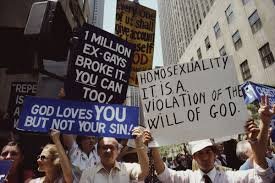
Homophobia is something pervasive within South African society. For all the advances we have made as South Africans, we are still shrouded in the oppressor-oppressee relationship that defines us.
We see causal racism in others, but fail – either intentionally or otherwise – to see the not-so-casual homophobia within ourselves. This has been evident to me throughout the past few days as I have seen the varied reactions to entertainer Zodwa Wabantu’s comments towards the LGBTQ+ community from Saturday night onwards, and then radio DJ Phat Joe’s defense of Zodwa, while peppering a bunch of homophobic comments of his own.
The LGBTQ+ community at large has been upset over these comments, as they prove once again that queer people are perceived to be sub-human, and any form of allyship is perceived to “accommodate” queer people on heterosexual people’s terms. Queerness not only has to be enforced by people who do not share the exact same experiences as we do, but the same would-be enforcers attempt to hide their bigotry by counting their number of gay friends, hoping this will insulate them from criticism. It is as if the twenty-odd friendships Zodwa Wabantu claims to have with queer people are more signs of tokenism than true unconditional friendship. This was exemplified by her use of the word “accommodate” to describe her stance towards gay people in general. Her accommodation of queer people, presumably, has its limits, when they “forget they have a penis and not a vagina”. Not only was this an affront to transgender women – who certain members of society see as men in drag – but it attempted to police the ways that queer people choose to express themselves.
Phat Joe, while discussing Zodwa’s comments on his radio show a few days later, expressed surprise at how queer people want everybody to accept their “lifestyle”. The word itself implies that LGBTQ+ people live in an unfamiliar, strange way that is somehow distinct from the way “normal”, heterosexual people live. Yet, he did not stop there. He expressed disgust at gay men who are “flamboyant like women”.
Phat Joe was taken off the air for his comments. But the damage has already been done.
Talk on social media concerning these two incidents is heavily skewed towards the homophobic rather than the compassionate. There are those who say gay people demand acceptance and are shoving their agenda down everybody’s throats. Others are befuddled at what was offensive about Zodwa’s comments since “gay men don’t have vaginas”. Then there are people who express sentiments of freedom of expression, citing Joe (and Zodwa’s) rights to have opinions contrary to what we would prefer them to have.
I was disappointed, yet not wholly surprised.
Politically, South Africans largely support parties and policies on the left. This is because the vast majority of people living in the country come from underprivileged backgrounds. South Africans see the importance of political parties that are pro-poor and have redistribution of the economy as their core issue, because they have an intuitive sense of how disenfranchisement negatively affects a group of people. They understand that the end of apartheid did not directly lead to the economic liberation of black people.
There are countless articles, essays, books, surveys, and seminars that intricately detail the impact that racism has had on black people. Race continues to be an emotionally charged topic for many, with the material effects of apartheid in place in many areas of the country still.
Then why is there such resistance to the sheer acknowledgement that the LGBTQ+ community is just as oppressed by society, as the black community at large had been oppressed by white supremacists during the centuries of colonialism and apartheid? Why is the Civil Unions Act enough of a concession to gay people that they indeed “have rights”? Why is it that in a country that knows so much about psychological abuse, we can nonchalantly call a system that has done more harm to black gay people than gay people of other races, merely a “personal opinion” that is bereft of interrogation? How left-wing are South Africans when they fail to see the social and structural implications of oppression in every place besides the issue of race?
Siya Khumalo, in his book You Have to be Gay to Know God, writes, “homophobia isn’t a stand-alone prejudice. It’s normalised so all other violence and bigotry may be tolerated when it comes.” In other words, if we are able to justify the LGBTQ+ community being at the periphery of society, then we suddenly have no excuse for lambasting Penny Sparrow or Vicky Momberg. After all, they were just expressing their personal opinions? If black people were the target of their opinions, then they should get over it, so goes the argument that they themselves present.
To that end, I hate equating homophobia to racism to remind people of their humanity. As Letlhogonolo Mokgoroane tweeted, “we can’t always invoke racism to prove how harmful homophobia is.
Using racism seeks to give us access to a humanity we are always dehumanized as queer people.”
Homophobia has to be pointed out to heterosexual people, who have the luxury of not having to worry if their mannerisms and way of speaking will be the difference between life and death. Before Zodwa Wabantu and Phat Joe, there was homophobia. It has been pervasive. It has led to depression, deception of oneself and of others, and even death. That is the true cost of homophobic comments being spouted around carelessly, particularly by public figures who have a fervent fanbase.
Zodwa’s homophobic comments gave rise to Phat Joe’s homophobic comments. These gave rise to a dozen other people’s homophobic comments online, and in real life. As any queer person will tell you, one cannot merely ignore homophobia when it is expressed. It has effects. Some of them are physical. Some of them are psychological. None of them are insignificant.
The urgency of a national conversation on homophobia and its effects cannot be stressed enough. There needs to be a concerted effort to counter the likes of Zodwa and Phat Joe, and others who proudly show off their homophobia with little to no shame. This comes with the religious and cultural justifications for homophobia, and so religion and culture will have to be vital in such a discussion. Appealing to people’s humanity while failing to truly grapple with the belief systems that feed them atrocious views will have no effect on the gay rights movement in South Africa. It will remain a project that appeals to a very narrow audience, and that runs counter to the supposed intention of the movement – to infiltrate society so that everybody has an understanding of the true horrifying nature of homophobia. It is dehumanizing, it is inhumane, and it is wrong. To truly put forward that message, the Bible and other religious texts will have to be put on trial. Writers such as Siya Khumalo and Scott Siraj al-Haqq Kugle have attempted to do this, outlining much of the reasons why religious homophobia is not in line with the true nature of Christianity and Islam, respectively. While I am a non-believer, I recognise the role that religion plays in the world. I am aware of its influence and power. If writers such as Khumalo and Kugle can disseminate their arguments throughout the mainstream, then we might see an evolution of our religions, as they become more inclusive of people they rebuked not so long ago (and are still doing, by the dozens).
We must not be afraid to explore why homophobia is a major facet of religion and culture. It is because of the conversations, or rather the lack thereof, regarding sex and sexuality within society. Young kids’ first bit of exposure to sex is an accidental or deliberate viewing of pornography or a blatantly false “fact” told by their friends. Sooner rather than later, children have adopted an entire script regarding sex and the “correct” ways to have it. These scripts are usually not guided with added discussions of consent, diversity, and respect. This leads to children becoming adults who, quite frankly, are ignorant on matters of sex and sexuality, save for the narrow and technical abstinence-based Life Orientation lessons that do not make children better-informed, as it mimics what is said in churches and in homes.
Schools must provide comprehensive sex education. This form of education must be inclusive of the LGBTQ+ community, and not further participate in a further erasure of queer people, and their need for guidance within the classroom. We, as queer people, are showered with the blood of heteronormativity. This means that we do not exist even when we do. We are exempt from even being discussed in an institution of learning, a place whose entire aim is to enrich and educate – and this leads to many more levels of erasure, from our communities to the media at large. People treat LGBTQ+ people as anomalies, because the institutions that are meant to educate others of our banal normal lives and regular habits choose to whitewash us by their silence. By that alone, they make us anomalies.
President Cyril Ramaphosa has noticed this. Hence, he has spoken quite a bit to and about the LGBTQ+ community, something which is quite commendable. However, the government must make various efforts to re-orient our social spaces to reflect a more diverse society. That means confronting the sacred cows of our society and engaging with them. The term “gay Christian” need not be a paradox. To walk around socially constructed eggshells so as not to alienate others is what the silence in our various institutions is born from. And it is that very silence that allows people like Zodwa and Phat Joe to feel justified in their homophobia. When there is an attack on queer bodies and the only resultant noise is a wave of cheers, then homophobic people see nothing wrong in their homophobia. Only when they hear mass disapproval and dissent will they pause to think again.
Maybe, just maybe, that will be the pause that opens their minds to a more fundamental truth – that gay rights are not anathema to human rights, but without gay rights, human rights cannot fully exist.
 wiseMusings
Leave a comment