Political ideologies are important instruments in the toolkit of political analysis. It is important not only to know the core tenets of each political ideology, but how those ideologies came to be. Otherwise one runs the risk of applying a theory into a reality that doesn’t allow for it.
I thought about this as I went through John Locke’s Two Treatises of Government for a university module on political philosophy. The ideas weren’t new to me, as a self-identifying liberal. But something about it compelled me to think harder, not only about the text and the character of the man who wrote it, but about how I perceive liberalism.
I’ve been enamoured with liberalism for a long time. This seemed like an ideology that everybody should be on board with, one way or another. “Who wouldn’t want to be in control of their own destiny?”, I remember rhetorically asking myself. I found myself drawn to liberalism and espousing its core tenets. I even once asked a friend of mine, “what kind of liberal are you?”. I took his liberalism for granted. It had never occurred to me that he might not have been a liberal at all.
And what was at the crux of my love for liberalism? How objective it seemed. How universal it seemed to be. It was seemingly a far cry from the authoritarian stylings of socialism and nationalism, which compelled its proponents to live their lives in a certain way.
Everybody wants liberty, I thought. So government should do all it can to give it to us, and only make sure we don’t step on each other’s toes while we do that. That should be its only role, and we’ll live happily ever after.
Sounds simple enough. Sounds very laissez-faire. It has all the airs of not giving value judgments and allowing people to just be, in whatever capacity they want to be.

But when I went beyond Locke and read about the context which gave rise to the liberal tradition, it is very hard to walk away with the conclusion that it is value-free and objective. Sometimes even more so than other ideologies that are more transparent about their biases.
Liberalism was informed by the society it originated in, by the monarchy that preceded it.. and of course, the people that founded it.
And you’ll forgive me if this is more autobiographical than it is analytical, but that’s my meta-argument – we bring ourselves into our analysis. There is no such thing as purely objective analysis. There’s the political and social analysis I bring, informed by my experiences, thoughts and feelings as a person who possesses the physical qualities I do.
And then there’s the political and social analysis of a Eusebius McKaiser, informed by his experiences, thoughts and feelings as a person who possesses the physical qualities he does. There’s the political and social analysis of a Max du Plessis. Of a Siya Khumalo. Of a Mpiyakhe Dhlamini. Of a Sindile Vabaza.
Of a Wiseman T Zondi.
Of you, dear reader.
We all bring ourselves into the room.

Ever heard the saying, “wherever you go, there you are?” It’s as applicable to self-help (which I used to write, but stopped because of reasons I’ll disclose one day) as it is in the political analysis world.
Some people are liberals, not because they’ve “seen the light” and are therefore more “rational” than the rest of us. They are liberals because being liberal feels right to them. It strengthens their identities as individual men, women and non-binary people who have freedom, reason, and the legal tools to exercise those values to their advantage. Yet, sometimes this can go awry.
Let me give you an example of what I’m talking about.
If you’re upwardly mobile, with a job that gives you access to the coolest things like video games and vibrators – if something like connecting to the internet is something you take for granted as just another part of life – then you probably feel you’ve worked hard for those things. You feel entitled to enjoy the money you make.
That’s true. That’s absolutely right.
So, you might or might not think, who gave the state the right to steal your hard-earned money, and distribute it to things you don’t even use, like, for example, ARVs for people who were irresponsible enough to sleep around, not using free condoms that were manufactured and distributed using YOUR money, and now want to mooch even more of YOUR money to live?
You were smart enough to use condoms everytime you have sex! You made an individual choice that would benefit you and you reaped the rewards. So why should that be taken away from you?
That’s the outlook that may or may not be held by some people who subscribe to a specific kind of liberalism. And while it might not apply specifically to issues of public health, it might apply to social grants and the general matter of redistribution of wealth.
My point is that if you’re in a certain class (which sometimes coincides with race), you are likelier – though not guaranteed – to hold some social attitudes over others. And obviously, this doesn’t just stop at those two markers. There’s gender, there’s sexual orientation, there’s age, there’s religion. And so on. And so on.
You think you make your choice over which party to vote for, independently. You might think your perspective on the world came to you, purely through reason and rationality. But the mind can fool you into thinking things that aren’t exactly there. To see the extent of your illusions, all you have to do is look beneath everyday, so-called “commonsense” thinking.

And so I see through all the political debates of the day and mostly find them absolutely exhausting, because we say we’re arguing over “lives or the economy” during the COVID-19 pandemic when we’re actually arguing over “my sense of self versus the other person’s sense of self”. Zero-sum, as in one must win and the other must lose.
I can’t take you through other people’s sense of self. But I can take you through my own.
Back to that classic line. “Give me liberty, or give me death!”
Firstly, liberty may be a universal feature in humanity – but it’s not the predominant feature in all of humanity. For some people, racial or gender unity is more important than individual liberty, as far as political organisation is concerned.
And they don’t organise in terms of race and/or gender because they’re misguided or short-sighted. They organise this way, because they don’t have the luxury of seeing themselves as individuals first and foremost. They were marginalised due to their race or their gender. So they galvanize along those lines politically, in conjunction with identifying with the specifics of their individual experiences. This is because if their group marginalisation can be minimised or disappear, they will maximise their individual freedoms by default.
Secondly, government’s core function should not be to maximise our liberty in the exact same way, as if equality of opportunity and meritocracy are lived experiences of many, rather than realities of a numerical minority in the country. Instead, government should maximise liberty in a very contextual fashion. Some people, by virtue of their class, are free in ways that others aren’t. To pretend that this isn’t the case would be downright dishonest.
Poor people aren’t free. Poor people have to depend either on people’s philanthropy (which isn’t always a given) or on crime to get food to eat, in the absence of a state that assists them to either upskill in terms of education or provide them with a social safety net. These are the choices that are forced upon them. Forced.
One could then counter by arguing that more liberty in terms of deregulation of labour laws, for instance, would translate to more employment, and that would allow poor people more choice. I would caution against that sleight of hand – that free markets automatically create dozens of jobs, as if WWE chairman Vince McMahon did not fire dozens of employees during one of the most financially successful periods in his company’s history – while simultaneously asking whether employment or poverty is a fair choice to be making, at all.

It is a fair choice, if you take free-market fundamentalism – the bedfellow of classical liberalism – to be a given. I no longer do.
What I take to be a given in an ideal society is the end of poverty (as a person who has lived in poverty). I personally don’t think The Market, in all its apparent glory, can provide that. At least not unchecked.
And now we get to why I think that.
When you look at the machine that created liberalism as we know it – who are the people, socially speaking? What social characteristics did they have that differentiated them from others?
Simple. They were white men.
(It’s easy for some to now accuse me of “race-baiting” and “propagating sexism against men”. They are free to do so, but it would be wise to question why this reaction is the first one to come to the surface. If, by simply making a factual claim that the originators of classical liberalism were white and male, I’m assumed to be prejudiced then why is that? That’s not a question for me to answer.
But I digress.)
These specific white men erased women in their analyses. They also didn’t explicitly challenge the hierarchy of races in those analyses. That is as much a part of the legacy of liberals as free-market fundamentalism is. For those who will reflexively argue against that, read “The Father of Liberalism” John Locke. (I have).
What is his context as he writes The Two Treatises of Government? Is it a context that explicitly talks about liberty for slaves? Is it a context that explicitly talks about liberty for women to be more than just people who raise children and cook for their husbands?
Or does he.. gasp.. take the subordination of women in the home and the existence of slavery as a given, in his writing?
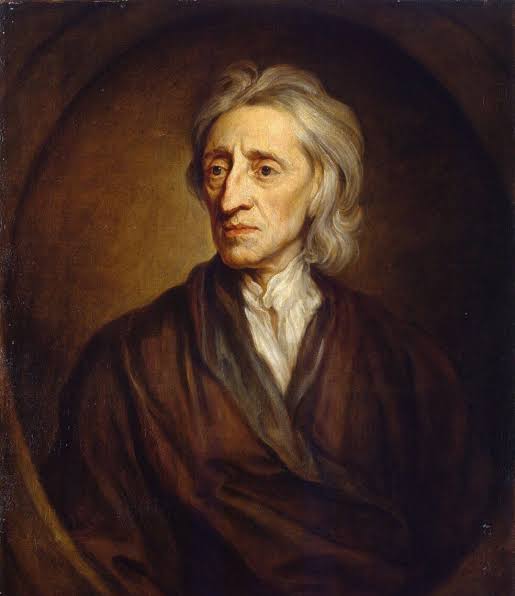
If his writing does take those groups into account, then I’d love to see the exact wording and quotations, in case I have missed it. If (as I’ve read) his writing does not, then how can one claim that classical liberalism is any good for marginalised communities despite handing them crumbs of a loaf of bread that can disappear at any time, depending on the whims of the rich and middle-class? How can one possibly see it as a one-size-fits-all ideology when it was never intended to be, even in its formation?
The history of how liberalism became a force in Africa reflects this very fact. According to Bobby Godsell in his article “A South African Liberalism for the 21st Century”, liberalism was directly linked with British imperialism. Can you then blame the majority of black Africans for being skeptical of liberalism as its done in the U.S and Britain being transplanted to our context?
One would counter and say that the liberal tradition in South Africa has been non-racist and non-sexist, with Helen Suzman representing the Progressive Party in Parliament and fighting for an end to apartheid. My answer to that – even if Helen Suzman had succeeded in her goal, it only takes us as far as legal protections which ring hollow in a social context that had disenfranchised black people (and the majority of women, who were black) within that society.
In other words, giving black people legal protections that were originally only reserved for white people was only the beginning. Black people also needed social assistance to help them better realise their full potential.
Tying people’s legs together for most of their lives then suddenly unshackling them, and expecting them to run at a pace akin to that of people whose legs were accustomed to running does not a meritocracy make. And the last time I checked, the idea of a meritocracy – where everybody has an equal chance of succeeding based on how hard they work – is an essential concept in liberal theory. So that immediately puts a fly in that ointment.
If you don’t believe me, ask poor people if their constitutional right to access to education on its own allows them to enrol at a tertiary institution. (Spoiler: the years that preceded and led to #FeesMustFall proved it doesn’t.)
At best, classical liberalism is ahistorical in a country that looks the way it does, precisely because of its history. And how relevant can such an ideology then be? At worst, classical liberalism has elements of white supremacy – creating a seemingly “fair” race but giving white people the resources to go further than others, through the affirmative action that existed during apartheid.
Either way, doesn’t look good for the theory of Locke.
Two possible solutions arise from that dilemma. The first is to get rid of all mentions of liberalism altogether, and forge around a new ideology that will be inclusive from the outset. Assuming that that is unnecessary and pedantic, one can use the second option at our disposal. We can alter the specifics of liberalism to a particular context while still keeping its fundamental tenets intact. For instance, we can recognise that classical liberalism is limited in its outlook and will not work wholesale in South Africa, except for a limited few.
So we change liberalism to suit our purposes. We give a giant “fuck you” to ideological purity if it stands in the way of the improvement of people’s lives. In fact, the ideologically pure decision would actually be to adjust the theory to the reality rather than the other way around. Classical liberalism was created as a pushback against the monarchy, and so has very specific guidelines that are suited to equip liberals of that period against the monarchy.
Our struggles are very different. So why use a version that isn’t specific to our struggles?
This is where social liberalism comes in.
“Old-school” liberals are critical of social liberalism for many reasons. Mainly because it argues for the expansion of the welfare state. Not only do they think that welfare promotes laziness and ineptitude, but they object to the way welfare is funded – by tax money, paid for by them.
Without getting into the “tax is theft” debate (because not everybody in society is implicated by such a debate, to begin with), I want to argue the ethical considerations of this view.
They use the strawman fallacy to perfection here, arguing that taxation makes others poorer by taking their money from them to fund services for “lazy undeserving people” (see my ARV example above). When you think about it, taxation does not make anybody poorer for having paid it. In fact, taxation is essential for “old-school” liberals to keep the economic wheel turning.
Sticking with my ARV example – if the free provision of certain forms of healthcare ended tomorrow, millions would die. The vast majority of those would be the 18-49 age group, also known as the workforce of any country. So, with fewer people to participate in the economy than before because they’re dead, how do free-market fundamentalists keep their businesses operating at optimum performance?
Bluntly put, how do business owners operate without employees? This is especially concerning when one considers that the stats say that one in every 6 people in South Africa is infected with HIV.

Taking it to the welfare example, taking that away in a country with many instances of poverty and unemployment doesn’t magically create hardworking individuals who will overcome every obstacle in their path. For every “against all odds” story printed in the newspaper when matric results are released, there are hundreds, if not thousands more, whose circumstances caught up to them. And that happens in a country that has one of the largest social grant schemes in the world!
Imagine how many people would be left behind without it. Imagine how many people wouldn’t be registered in university as we speak. Imagine how many people wouldn’t have degrees. Imagine how many people wouldn’t have had the opportunity to break the cycle of poverty in their households, while simultaneously working for the very business owners who say that a welfare state is inherently bad.
And that’s not to say that the South African government has been efficient, or even ethical, with tax money. It hasn’t. But there’s a difference between pointing out that corruption and inefficiency hold poor people back, and saying that redistribution should then be a thing of the past.
And the oft-cited quip that redistribution is inherently socialist? If one perceives paying taxes to feed the less fortunate as socialist, then perhaps elements of socialism aren’t all bad. After all, Johann Rupert claims he’s been the most-taxed person in South Africa for years now, and he’s still a multibillionaire.
But on a serious note – the false dichotomy of “you either support the dominance of the market, or you’re a socialist” is obviously a fallacy not worth entertaining. One can support redistribution while not necessarily having a copy of The Communist Manifesto on their bookshelf. The idea that capitalism and socialism are at odds with each other is a remnant of Cold War-esque, binary thinking where nuance goes to hell, and context is seen as an inconvenience.
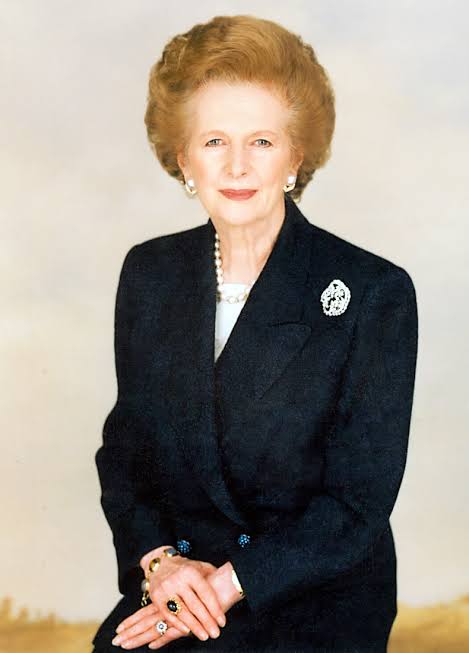
Unlike what Margaret Thatcher would think, we live in a society, one where interdependence ensures our common survival. In a very literal sense, individualism depends on other individuals. I expect Locke, Mill, Rousseau and the rest of that gang not to see that. Liberalism was a very self-serving ideology in their day. They only saw those who looked like them as persons who merited individual liberty.
But in a country such as South Africa, in the year 2020 especially in the wake of COVID-19, how wise is it to forget all that?
History and context matter. If that doesn’t sound true, then you should wonder just how free you really are.
 wiseMusings
Leave a comment