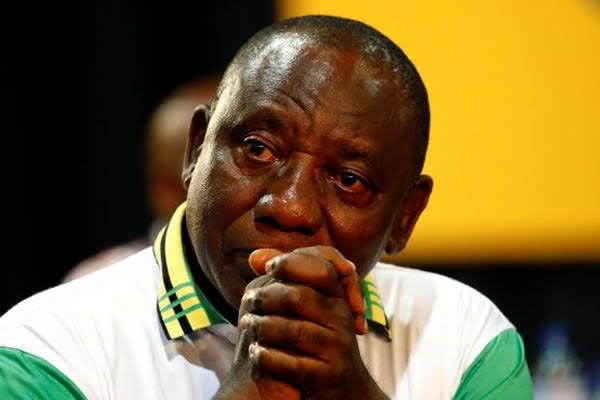
The interplay between emotions and politics is an interesting one, particularly because we come from a grand tradition of people trying to separate the two from each other.
Approach a politician anywhere in the world, and ask them what role emotions should play in politics. Presumably after making sure you are a member of their party, they will most probably tell you that emotions should play a minimal to non-existent role in politics. This is because, they’d say, politics must be a rational enterprise that allocates power to certain groups in society. If you’re too emotional about which group gets what, you may end up making a mockery of the entire political system, and the processes that underpin it.
This is the argument that they may give. And to an extent, I find it compelling. Too much value to how one feels, and not enough on the realities on the ground, is a dangerous way to engage in politics. This is partly because our feelings and emotions are not always reliable narrators, and partly because our feelings and emotions may be influenced by fear and ostracism rather than justice and inclusivity.
But this take disregards one thing – that political power is gained through winning elections, and not through presenting a valid and sound argument to the populace (though that would be nice). And winning elections means getting the electorate to believe in your vision, using a number of psychological techniques to do so. No, not that psychological.
No political party that has amassed a significant measure of success in the world has done so, only because they were “more rational” than parties that did not. They did so because they appealed to a large group of people in a way other parties did not. That goes for the African National Congress (ANC) that has won six consecutive national elections in South Africa. That goes for the Economic Freedom Fighters (EFF) that won 10% of the national vote in the recent national elections, in their second election as a party.
And that goes for the Democratic Alliance (DA) that has hovered around the 20% vote margin for the past two elections, and is the official opposition in the country. ‘Nuff said.
All these parties may or may not make valid points about South African society. That is almost an accidental consequence of the parties concerned. One could go so far as to say it’s irrelevant.
What these parties do well is that they represent people. They bolster people’s identities and stand for their interests in the National Assembly. On a purely psychological level, they appeal to the stories that people tell themselves in their minds, and either act or speak in accordance with those stories.
This is at the heart of why I am disillusioned with the idea of “identity politics” being a tool solely of marginalized communities. It isn’t only marginalized individuals who have identities. Those in power, those who are privileged, have identities that directly influence their politics as well. The only distinction is that their identities seek to either revert to a past that prioritized them, or to remain in a system that currently prioritizes them. This is why for them, politics is a war. Their binary thinking cannot allow them to think of power-sharing in any significant sense, because this delegitimizes their role in the social order. So for them, it is all or nothing. Win or lose.
And for them, so the myth of “rational choice theory” must be upheld. For those wondering what rational choice theory is, Investopedia defines it as “the idea that individuals will always make rational, cautious and logical decisions.” To some, this seems clear and lucid. People should make rational, cautious and logical decisions in a normative sense, after all. If we didn’t make choices that made sense and preserved our long-term stability, then we would be living in something akin to Hobbes’ state of nature – where life is brutish and short. But we’re not. So there must be some rationality at play, right?
Well… kind of.
What counts as rational is often culture-specific. For instance, it was once seen as totally rational to enslave living, breathing human beings. People did not engage in slavery in secret. They bought and sold other human beings quite freely, in fact. They offered various justifications for engaging in slavery – justifications which were taken seriously, and seen as totally rational.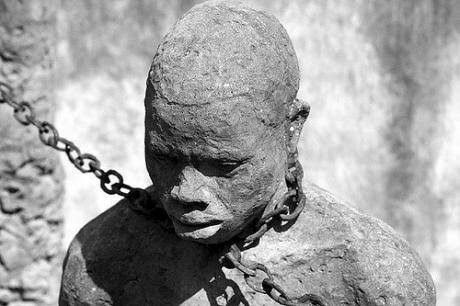 I repeat, people being bought and sold was a good thing once upon a time.
The reason for this was no accident. It was because people with social and economic power held these opinions about slavery and could make them valid just by expressing them. This is the relationship between seemingly acceptable forms of knowledge and social power. In her seminal work, Black Feminist Thought, Patricia Hill Collins writes about how white men control the structures of knowledge validation. In other words, knowledge isn’t really knowledge until white men affirm it, either by expressing it themselves or by co-opting the knowledge of others unlike them.
Why white men? Because of the role that white men have played in shaping world history. Colonization was enacted, primarily by white men. The Enlightenment, a period that sparked technological advancements never before seen, was spearheaded by white men. Those statements of fact are not meant to debase or to devalue the stature of white men who might be reading. Instead, it highlights their disproportionate power in the world due to not only their race but their gender.
Is sexism and imperialism the only story that can be told about white men throughout history? Of course not. But it plays a significant part, not only in how history books depict white men of the past. It also plays a significant part in how certain white men of the present tend to think and reason about politics.
What does this mean for people who aren’t white, or who aren’t male? For them to produce knowledge that gains validity, they have to receive the Seal of Approval by a respected white man (or somebody who has direct links to respected white men). And if they do not, they are accused of irrationality and “populism” by the one group that has the capability and resources to use revisionist history to obtain a monopoly on reason, and its usage.
Still not convinced? Check out the statistics and see how many white men are philosophers in the year 2020 as compared to black men, white women and black women. Not just in South Africa, but worldwide.
When did Dr. Mpho Tshivhase, the first-ever black woman to obtain a PhD in philosophy in South Africa, earn her doctoral degree? In 2018.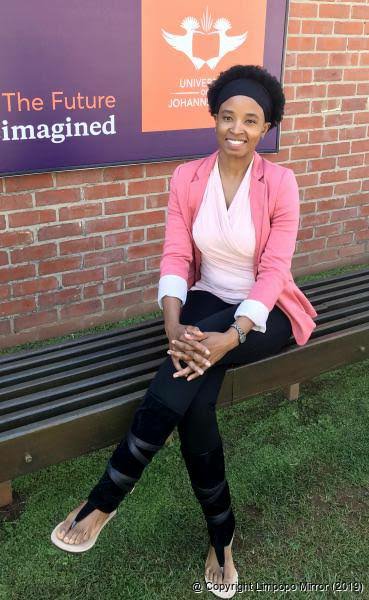 Also, Dr Tshivhase? Mad respect.
Shows you there’s something wrong with our ideas of rationality if the academic discipline most concerned with rationality is disproportionately of one race and one gender. And it’s not even a matter of wanting proportional representation, it’s merely a matter of wanting representation that is reflected in philosophy itself. That goes to the way we think of rationality and how to remove the sterile idea that epistemological claims don’t have the biases of the person doing the claiming within them.
What does all this have to do with politics?
It directly means that politicians try to sell you the recipe for rationality through the backdoor, while selling themselves as the only shop in town that offers their specific type of rationality. And nowhere is this more prevalent than in one certain political party.
But that’s a discussion for another day. Let’s park that discussion right here.
The discussion we will have today is how affect – our feelings and emotions – directly influence our decision-making. And that goes for all of us.
Political psychologists Martha Cottam, Beth Dietz-Uhler, Elena M. Masters and Thomas Preston write that “we accept as true information that conforms to our preexisting knowledge and reject as untrue, or irrelevant, information that does not conform.” It would be silly to think that this only applies to whether we like avocados or not. It has an impact on how we vote, whether we feel comfortable campaigning for a particular candidate, and which party aligns with our predominant interests.
Let me take myself as a case study. Hello!
I am a black man. My interests are, ideally, to find a political home that makes space for that social marker. So I would be curious about political parties’ views on racial redress and look at their leadership structure to see if there are any faces that mirror mine and whom hold the same views regarding racial redress as I do.
But race is not the only social marker that I find to be politically relevant. I am also gay. This means that any political party that I’d want to be a member of must explicitly value and uphold LGBTQ+ rights, both in theory and in practice.
Now, here’s the twist. What happens when these two qualities I look for in a party are held by two different parties? What if party A is incredibly progressive on matters of race, along with a history of fighting apartheid, but are eerily silent on LGBTQ+ issues besides an empty-winded statement here and there? Then what if party B attends Gay Pride, has dozens of openly gay officials in its organisation, but are paralyzed by the question of race in South Africa?
Assuming I take both my social markers and the convictions that relate to them equally seriously, which party do I throw my weight behind?
The answer to that is interesting, sure. But the far more interesting aspect to the question is this: would my decision be a matter of “rational choice theory” winning out?
I suspect not.
I suspect that I’d stop and think about which one of my two identities is more likely to garner oppression than the other. This is not an objective analysis, by any means. My personal situation could be specific to my class, my age, my education level, and so on. Even then, a black gay person with the same social standing as me might make a different choice. It would all boil down to – which party makes me feel safe?
And back to the feelings we return. Those warm and fuzzy feelings.
I realise that my reasoning methods aren’t reflective of all individuals. I even realise that some individuals don’t even think of their voting choices as blind loyalty to a party, and more as a way of securing interests. I would challenge those people who absolutely think this way to consider a few thoughts.
I’d challenge them to consider that maybe the way in which they chose which interests to secure in the first place isn’t value-free. That it’s coloured by their specific life story, and the experiences that emanate from it.
I’d challenge them to consider that rationality is specific to the people who are in power at that time, and that everybody has an internal logic that they use to navigate the political sphere.
More than anything, I’d challenge them to consider that their constant painting of themselves as “rational” and others as idiots is an emotional response that strengthens the polarization that is systemic to political discourse. People don’t respond well to condescension, especially by a group that they already have an inherent mistrust of.
I would like to challenge individuals to take emotions seriously as a feature of politics, and maybe, just maybe, use the emotion of radical empathy to bring people together rather than keep us apart.
- Comment
- Reblog
-
Subscribe
Subscribed
Already have a WordPress.com account? Log in now.
 wiseMusings
Leave a comment