“Queer” is an incredible term.
I didn’t always perceive of the term in that light. Quite the opposite, actually. I saw it as a continuation of the relentless poking that homophobes threw our way. I heard the argument that the usage of the word “queer” was to reclaim it. I was not convinced. And so for the longest time, I flat-out rejected the term “queer” as a term used to describe me, choosing instead to use the word “gay” to illustrate my sexual and romantic attraction to other men.
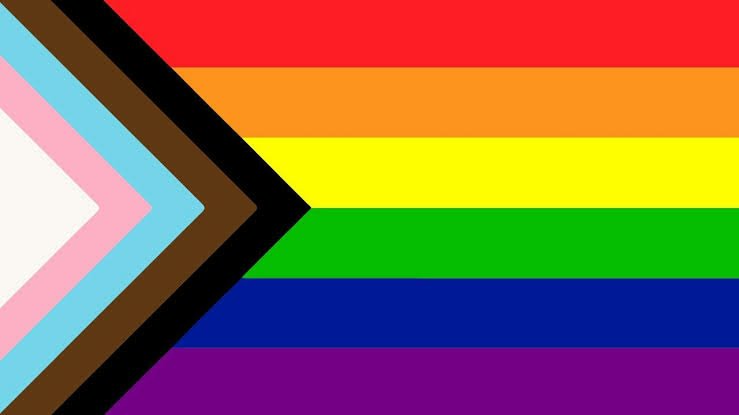
I then listened to a Cheeky Natives discussion where host Letlhogonolo Mokgoroane was chatting to author (and friend of mine) Siya Khumalo about whether Siya identified as gay or queer. By then, I had come around to understanding the word “queer” to be a catch-all term for the LGBTQ+ community. For me, the word “queer” was interchangeable with the letters that carry our identities. It was an umbrella term under which we could all find refuge, and I appreciated it for that. A word that any misfit and social reject could not only borrow, but fully inhabit and own, was a word that had power to positively influence the people who use it to describe themselves. Be that as it may, I was reluctant to use the word to describe myself.
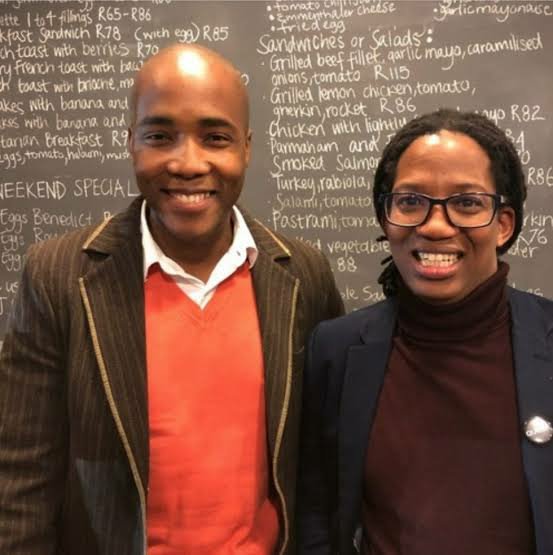
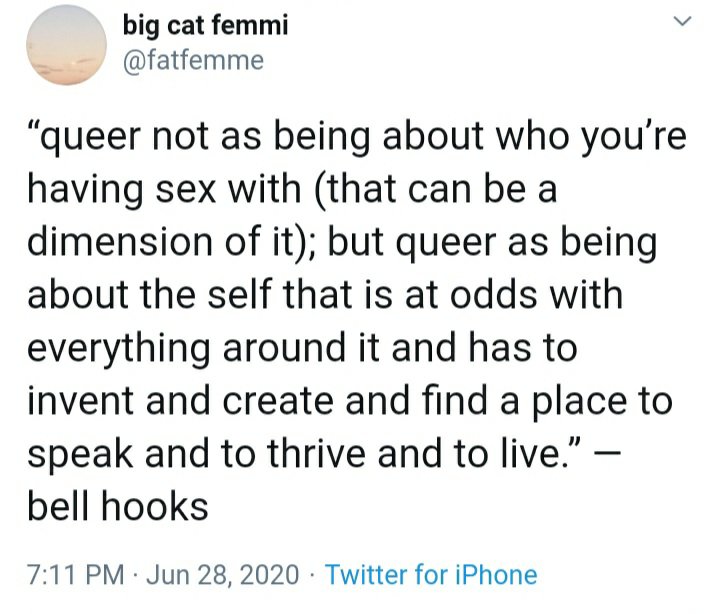
But Letlhogonolo – as intelligent and precise as he is – explained that being “gay” was simply a sexual orientation. If you were attracted to people of the same gender as yourself romantically and sexually, then you were gay. However, being “queer” signified a kind of politics. Queerness, according to Mokgoroane, was a way of living life that embraced the dictionary meaning of “queer” (the definition reads as “strange or odd”). If you were queer, your perceived strangeness or oddities didn’t just begin and end with who you dated, married or had sex with. It manifested itself in a vision of the future that was truly liberating.
Queerness meant challenging the social constructs we took for granted while growing up. Queerness meant challenging homophobia, biphobia, transphobia and the other afflictions that befall sexual minorities. Queerness meant challenging racism, sexism, ableism, and so on. Queerness meant challenging capitalism. Queerness meant challenging the gender binary. Queerness meant challenging marriage as a respected social institution which every person should strive towards. Queerness meant challenging monogamy as the only version of intimate relationships worth pursuing. In short, queerness meant challenging everything.
This discussion came to me at a time when I was questioning my politics. I identify as a liberal, and so that means making the system more equitable and fair for everybody to benefit from. My identification was starting to shake, though. I began asking myself if the inability of people termed as “other” to gain from the system wasn’t a problem with them. Perhaps, it was a problem with the system. Not the kind of problem that can be solved by bringing more people into the system but by shutting it down and rendering it obsolete.
I struggled with that question. I still do. As a politician and activist in a liberal party, this question irks me more than ever. But the answer I have come to (and am constantly adding towards) is that some of the ways we have been programmed to think about the world are wrong and we should directly challenge them. Even when we’re termed as “unprofessional” or “angry” or “uptight”, we must move the conversation beyond what society deems as a respectable place to end it. We must advocate for an utopia long and hard to have any chance of seeing it come to fruition.
That’s done in big ways and small ways. It’s done by condemning injustice when we see it, and listing solutions that challenge the root causes of those injustices. It’s done by reading up on the great social movements of our past, and the lofty goals they once had. It’s done by speaking about issues that might make others uncomfortable, but might force them to learn more about why they feel discomfort. It’s done, oftentimes, simply by existing in your fullest form.
I haven’t combed through a reading list of Queer Studies texts (though I will make sure that I do). But I do know that the simplest form of resistance against systems and structures that grind you down is to survive within them. Even without the education and love of reading that I have – I’d still be resisting the clutches of heteronormativity by being open about my sexual orientation. I’d still be escaping the clutches of what Adrienne Rich termed “compulsory heterosexuality” by stating my love for men even when my masculine appearance allows me to feign heterosexuality and thereby keep others comfortable.
I don’t want people to be comfortable. I want them to be awake and listening to all of us – the gay among us, the trans among us, the asexual among us, the poor among us, the HIV-positive among us, the non-binary among us. Everybody deserves a face and a voice. And to me, that belief makes me pretty damn queer.
And here’s the thing: my queerness is not coincidental to the roles I play in society. I’m not a politician or an activist or an academic who just happens to be queer. Being gay influenced my very interest in politics and activism, to begin with.
In 2016, I was in my final year of high school. As part of our History curriculum, we learnt about Steve Biko and the Black Consciousness Movement. His clarity of thought, his accuracy at explaining the state of South Africa and the fact that a black man – like me – could do all of this drew me in. From that point on, I voraciously read everything I could get my hands on regarding Steve Biko and later on, politics. I got conscientised.
But that’s just half of the story.
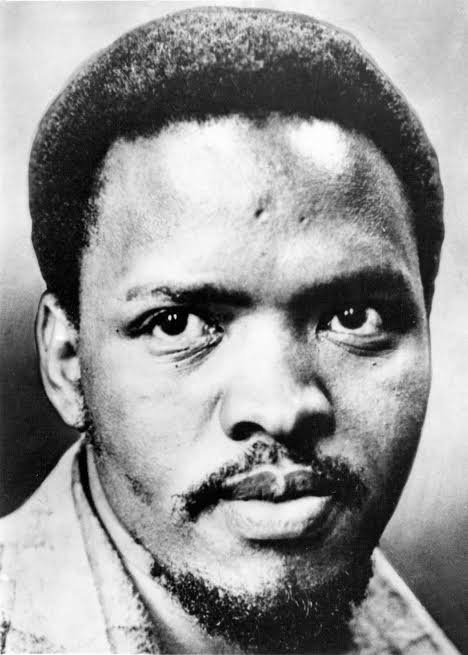
What I was attempting to also do with my newly-found conscience was to formulate what I called a Gay Consciousness Movement. I felt that the resistance of white people to recognise the nuances of racism also existed within heterosexual people’s responses to homophobia. I wanted to use the BCM as a foundation for my Gay Consciousness Movement, and attempt to teach people about the true lived experiences of a gay person in South Africa. Just as Steve Biko had conscientised me, I wanted to conscientise others.
Now, obviously, the Gay Consciousness Movement did not come into fruition (sadly so). But my interest in politics remained. From reading the works of Steve Biko, I started reading about other political figures of the past. I developed an interest in current affairs. I formed opinions about things that would have went over my head previously. I became the political thinker I am today – in large part because of my queerness.
Lived experience is a beautiful teacher. Throwing yourself headfirst into literature is an even better addition. And in my lived experience, I knew that I was different. I knew that men who were romantically and sexually attracted to other men were a rarity (and for many years, non-existent in the circles I frequented). I somehow knew that this difference I had would have many social implications for me, from the friendships that would end to my now-dead aspiration of one day becoming a preacher.
I didn’t quite grasp that those feelings of difference were widespread. I didn’t quite see, for example, how sexism affected the girls and women around me, in subtle but very real ways. I didn’t quite see how persons with disabilities are ignored and made to feel like subjects of pity rather than integral parts of our society like everybody else.
I failed to realise that, until I really had to reckon with what it meant to be different in a world that encourages conformity. That reckoning came in the form of reading about black women who experienced systemic erasure from movements they had created.
And so, being gay taught me about difference. It taught me how it felt like to be an outcast in ways I had never before experienced, or even known of. It also taught me to reach. It taught me to grasp for knowledge other than the kind that I was given in school and university. It taught me that one of the safest ways to gather information about the nuances of gay life – and life in general – would be to read outside the classrooms and the lecture halls. And in that, I was exposed to other forms of prejudice; other irrational responses to difference. The very idea of listening to the Cheeky Natives discussion would likely not have come to mind if I was not myself a member of the LGBTQ+ community.
And more than anything, my queerness taught me to embrace those differences and amplify the voices of those who held them. Because we were all being fucked over by the same system, and unity would be a far better principle to achieve liberation than disparate voices all shouting over each other.
I can honestly say that I wouldn’t have learnt this if I was not queer. I’d probably know what each letter in the acronym LGBTQ+ stands for, but I would be unable to articulate why these seemingly different people chose to form a community. I would not understand that trans men and women are real men and women. I would have failed to grasp that homophobia and transphobia are undercurrents of misogyny and the glorification of the gender binary. Why? Because I wouldn’t have cared enough to learn about it.
Epistemic ignorance, according to the philosopher Nancy Tuana, is what happens when you are aware that there is knowledge you lack, but you have zero interest in obtaining that knowledge despite the ignorance. Because of this lack of interest, you end up marginalizing the group which you know nothing about, intentionally or otherwise. Epistemic ignorance is not about intentions. It is more about the lack of willingness to grasp concepts about groups different to you – simply because you don’t have to. You can opt out of a debate that others have no choice but to enter. (White people who deny the existence of white privilege come to mind here).
The reasons for opting out are understandable even as they are objectively wrong. Knowing how society discriminates against a group you’re not part of makes you uncomfortable. It would mean that you might have absentmindedly and unintentionally engaged in discrimination. And it would mean that you would have to stop the discriminatory behaviour – thus, maybe letting go of some of the privileges you might attain from this behaviour. That’s hard. That’s difficult. That’s not something just anybody would do, without a major instigator practically forcing them to do so. And I’m glad my queerness was that instigator for me.
In addition to showing up for myself and fellow gay people, I can do more for more people. I can now show up for women. I can now show up for my trans brothers and sisters. I can now show up for non-binary folks. I can now show up for people with disabilities. I can now show up for so many movements that wouldn’t get the time of day from me if I wasn’t who I am.
Don’t get me wrong, this isn’t a convenient copout for individuals who choose to revel in their epistemic ignorance. As I understand the difficulties of learning about people unlike yourself, you must do it. We all must do it. In many ways, that’s the only way for liberalism’s purported essence to come out: when all individuals feel like they are understood by the person beside them, we will have a free society. While I recognize the limits of interpersonal interactions to solve systemic problems, it does sometimes help.
Imagine what an ally of the LGBTQ+ community could do as the president of a country? How they could recognise the non-marriage problems that plague the community? How they would put in effort to solve those problems? Take that template and apply it to an ally of any (and every) group you want. Doesn’t that sound like a fundamentally better society than the one that currently exists?
That kind of society does not start with marginalized people having to constantly perform their pain in an attempt to appeal to a privileged person’s humanity. That kind of society starts with one privileged person realising that life for them isn’t the same as life for that other person, and doing something about it.
And so if queerness is a form of politics, we all should be queer. Obviously, this does not mean we should form sexual and romantic attractions to people of the same gender. Instead, I mean to say that we all should be angling for a society in which poverty is a distant memory, in which nobody anywhere in the world has to live in fear over being affectionate towards the person they love, in which even the poorest person in any given society has access to healthcare that can save their life, in which girls are not raped and murdered under any circumstances.
We all should be fighting for that society to be a reality, rather than something out of a Harry Potter movie. Instead of a fantasy, it should be a reality. In such a society, difference is celebrated and seen as a natural variation between humans rather than an abnormality that must be expunged from history.
If we want to see a world where we are all free in the best of ways, we all should be queer.
 wiseMusings
Leave a comment