TW: rape, sexual assault.
Rape has many myths and misconceptions that are baked into our ideas of it. These myths and misconceptions are surprising, because they usually do not line up with how most rapes take place. But we still hold on to these ideas of rape, and as a society, we’re worse off for it.
We tend to think of rape as only being done by the “creepy old man” who has no friends, and who lusts after young girls until he can grab one and rape her. That’s the archetype of rape that we have in our minds.
I suspect that the reason why this idea is still so popular is because it insulates us, and the people closest to us. If we can identify who is more likely to rape, then we can keep ourselves and our children away from that person. Then we are safe; then we are protected. It is an idea shrouded in self-preservation. However, it is unhelpful to preserve yourself based on a lie.
It is unhelpful because it keeps us from identifying rape that does not fit into this category (and most rapes don’t).
In South Africa, this is the deal: most rapes tend to be by people known to the victim – sometimes, rapes are even committed by intimate partners. Men and young boys are not just potential rapists. There is also potential for them to be raped as well, even though the statistics note that this is a numerical minority as compared to women being the victims of rape.
Everything that I have just stated does not include a lusty old man dragging a screaming schoolgirl into the bushes, and tearing off her clothes as he rapes her. To be sure, this form of rape still does exist. However, it is not the only form. And our unwillingness to fully realize this is problematic, because it sorts people into hierarchies of victimhood, or even worse – it disqualifies them from claiming victimhood.
In my anecdotal and not-data-based experience, women who have been raped by their intimate partners are not given the same compassion and latitude to grieve their rape as people who were violated by “creepy strangers”. In fact, these women are often vilified.
They are said to be modern-day Delilahs – women who seduce a man, only to ruin his life by so-called false rape accusations. This comes from a misogyny that exists in society (the conservative idea that women are sly, reprehensible human beings whose only purpose is to destroy men a la Eve from the Christian Bible), combined with a perverted idea of sex (that sex-on-demand is a perfectly acceptable demand in intimate relationships).
And we wonder why women don’t report having been raped.
The stakes are raised even higher when the rapist is a likable figure. A new set of questions are raised in that context. How does likability influence our perception of a sexual crime? How does our ability to recognise complexity go out of the window when a person we like has been accused of rape?
Let’s get right to the matter you’re thinking about.
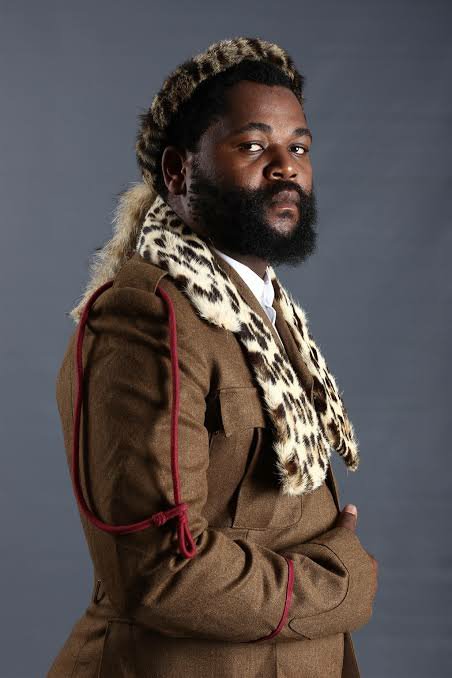
The recording artist Jabulani Hadebe, better known as Sjava, has been accused of rape by his former lover Yamikani Janet Banda, also a recording artist better known as Lady Zamar. The para-social relationship that exists between Sjava and his fans has led to the construction of a narrative that paints Lady Zamar as a scorned lover seeking revenge on Sjava for past indiscretions.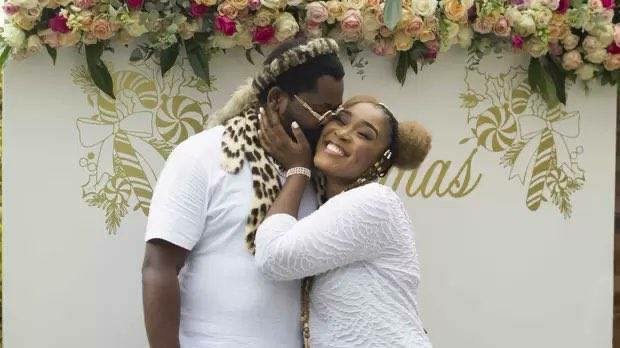
I will not claim to know the truth of the matter, and neither should you. The para-social relationship creates the illusion of a closeness between yourself and the celebrity, even when there is not. In other words, we know nothing about Sjava except the image he chooses to portray to the public. Behind closed doors, he may be a different person altogether and we cannot confirm or deny that. However, I will speak about my thoughts on the matter, illustrated by an example.
The likability of a person does not take away from their ability to rape. A likable person is just as likely to rape as an unlikable person. This is because the image we project in public may not always correlate with the person we are, behind closed doors. We can all think of a story we’ve heard of a celebrity that was seemingly nice when the cameras were on, but was mean when they weren’t (Ellen DeGeneres is a good example of this).

So how do we seem to forget this when a crime such as rape is brought into the forefront?
Or better yet: do we really believe that Sjava’s likability shields him from raping a person, or are we afraid that Sjava being guilty of rape will mean we could all be guilty of rape?
Celebrity culture is terrible for many reasons. But celebrities are useful for at least one reason: they are a symbol of the cultural moment. What we find relatable, entertaining, funny, or interesting is reflected in who we regard as celebrities, and which of those celebrities we find to be likable.
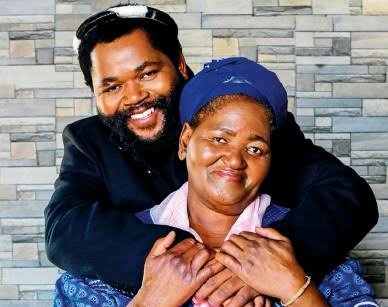
Sjava is likable. This is because Sjava is relatable. Almost all of us know a person who looks like Sjava – particularly in our families. We can relate to the themes in his music. We like the way he honours his mother in public, because of our close relationships with our mothers.
But even as all of this is true, it does not make him any less capable of rape. In fact, it makes him more capable of rape. If he can shield his rape behind his image as a good Zulu man who loves his mother and who simply sings about love, then he’s seen to be off the hook. He’s not the ugly, unlikable old man who undresses young girls with his eyes. Therefore, he’s presumably innocent. But if he’s guilty?
That means other good Zulu men, other men who love their mothers, other men who are hopeless romantics – they are also in the firing line. They are also capable of raping somebody.
Rape does not take away from whatever good you may have done. But at the same time, your good deeds do not take away the fact that you raped somebody. These components can (and often do) co-exist.
As promised, here is a personal story. In the spirit of bringing myself into the analysis, I’ll share a story I have shared before – just to illustrate this.
I was once sexually abused by someone very close to me. He was not a lover; he was not even a peer. He was a respected middle-aged member of the community. He had power over me.
I was scared of him before the act. I was terrified of him after the act. But I had no recourse.
I knew that his social standing, his access to resources I didn’t have, and his likability afforded him power that extended far beyond the physical strength it took him to forcefully hold me down by my wrists.

I knew that I would have been vilified by those who knew him. I would be seen as one of those Delilahs trying to take down this Sampson of a man (and I’m gay, which did not help matters at all when bringing such a charge against someone known as heterosexual). This led me not to report what had happened to the authorities.
And you know what? That shit ate me up inside. It negatively impacted my sex life (when I eventually became sexually active, that is). I felt powerless and dirty. Meanwhile, life went on as normal for the person. The next time I saw him, he made no mention of what had happened. In fact, he never did. It was nothing to him. But it was everything to me.
Because I was the victim – because I was subordinate to him in so many ways – there was no way to bring it up without being forever marked and defined by what had happened to me. While his life would have likely gone on as normal, albeit with a tale about how he overcame the despicable lies of an evil child.
And you know what? I still loved the person who violated me. Was I bitter? Yes. Did I want to take revenge on him? Yes. But did I still love him? Yes.
I had to reconcile the good things he had done for me, with this bad thing he had done to me.
His good deeds weren’t erased by his bad deed. But at the same time, his bad deed was not erased by the good he had done. He was both – my violator, and …. someone close to me.
That is why Lady Zamar continuing her relationship with Sjava is not strange to me. It was my status quo.
I will admit, however, that Lady Zamar reporting her rape was strange to me.
In a country that vilified Fezekile Ntsukela Kuzwayo for daring to tell her truth about being raped by a prominent politician; in a country where rape conviction rates are so low so as to be non-existent; in a country where her perpetrator was one of the most likable musicians to ever grace it; in a country that is infamous for its sexism and sheer hatred of women, even trickling down to the police officers that you are meant to report your rape to – why would one even try?
I eventually realised that it was meant to break the stigma. The reporting of the rape was meant to fight back against the smugness and self-assuredness of power. Saying that “Jabulani raped me”, for Lady Zamar, had an unspoken “… and it shouldn’t have happened” at the end. Letting the world know that yes, even men who greet their neighbours and kiss babies do rape as well, is a heroic act. Informing people that yes, you can change your mind deep into foreplay, is a heroic act. Showing people that rape victims are truly survivors because they not only have to heal from the rape, but from the society that hoists the rapist up on their shoulders and punishes the victim for having the nerve to speak out – that is a heroic act.
And speaking of mythbusting – that is why the word “victim” has no negative connotations for me. It is a neutral term that describes my role in the event. A crime happened to me. I suffered because of it. And that shouldn’t have happened. Therefore, I was a victim of a (sexual) crime.
That does not take away my agency, after the fact. It does not preclude the fact that I survived the violation. It does not preclude the fact that I can speak out against rape and sexual assault in ways I could not, at the time.
The word “victim” simply means that something was done to me, that shouldn’t have been done to me.
Whether that was done by a lusty old stranger, one of the bestselling artists in South African history, or somebody I was close to is irrelevant.
And if there is any myth that needs busting, it’s that one.
 wiseMusings
Leave a comment