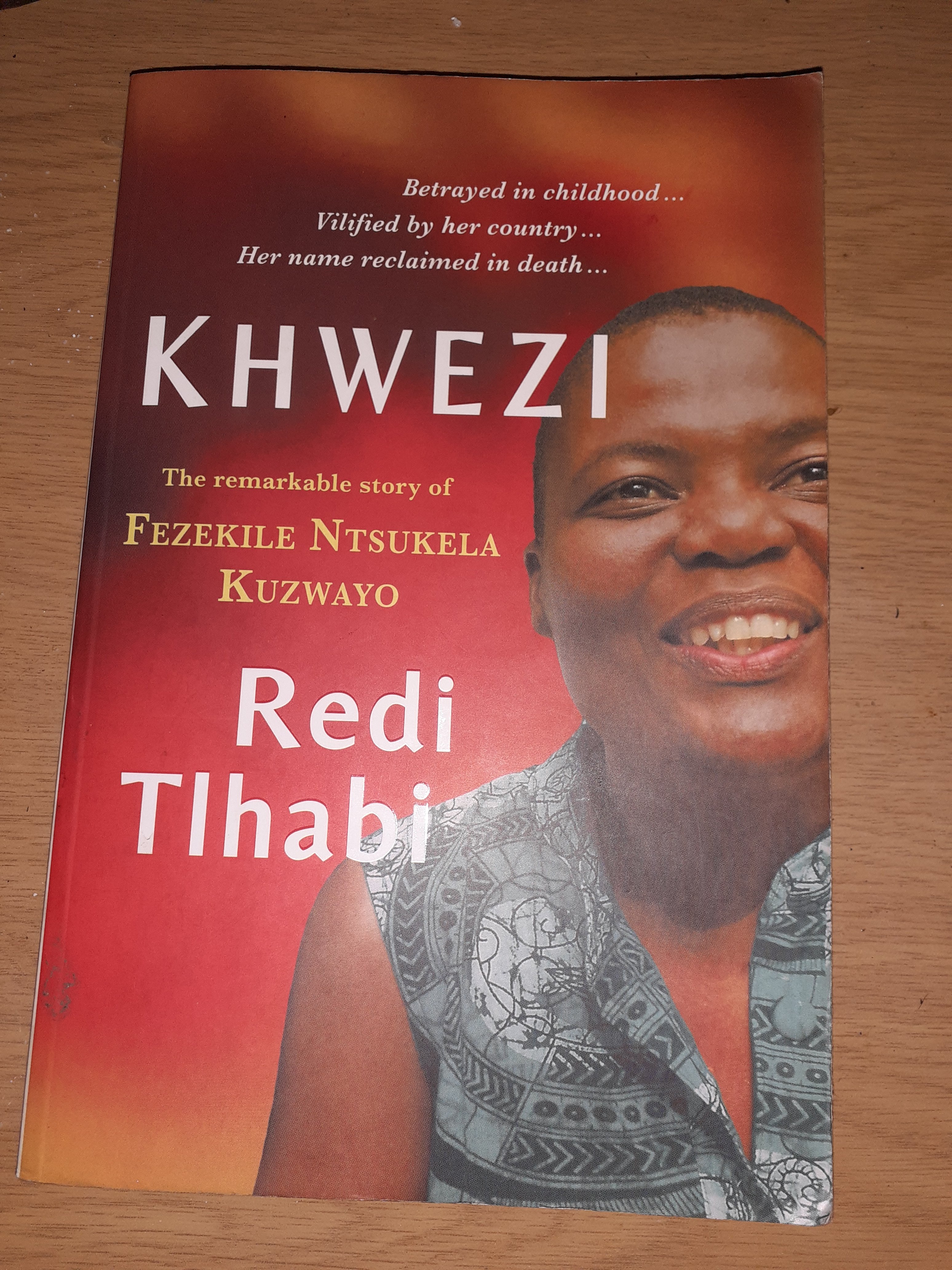
The book KHWEZI by seasoned journalist and broadcaster Redi Tlhabi was meant to be an examination of the power imbalances that underpin sexual abuses, with the story of Fezekile Ntsukela Kuzwayo and the 2006 rape trial against former President Jacob Zuma as a case study. It was meant to be a book that was as much about the general as it was about the particular. However, the spotlight was squarely on Kuzwayo, the woman formerly known as “Khwezi” as a way to conceal her identity.
This was for the best.
Fezekile Ntsukela Kuzwayo’s life was intertwined with the dominant themes of this book. She lived in exile at a young age – a site of sexual violence against women and children, including Fezekile herself. She was raped by one of the most powerful men in the country; a country that has shockingly high rates of sexual violence. She struggled to find herself after the trial that revealed bare the ugliness of South Africa’s collective consciousness. She died as a woman who never found peace in this lifetime, highlighting the effects of sexual trauma on a person’s psyche.
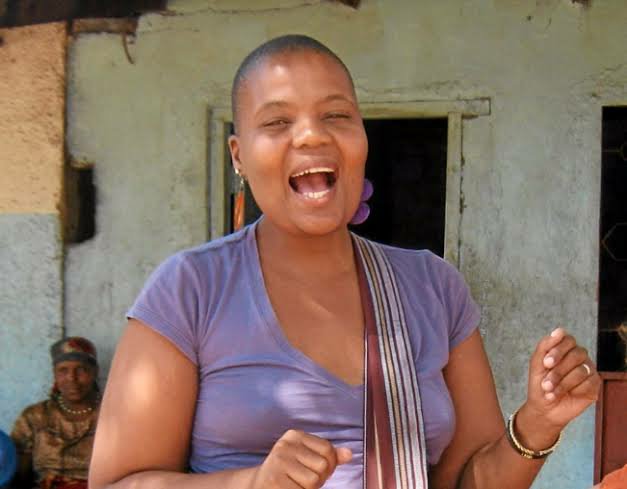
Because of this, she was the book. Tlhabi used her life story to speak into tough questions: why is sexual violence so prevalent in South Africa? What is the role of the law in administering justice to victims and survivors of rape? How does such a violent act impact the person who has to live in the crime scene, every day of their life?
Tlhabi writes that “this book is neither an exhaustive nor an authoritative account of Fezekile’s life” on page 96. The disclaimer, however warranted it was, would come to mean so little. While books detailing the Zuma rape trial and Fezekile’s life, existed prior to Tlhabi’s attempt, it is this book that is the most famous and noteworthy. This was probably because KHWEZI was the last (and, to my knowledge, only comprehensive) book project that Fezekile contributed to before her untimely passing in October 2016.
As previously mentioned, the story begins in exile with a brief biography of a freedom fighter named Judson Kuzwayo. His apparently accidental death had a negative impact on his wife and young daughter, who we know was Fezekile. A self-professed “daddy’s girl”, she saw Kuzwayo through heroic-tinted glasses, and that bled into how she saw his closest friends. Enter one Jacob Zuma.
Before Tlhabi delves deep into the fateful events occuring in November 2005, she lays out the scene. She writes about how the community of freedom fighters was also home to sexual violence as a perverted way to reclaim the masculinity never afforded to them by the apartheid government. She also brings us into the practice of jackrolling in the 1980s, which consisted of young men abducting girls in order to rape them. She also links this to the disintegration of societal norms, triggered by the constant presence of the army and police in South African townships. In short, apartheid may not excuse the war on women’s bodies, but it sure as hell explains it. In two particularly haunting lines, she writes that “sexual violence was part of the DNA of the struggle. It is in society’s DNA today” (p. 63).
In such a setting, with such characters, was this sort of incident not (eerily) inevitable?
In recounting that night (in particular, Fezekile’s idiosyncrasies and Zuma’s decision to prey upon her based upon them), Tlhabi makes important points about culture, trauma, patriarchy, and how all these coalesced into a woman raped by a man she perceived as a father figure.
The act of rape itself is a horrifying sort of violence. However, the darkest part of the book came as Zuma’s power and influence surrounded every aspect of Fezekile’s life as the case went to trial. By the first day of trial, Fezekile was battling seemingly the entire world, unequipped.
The trial itself was where Tlhabi shines the most, with crucial details of the trial interspersed with expertly-crafted contextualization that was seemingly absent during court proceedings. In every sense, Zuma was found to be morally bankrupt. It is, then, a reflection on a society that cares very little about sexual violence that could later propel such a man to the presidency.
I ended up rethinking the role of the law in bringing justice to perpetrators of rape. How can a fundamentally flawed and one-sided system work for the average person? How does an institution that privileges reason and rubbishes emotion adjudicate over a largely emotional crime? Those questions continue to haunt me after I read the final page.
Tlhabi then gives an overview of Fezekile’s life and travels after having to leave South Africa in the wake of the trial, which acquitted Zuma and left thousands of his supporters baying for her blood. She and her mother move to Amsterdam, and then later to Dar es Salaam. Permission is eventually sought from Zuma (who had, by then, assumed the presidency) for her and her mother to return to South Africa. In a rare act of magnanimity, he agrees to the request. Understand what I’m saying: Fezekile only returns to her home country because her rapist allowed her to.
Tlhabi sympathetically but honestly tells a story of a woman who was constantly searching for peace; seeking something that may have always eluded her throughout her sad life. This is not to say that she had no good moments – Tlhabi speaks to many of her friends, and paints a picture of a confident, bubbly and kind person who adored her mother. However, the trauma of four rapes in a lifetime, combined with the death of a father she seemed to revere, caught up to her each and every time.
She eventually stopped taking her ARVs – Fezekile was living with HIV – and this would eventually lead to her sickness and eventual death in late 2016. The lack of a “happy ending” makes the book a particularly hard read. For all of the trials and tribulations she underwent, both legal and psychological, Fezekile Ntsukela Kuzwayo was unable to ever reclaim her life, and have even a semblance of a stable existence. Such is the power of trauma.
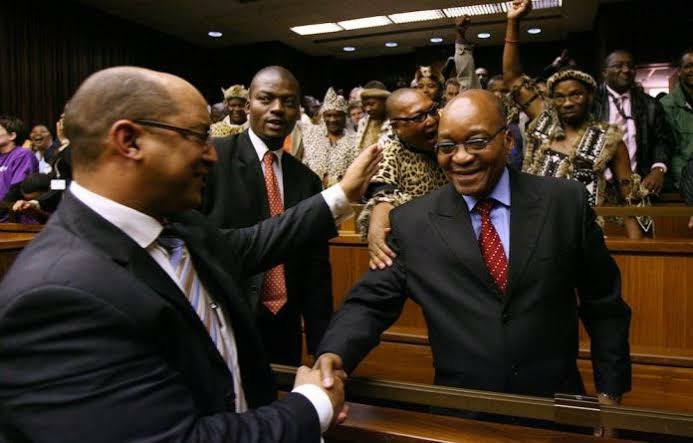
Her rapist, however, used the trial as a rallying tool to argue victimhood. His act of sexual violence did not hold him back in any way. In fact, he became the president of the country, and proceeded to hold the position for almost a decade. Why was that?
Was it his stature as the then-former Deputy President and accomplished freedom fighter that insulated him from consequences? Or was it much simpler than that? Was it because he was a man that he was allowed to walk away unscathed from a rape trial that would have left his reputation in tatters, in any society that truly cared about women’s bodies?
The truth is probably somewhere in the middle, as with most things. It is, however, a pity that the truth could only accommodate Fezekile after her death. Yet, it was a story that was begging to be told. It was a narrative that required recounting, in all its messy and dark totality. And as a nation, we express gratitude to Tlhabi – and Fezekile – for giving us this gift of a book.
This is because sexual violence is still a major problem in South Africa. Femicide (and the entire war on women’s bodies) predates COVID-19 as the country’s original pandemic. To find an antidote for this social ill, we will need deep examinations and genealogies of this particular pandemic. Whenever it is we hope to rid ourselves of this disease, KHWEZI will be waiting as a resource, ready for us to face the dark truths for which we aren’t ready.
 wiseMusings
Leave a comment