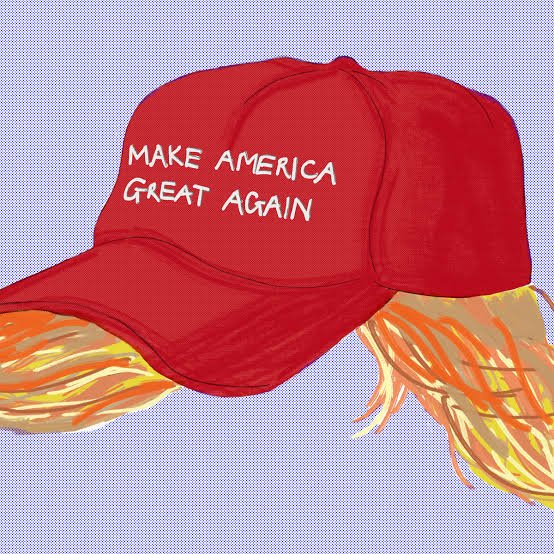
Dozens upon dozens of political analysis books have been written about the rise of Donald Trump to the U.S presidency, the referendum that led to Brexit, and more generally, the rise of populist leaders around the world. These books (some of them more than others) are compelling works of non-fiction, successfully documenting every event and the reaction of the population to each event.
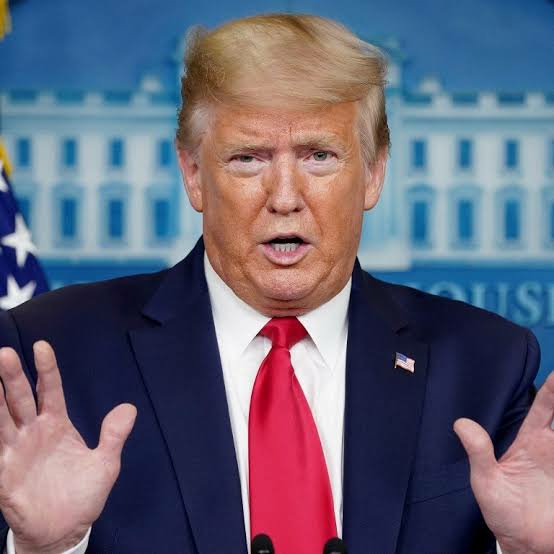
The question to be asked, more than any other, is – can we generalise? Is there a common denominator in all of these countries that has directly led to populist leaders assuming power?
I believe that there is.
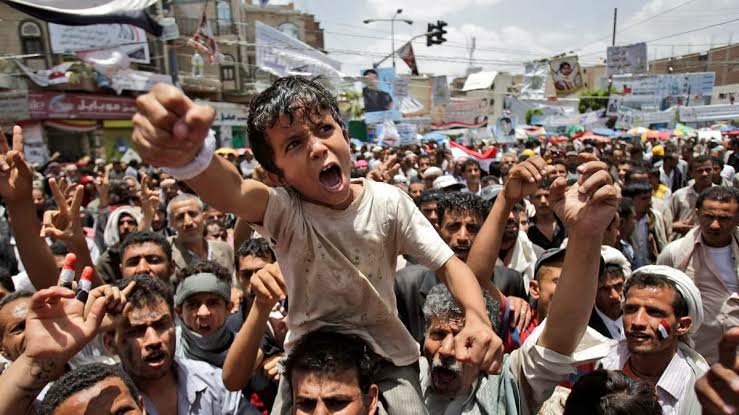
Simply put – there has been an erosion of trust in politics and politicians that has been slowly but surely building to a fever pitch. The Arab Spring in 2011 – which was a series of rebellions beginning in Tunisia against oppressive regimes – was seen as the template for what the fever pitch would look like. In other words, it was widely believed that in response to a lack of political will, citizens would erupt in revolution and dismantle the political structure by sheer force of numbers.
However, things have not quite turned out that way. Instead, politicians have taken the discontent of the populace and used it to rally a base. Populist politicians have framed themselves as being separate from the political system, and as being for “the people” in ways that so-called “establishment politicians” are not. This gives them a sort of legitimacy that career politicians do not enjoy.
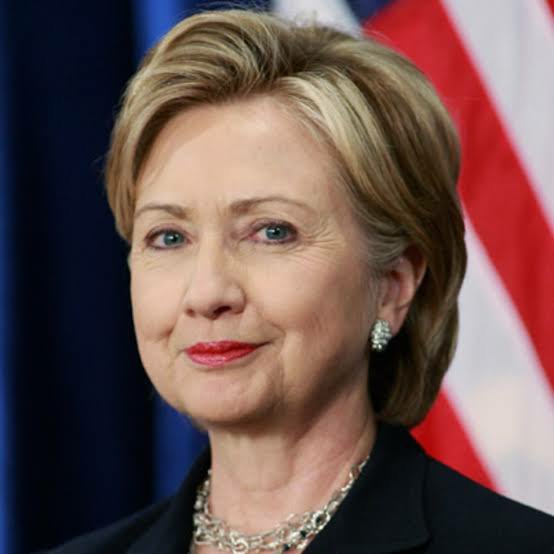
For instance, Donald Trump had never served in politics before running for President of the United States. This was seen by many political analysts as a disadvantage, as his Democrat opponent Hillary Clinton had a wealth of experience in U.S politics. For many, it was a no-brainer.
What they didn’t consider was that Trump’s inexperience was actually an advantage. He was not “soiled” by “the establishment”. He could see things from the average person’s perspective (well, as much as a rich celebrity can). He could play outside of the fence because of this. He could play to the anxieties and worries of white Americans who felt their position in society diminishing. He could be openly racist, sexist, and ableist because he had no political training.
And to be honest? He didn’t need it.
What Trump lacked in political experience, he made up for in his ability to “tell it like it is”. This endeared him to people who felt that he was truthful in his assertions. It also gave them hope that since he wasn’t part of the establishment, he wouldn’t do them dirty like other politicians had done in the past. He’d be focused on the nitty-gritty.
This is why the distaste that even other Republicans had towards him did not sway the people who were in his corner. In fact, it entrenched them even further into his corner. “He was the thorn in the establishment’s side! He was playing 3D chess while others were playing checkers!”
Because of all of these sentiments, Trump was always going to be U.S president. If not him, somebody else playing his game would have struck gold.
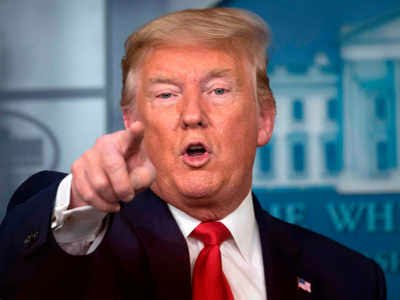
It’s a winning formula. In a country filled with political disillusionment, just come in (from another field) and appeal to the electorate’s worst instincts. Sow division and hatred among groups of people, and if you’re really looking for effectiveness, have one specific group that you demonize and degrade everytime you receive a platform.
Couch your rhetoric under “just being concerned about our country”, all the while knowing that your increasingly growing base will hear the dog-whistle and react accordingly. Promise the citizens the moon and the stars, even when you know you’re unlikely to achieve those goals.
Isolate yourself from career politicians as much as possible. Say you want “new blood in politics”. Get as many people who will toe the party line as possible, and put them on your team. Be loud. Be brash. Get as many newspaper front pages as you possibly can, because even when they’re reading you for filth, they’re giving you publicity and making you a martyr in front of your fans.
Stick to your formula, and reap the rewards.
What is interesting to me is that we almost have a figure that compares to Trump in South Africa.
His name is Julius Malema.
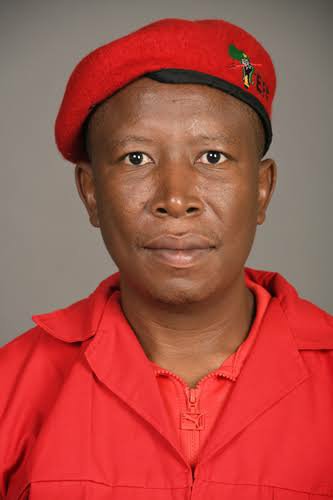
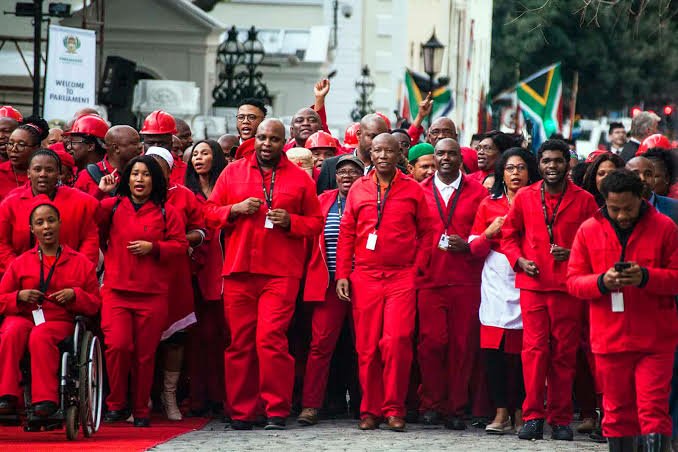
The Economic Freedom Fighters (EFF) is a party that can be best described as “controversial”. That adjective has less to do with the political ideology of the EFF as a “Marxist-Leninist party”, and more to do with the person of its leader (or Commander-In-Chief) Julius Malema.
Malema made his name in the late 2000s as a fervent supporter of then-President Jacob Zuma, and as leader of the African National Congress (ANC) Youth League. His expulsion from the party in 2012 led to a brief hiatus from political discourse, before coming back as leader of a party said to be for poor and working-class black South Africans in the EFF in 2013.
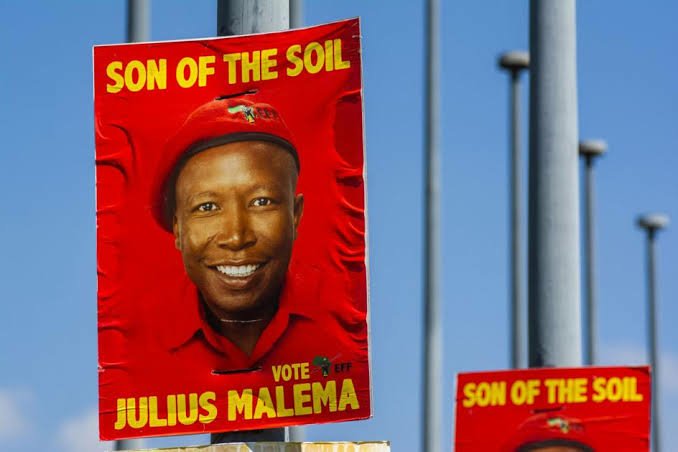
The EFF has been very successful for a party its age, amassing 10% of the vote in the national elections last year. Most of this can be attributed to Julius Malema, and his ability to attract attention towards any issue he sets his sights on, be it land expropriation without compensation or the infamous “pay back the money” slogan aimed towards now-enemy Jacob Zuma for his Nkandla homestead renovations. This (along with EFF election posters that had Malema’s face and the phrase “Son of the Soil”) have led to claims that the party is constructed around Malema, and has significantly less power without him – a winning formula for the populist project.
I am not privy to conversations within the EFF. Therefore, I cannot say the following with any certainty. But politics is a game of perception above all, and the image of something wins out over the reality. Therefore, it almost doesn’t matter what the truth is. What only matters is what people believe the truth is.
What I believe the truth to be, regarding Julius Malema and his prospects of being an ideologue in the ilk of Trump and Britain Prime Minister Boris Johnson, is that his chances are good, but not quite sufficient to grab the mantle here in South Africa.
His greatest strength is also his biggest weakness. Julius Malema is a masterful politician. Obfuscation and derailment are tactics he effectively, and skillfully, uses. As someone who sat under the learning tree of another masterful politician in Jacob Zuma, Malema has crafted a persona of himself that is undeniably appealing to his base of poor and working-class black people.
The Clicks incident, and the H&M incident before it, highlight the extent to which the party has absorbed his public persona: abrasive, unapologetic, and disruptive.
And that’s part of the problem.
The EFF is too much of a well-oiled machine in the South African political system. It is adept at creating a performance of solidarity with the people it claims to represent – so much so that we all know that the party is at least, in part, performing for the cameras.
That comes with Malema’s extensive career in politics; that comes with his time as part of the establishment.
And you can only guess how an electorate that is anti-establishment will respond to this.
Malema’s greatest flaw isn’t that he’s a bad politician. It is that he is too good of a politician. He knows that the role of his party in the national discourse, for at least the next few years, is that of kingmaker. He knows that the best-case scenario for him in the 2024 national elections is for the ANC not to win a majority, and for him to enter a coalition with uKhongolose so as to control the levers of power.
He knows that a 20% share of the national vote is unlikely in 2024 – that being the vote range of the official opposition, the Democratic Alliance (DA). He knows that his ability to garner extensive media coverage will not lead him to the Union Buildings a la Donald Trump.
Is that because of Malema’s status as an ex-ANC member? Is it due to South Africans agreeing with his message, but not the person delivering it? Is the socialism of the EFF the turning point? Is it caused by the electorate being way too conservative to make a sudden shift from the ANC?
All these, to some extent, can explain why the EFF is unlikely to win the presidency in just three elections.
However, as far as I am concerned, the biggest reason is that Malema isn’t anti-politics enough. This is because Malema is invested in the political system working as it currently does. He has something to lose if South African politics losing relevance: his MP benefits, the status that comes with leading the third-biggest political party in the country, his proximity to influential people, and so much more.
This means that Malema can be populist, but only to a certain degree. He can incite hatred against certain individuals, but must toe the line in order not to make it too explicit. That limits his potential as a populist leader who will skyrocket his way into either the official opposition or the presidency, no matter how much he can galvanize his supporters around a particular topic.
People will call on him and his party whenever a company has expressed racism in its adverts. He’ll receive lots of praise and support on social media. But when votes are casted, the very same people will remember that Malema is a part of the establishment and will place their vote somewhere else.
That means that there is an ever-widening gap for a populist party in South Africa, despite the repeated attempts of Julius Malema to fill that gap.
And do you know who looks likely to fill it?
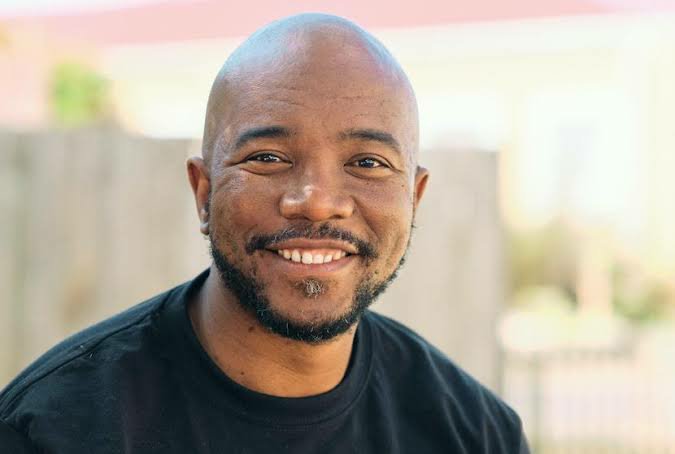
Hahahahaha. I’m just kidding.
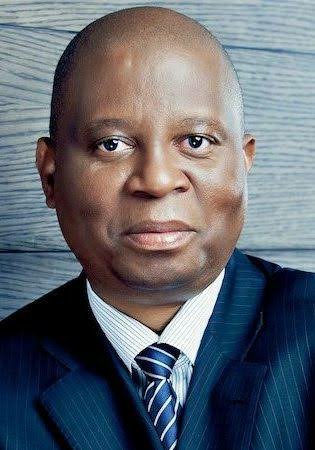
Herman Mashaba is a businessman. Herman Mashaba had what seems to be a successful stint as Mayor of Johannesburg. Herman Mashaba left the DA on very bad terms (and his chief of staff while mayor, Michael Beaumont, wrote a book that paints the DA in very negative terms while portraying Herman in very flattering terms). Herman Mashaba has also expressed very xenophobic views, which have given him lots of support among black South Africans.
That means Herman has the “outsider view” that places him almost outside of politics in a way that Malema could not create for himself. That means that Herman, when campaigning, will not be saddled with the seemingly pejorative term of “just another politician.” That gives him a leg up. Also, his battle with the DA, which is generally disliked by the black population at large, adds some advantages his way. Lastly, he has an outgroup from which he can rally against, and attempt to bring people in to oppose.
How about that?
His new political party, Action SA, seems to be founded upon free market principles, which might make him attractive to what is usually called “white monopoly capital”. But as Trump the businessman has proven, that does not make a populist explosion any less likely.

Is Herman Mashaba on course to begin a populist uprising in South Africa? Time will tell. His party is officially less than three months old, at the time I write this.
However, if anybody has all the elements required to game the system and appeal to the millions of South Africans disillusioned with politics as it currently stands, it is Herman Mashaba.
Only you can decide whether that’s for better or for worse.
 wiseMusings
Leave a comment