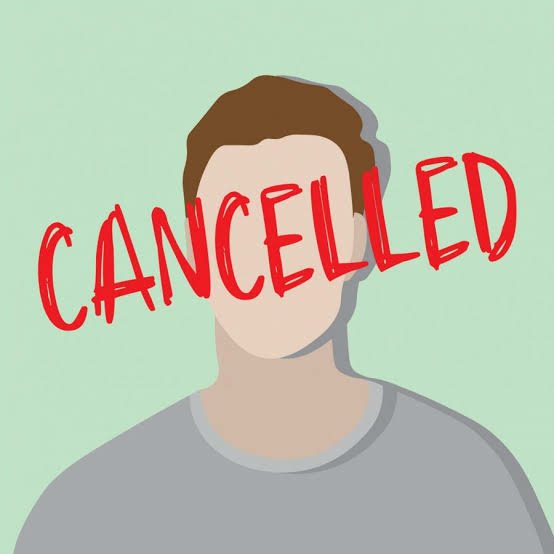
This is part 1 of a 2-part series attempting to deconstruct “cancel culture.” Part 1 will focus on identifying the nature of cancel culture, and if it truly exists or not. Part 2 will focus on the problems surrounding online discourse, and how we can create a better online environment.
What kind of cancellations create a culture?
This is the question that I have been asking myself, with regards to the supposedly-new concept known as “cancel culture.”
To the uninitiated, cancel culture is the idea that What’s Called Political Correctness – the policing of people’s speech and forcing them to use euphemisms instead of being direct – is the social law of the land. If you do not adhere to the rules set by What’s Called Political Correctness, then you are “cancelled.”
You are lambasted on the Internet, people contact your workplace and get you fired from your job, and you are basically left with a tattered reputation. All because you decided to express yourself, while ignoring the idea of What’s Called Political Correctness. This behaviour has become so normalized that it is now a part of our culture to demonise people with differing views to yours. Hence the term “cancel culture”.
That is the distilled version of “cancel culture.” And the mere fact that I’ve put it in inverted commas should indicate what I think about the concept.
I think it is false. I think it is non-existent. More importantly, I think it is ideologically motivated.
And here’s why I think that:
What’s Called Political Correctness is simply an attempt to create
inclusive language, and a vocabulary that invites people who’ve often been rendered invisible, or explicitly dehumanised.
The fact that the word “kaffir” isn’t seen as a socially acceptable word to use has very little to do with What’s Called Political Correctness. In other words, the word is unacceptable not necessarily because we want to project an image of purity. The word is unacceptable because it is a derogatory term that was used to describe black South Africans in ways that stripped them of their humanity.
So, our non-use of the word is an extension of an olive branch towards black South Africans. It is to show them that we do not think of them in derogatory terms. We do not wish to strip them of their humanity.
The same can be said about the term “people living with disabilities.” We use this term instead of the term “disabled people”, because we want to emphasize their humanity. Their humanity must come before their disability. Using “disabled” as an adjective seems harmless. But it implies that Person X can only be known through their wheelchair, or their guide dog, or any other marker that seems to indicate disability.
Using the term “people living with disabilities” does two things. It reminds you that the person being mentioned is, indeed, a person. Secondly, it sends a message that the disability is incidental to the person. They live with the disability. They are not the disability, itself. And so, they must not be described, simply in that way.
Our use of this term is a way to emphasize the person’s humanity beyond the disability that they live with, just as our non-use of the word “kaffir” is a way to emphasize the person’s humanity beyond the derogatory beliefs that correspond with the term.

Unfortunately, those attempts to emphasize the humanity of previously (and still) marginalised communities are seen as somehow wrong. The reason for this almost always boils down to “free speech! People have the right to be assholes!”
This is true. People do have the right to be assholes.
But they do not have the right to get universal approval for their views. They do not have the right to be free from criticism.
And, in my view, that criticism would be warranted. Language is political, social and cultural (just as everything else is, really). Words aren’t just words. They signify things. They create reality, for all of us. Whether it is the words in the Bible or the words spoken by your mother when she’s shouting at you, words affect the way we see ourselves, and the world.
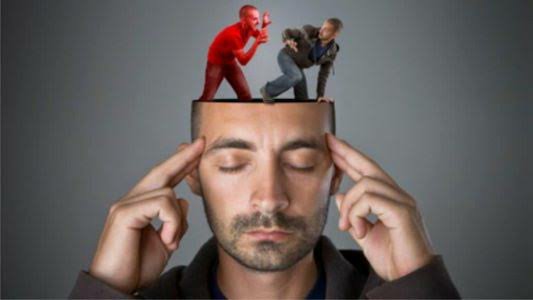
In that context – if you use the word “isitabane” (a Nguni word that is used to derogatorily describe queer people/members of the LGBTQ+ community), then you are saying something about yourself, and your worldview. You are saying that you see queer people in derogatory ways.
And like I said, nothing in our Constitution prevents you from doing so. But when your reality conflicts with the reality that we are collectively trying to create – a reality that empowers and affirms the humanity of queer people rather than delegitimizes it – then you’ll be met with a pushback.
It’s not all that different from how women who identified themselves as “feminists” were at odds with the then-socially accepted reality of male dominance. They paid the price for their opposition to conventional social norms.
So, for those who would ask “so what happens when it happens to people you do agree with?”, my answer is that it’s been happening since the dawn of humankind to people I agree with.
It just seems like an all-out attack because groups that set the cultural norms are now largely on the backfoot.
How that pushback manifests itself is another bone of contention.
For me, I have gone back and forth on the existence of “cancel culture”, because I could not quite answer one question: what constitutes being “cancelled”?
When studying famous people who have been accused of being “cancelled”, and what they identify as “cancellation”, one commonality springs up.
Nasty tweets on the Internet.
Now, I don’t want this to be perceived as a minimization of online bullying. I have mental health issues. They would most likely be exarcebated if I got millions of people on Twitter telling me to kill myself. And so, I can understand how being at the centre of such public criticism is not a nice thing.
However, I want to separate online bullying from a loss in influence, and a damaged reputation. Online bullying is done by angry people who want to lash out at a person who they feel did them wrong (I’ll expand on this in part 2).
Meanwhile, a damaged reputation is self-inflicted. If you say, or do something wrong, then people will respond negatively to that. That’s not their fault. It’s yours, for having committed a wrongdoing.
The ethics of how they respond can be debated, sure. But the fact that there is a negative response at all is a good thing. If you do something wrong, then accountability has to be taken for those actions.
“Does that accountability have to lead to me losing my job?”, you ask.
“Maybe it does”, I answer.
Like I said earlier, words aren’t just spoken (or Tweeted) in a vacuum. They affect people. And if the words are representative of hatred and refusing to acknowledge the humanity of another, then you’re damaging people.
Because of your privilege relative to the group you’re denigrating, you can Tweet something anti-Semitic, for instance, and go on with your day.
Not so for the folks who might not only be negatively affected by your words, but by the folks who’ll agree with you, and use that as a call to action.
Your words have power. And if you’re using them to make other people’s lives less secure, then maybe you, too, need to understand what it is like to be less secure. In this sense, financially.
Morally, the retributive model of justice has its detractors. But I believe that it can be useful, in certain cases.
If you have no issues desecrating the humanity of another human being, then you should have no issues receiving the same treatment. If you take my humanity for granted, then I’ll take your humanity, as a person who needs to feed their family, for granted, as well.
Does that mean you can’t “speak your mind”? No, it doesn’t. Say whatever is on your mind. Just don’t use your influence, as a human being who has relationships with other people, to put down the dignity and humanity of others.
But here’s the funny thing. Here’s my main problem with the concept of “cancel culture”: privileged, rich people complain about “cancel culture” affecting them too. Louder than most people, in fact, because they have platforms to do so.
For example, J.K Rowling will complain about “cancel culture”, even though she recently published a book which further perpetuates transphobic stereotypes. She writes open letters complaining about the toxic “cancel culture” that exists. Those letters get a fair amount of media coverage.
What reputational harm did Rowling obtain? The anger of upset fans? Did she truly believe that espousing transphobic views would not alienate trans people who loved the Harry Potter books and movies?
And if she did open herself up to that possibility (and it was there, whether she was aware of it or not), then who’s to blame for her reputational damage – which she probably won’t even feel, financially? Is it people reacting negatively to a bigoted opinion, or is it the person who expressed the bigoted opinion?
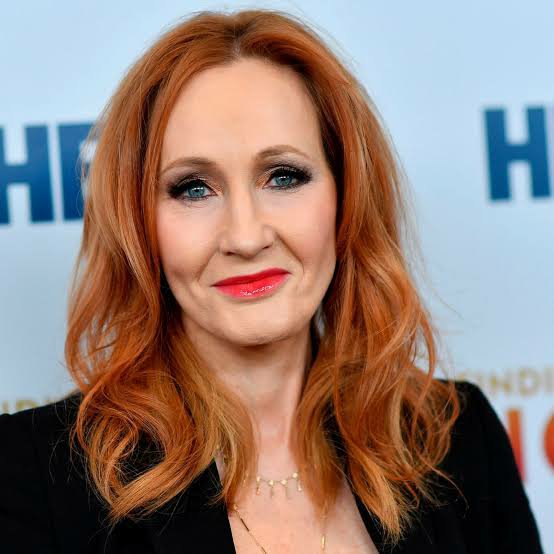
That’s my main problem with the Quillette gang. They mark negative reactions to their foolish views as a seismic event; one that changed the course of their lives and took them from rich, beloved megastars to being reliant on social welfare.
The very existence of Quillette – a platform that almost exclusively amplifies the views of the J.K Rowlings of the world – is enough to disregard the claims that “cancel culture”, to the extent that it exists, ruins careers.
The very fact that Donald Trump became the President of the United States of America, amidst criticism from every corner over his bigotry, is enough of a metaphorical fly in the ointment.
I could name so many other examples, but the point is this – the idea of “cancel culture” is used as a tool to signal opposition to progressive politics. A narrative has been constructed that portrays rich, famous and privileged people as victims of a vengeful mob who smell blood.
And as they rack up book deals, television appearances, and other deals that give them a platform – they refute the very point they are trying to make.
But it almost doesn’t matter. The point is not to say something true. The point is to play to people’s fears that the world as they know it is disappearing. It is to stoke their deepest insecurities, and to pivot them towards backlash rather than building a shared future in which we all can equally inhabit.
If you can tell a person “you can’t say anything anymore. If you say something they disagree with, they’ll ruin your life! Look at me!”, then you’ve manipulated them into believing that those who march towards progress are antagonistic towards free speech.
At best, that’s a misunderstanding of progressive politics. At worst, that’s a lie used to recruit people into an anti-progressive crusade.
With that discovery, I answered my initial question of what kinds of cancellations create a culture.
The answer is that cancelling a rich and famous person from the books of universal likability create a culture that attacks vulnerable groups as a method of revenge.
But rich and famous people aren’t the only groups of people who complain about “cancel culture.” Even people who identify as progressive use the term, and like the right, they also caution against “cancel culture.”
What causes this? Could they be talking about something else, instead? What are the dynamics that are in play when progressive people disagree with each other? Is there a way to reconcile our differences in a non-retributive fashion?
All of these questions, and more, will be addressed in part 2 of the two-part series “Deconstructing Cancel Culture.”
Until then, thank you for reading. I’ll catch you back here on wiseMusings for part 2 of “Deconstructing Cancel Culture”, very soon.
 wiseMusings
Leave a comment