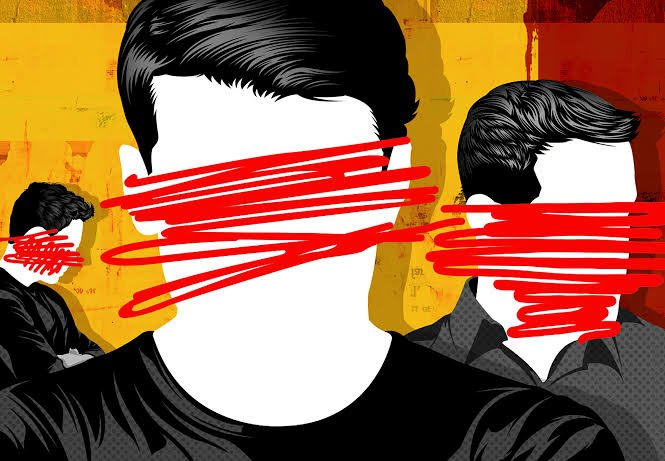
This is part 2 of a 2-part series attempting to deconstruct “cancel culture.” Part 1 will focus on identifying the nature of cancel culture, and if it truly exists or not. Part 2 will focus on the problems surrounding online discourse, and how we can create a better online environment.
In part 1 of the “Deconstructing Cancel Culture” series, I explained that the idea of “cancel culture” was an ideological attempt to push back against progressive politics by weaponizing free speech. In that sense, I concluded that cancel culture was, and is, non-existent.
I do still believe that. However, that does not mean that all is well, in the way that we interact with others online.
Instead of there being a “cancel culture”, I believe that there is a “call-out culture”, instead. It is different from the concept of “cancel culture”, in that it is not focused on the person on the receiving end of online criticism. Rather, it focuses on the people doing the critiquing, and why they do so.
In its most ideal form, calling a person out on social media networks, particularly on Twitter, is meant to correct them on their less-than-progressive statements. It is to inform them of the context that the person may be missing. So, in that sense, the people who call out are performing an educational role: they are literally fact-checking a piece of information given in an ill-informed (or “problematic”, in leftist discourse) social media post.
This would fit in with the purported ideal of progressive politics. It is to re-orient our culture to be one that encourages co-operation and community.

But as we all know, things have not quite turned out that way.
Instead, what call-out culture has done is that it has created an almost vampiric tendency to completely put down people who hold problematic views. It seems as if we have not collectively mastered the art of rightly holding people accountable for their views, without being callous and cut-throat in the way we hold them accountable.
The very nature of Twitter – which promotes the very opposite of deep and nuanced thinking, but instead rewards quick but effective shaming – does not help matters, either.
And the sad part is that using shame and mockery as a political tool can be effective, in some instances. Imagine Coconut Kelz (a satiric character played by Lesego Tlhabi) appropriating the language of Helen Zille and other self-styled white liberals to tease out the subtle, but visible, racism inherent in some of their thought processes.

However, that’s not what happens on Twitter. We – and I’m including myself, because I’ve been guilty of the same things – don’t think as thoughtfully as Tlhabi does about how to confront bigotry, in the moment.
We see a problematic Tweet. We Quote-Tweet them, rebutting them in the harshest terms. We use that as proof to show how non-problematic we are. And then we move on to the next person, because our work is seemingly done. Lastly, we then wait for the person to take another misstep, only to remind them of their past indiscretions.
It is pixelated self-righteousness.
An entire person with a history, a perspective, a conscience is distilled down to a set of digital words that are probably not the best example of who they are.
And we have to understand what causes that.
One of the causes is, like I mentioned earlier, the nature of Twitter. Twitter is mostly used for quick jokes, aphorisms, and call-outs. To be fair, there are people who do great work on Twitter, creating informative yet nuanced threads that play the educational role that call-outs often try, and fail, at.
But Twitter was not designed for that. Twitter was designed to be quick, easily digestible, and interesting.
Not a good environment to hash out differences without hashing out blows.

Another cause is what author Rekgotsofetse Chikane calls “people politics.” This is where personal differences between individuals are given an ideological smokescreen, so that any criticism of them is deemed acceptable because “they were problematic!”
This means that I can dislike a person for any reason. And then I can wait for them to slip up. When they do, I strike. I tear apart their character. I point out every perceived flaw about them that has ever existed. I do this because now, I finally have the smoking gun I needed. I finally have the justification for assassinating their character. And I take advantage of it, all in the name of “accountability”.
The last cause I’ll address (though this is by no means an exhaustive list) is our ideas of what justice is. We come from a world that is zero-sum in its construction. This leads to us thinking in terms of scarcity – there is only so much of X in the world. X can either belong to you, or it can belong to someone else. Make sure X belongs to you.
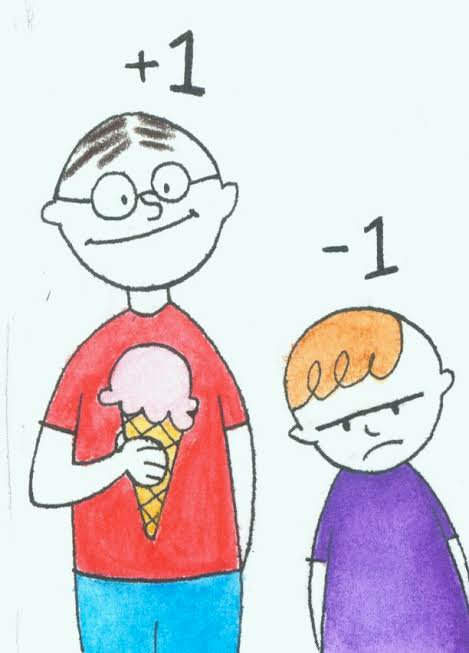
And, in this case, when we solve for X, we find that the X symbolizes virtue. As in, being a good person who cares for others, and who lives in the world with the intent to make it a better place.
We believe that it isn’t in human nature to be good. We believe that we cannot all be virtuous. Depending on your worldview, that can either be true or false. It’s what follows that is insidious.
The idea that follows is that virtue can either belong to you, or it can belong to someone else. So our task – our way of proving that we are virtuous – is to show that as many people as possible are not.
That is at the core of the term “virtue-signalling.” Yes, this word has been co-opted by people who are resistant to progressive politics. In fact, the only time I have ever seen this term used is by white conservatives labeling white progressives with it.
I guess that can be one interpretation of the term. But that’s not what I’m trying to get at here. I’m not saying that virtue-signalling (or call-outs, for that matter) is inherently bad. Knowing that you are a good person, and showing that by your words and deeds, is a good thing. We must just be careful that the process of doing so does not lead to us having to knock others down in order to propel ourselves up.
I’m not blind to the rationale that has often been espoused as a response to this. I gave a version of this argument in part 1. It is that people who hold problematic views are disturbing the reality that we are trying to build – one that is inclusive and one that empowers everybody. Therefore, it is okay to retaliate against them in order to give them a taste of what marginalised groups go through, on a daily basis.
I used this argument in part 1, so I clearly think that there is some truth to that. There are instances when retributive justice is justified. But it is contextual. It’s not a one-size-fits-all answer. And oftentimes, I sense that retribution is used in exactly that way.
A person whose Twitter account you’ve never seen before will tweet something sexist, or ableist, or homophobic, or any other form of prejudice. Then I, with my hubris, will share that tweet, with a comment that is more insulting than it is educational.
How is that helpful?
Maybe it’s letting off steam. Maybe it’s showing others that openly naked prejudice – or even the formally dressed variety, for that matter – cannot be tolerated. And in some instances, that might be a good position to hold.
It might be a good position to hold when seeing a tweet by a Donald Trump (which you won’t, anymore, thank goodness), an Unathi Kwaza, or a Steve Hofmeyr. It might be good for people who are unrepentantly bigoted, and who clearly have been taught better but have decided to set their roots down in Bigotry Lane.
It might not be so good for someone whose perspective you know nothing about, except for one tweet. Various things aren’t taken into account: the fact that nobody was born “woke”, so to speak; the fact that we all engage in problematic behaviours and hold problematic views; the fact that we’d like to be handled with generosity and compassion, while being held accountable and being shown that our behaviour is harmful and needs to change; and the fact that we’re not all wordsmiths, and that a point can mean to say A but be read by another person as B.
As a culture, we need to change that. The days of attacking an individual we do not know for clout must come to an end.
I’m sure there are some people who will wonder, “but aren’t you saying the very same things about online shaming that the “cancel culture” camp is saying? So, then, aren’t you lying when you say “cancel culture doesn’t exist”?”
My answer is that I distinguish between call-out culture and “cancel culture” in focus. With “cancel culture”, the takeaway is that people’s reputations and lives are being ruined because of a fixation on What’s Called Political Correctness. In part 1, I argued that to be a falsehood.
My focus, when it comes to call-out culture, is that individuals are engaging in extremely volatile behaviour fuelled by the Twitter algorithm, personal differences turning ideological, and (intended or unintended) virtue-signalling gone rogue.
In other words, it’s not really about the victim (although they might face a considerable amount of online abuse, and that mustn’t be forgotten). It is about the perpetrators, and the lack of generosity that they display when attempting to do something that, on the face of it, seems generous.
Oddly enough, because of the toxic online culture that we are creating, it is inevitable that the perpetrator will one day be the victim. The person calling out others for their bullshit will one day be the one called out for their bullshit.
And how would we want others to respond?
For starters, I would highly recommend the “calling-in” approach used by the LGBTQ+ media advocacy organisation Iranti when entertainer Zodwa Wabantu made homophobic comments on her television show. To my understanding, they went to her house. They sat her down, and explained to her, step by step, why her comments were wrong. She seemed to be very responsive to that.
I’d like to see a lot more of that. Obviously, I do not mean that a group of strangers I only know on Twitter must organize to come to my place of residence to educate me. For me, calling-in, in the social media context, means sending me a Direct Message or a comment under my problematic post that explains to me how I might have messed up in my thinking, with generosity and a willingness to understand that these views might be a lapse in my thinking rather than the essence of my being.
It doesn’t even have to be a transcript of a speech, in length. One can simply provide a link to an article that explains why my views are incorrect. Luckily, there are dozens of explainer articles (or even books) that deconstruct, and demolish, bigoted talking points.
Yes, it is not your obligation to educate the person. Yes, Google should be our friend.

But I’m not entirely convinced that after I’ve been raked over the coals over a bad tweet, I’ll go onto Google to educate myself over what my lapse in judgment was. For me, and I assume a lot of people as well, shame has never led to a substantial behaviour change past the age of 10 years.
Instead, I’m more likely to dig in my heels, and my problematic belief will be reinforced. And when I spew that very same opinion next time, you’ll invoke the Maya Angelou quote “when someone shows who they are the first time, believe them” instead of opening yourself up to the possibility that I am capable of being educated into a better way of thinking. I just won’t come to it via condescension and insults.
And if anybody’s goal is to educate, maybe a generosity-based approach is a good one to take. At least, as a starting point. After all, you attract more bees with honey than with vinegar.
But what happens if the person is nonresponsive to being called in? What if they continue to broadcast bigotry on their timelines?
Then you have the option to unfriend, report, and block the person, all of which I strongly suggest you do. Also, the writer Brianna Wiest once suggested this: whenever someone tweets something negative about a group, tweet something positive about that group without referencing the hateful tweet in any way.
For example, if you tweet something homophobic, then I should tweet something that empowers and supports the queer community. I shouldn’t reference your tweet at all. I shouldn’t share it, talk about it in my tweet, or anything like that.
In that way, I do two things. Firstly, I make sure that your bigotry is turned into a seed for a more positive contribution to the lives of queer people. I effectively take away the effectiveness of your tweet by adding value to the group you were trying to downrank.

Secondly, I don’t give your words any leverage, or power, to affect others. By not sharing your post, or by not engaging in it outright, I rob you of the most important currency in social media – attention. And even worse for you, I took your egocentric bid for attention at the expense of others, and I used it as an opportunity to empower the very people you sought to put down.
Lastly, we must use our discretion when handling online disagreements. In some instances (when your goal is not to educate the person behind a bigoted tweet, but to educate the public-at-large), it is okay to share the tweet, and provide information that directly contradicts the tweet.
In some instances (when your goal is to educate the person), it is best to use calling-in, as a strategy.
In other instances (where you are upset at the bigotry and don’t want to educate anyone), the option that does the most good is to report the tweet, block the person, and then counter the bigotry with a positive contribution to the affected group.
We live in a complex society where things are not black-and-white, some of the time. Call-out culture was an attempt to make things clearer; to separate the wheat from the chaff, so to speak.
However, multiple forces have muddied the water, and led to a method of online discourse that exhibits a fair amount of fear and trepidation.
Luckily, we can change this. In fact, if there is any lasting lesson we can take from the advent of call-out culture, or even “cancel culture”, it is that we are the culture.
We create it. We shape it. We influence it. We own it.
So let’s make a better culture.
 wiseMusings
Leave a comment