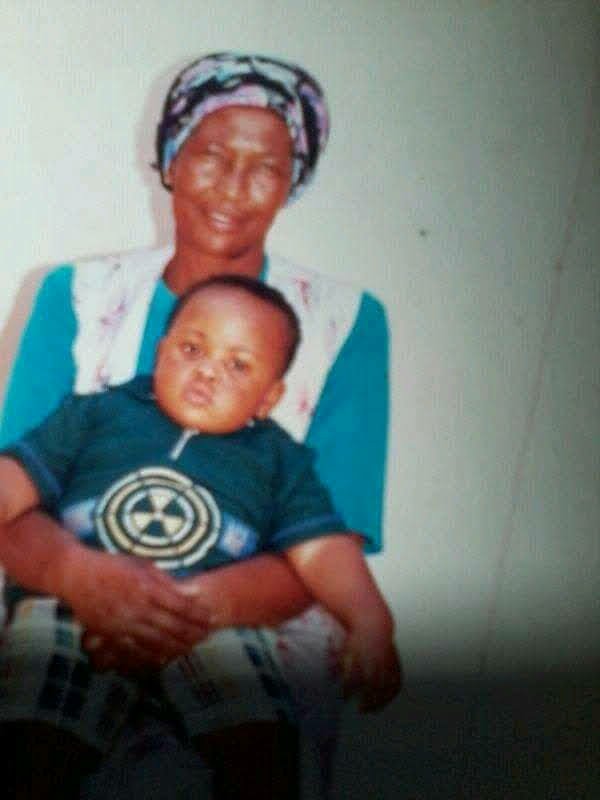
I remember when my grandmother passed away.
She wasn’t at home, so I didn’t see her take her final breath. She was in hospital. She got there after months of being bedridden but refusing to go, until we called an ambulance on her without her consent, and she agreed to go once it arrived.
I remember the day she passed – 25 June 2015.
I was taking a stroll outside the house while my sister’s children, who I was looking after, were either asleep or playing. As I was taking that stroll, I made a mental plan of the remainder of that year.
Gogo would come back around July. At about September, we’d start looking for schools where I could do my Matric (I wasn’t studying at all that year, and thankfully so, in retrospect). We’d find a way to pull through, just as we were doing in the wake of Gramp’s – my grandfather’s – unexpected death in August the previous year.
My plan was in place… and then my sister came back.
She couldn’t stop crying. She was heavily distressed. I was confused, but I went to Gogo’s room as she summoned me and the kids there. Then she told us the news: uGogo had passed away.
Immediately, I started flashing back to almost every memory I had of her. Those words made me realise that I wouldn’t have any more to add. I was in shock. I didn’t say a thing. I didn’t cry. I just stood there.
Five minutes later, when my sister was sorting out Gogo’s belongings, I watched her for a few seconds. And then I started sobbing uncontrollably. I don’t think I’ve known a greater pain. I don’t think I ever will.
See, Gogo wasn’t just my grandmother. For all intents and purposes, she was my mother.
My biological mother passed away when I was 3 years old. I have no memories of her whatsoever. But my first memory includes Gogo. Gogo was the sun which everything & everyone in my immediate family orbited around.
For her to pass away – when I was 18, when I was effectively a high school dropout, when I had zero prospects for the future and felt like shit on most days – felt like a betrayal. I was mad at her for dying. I wanted her to stay for just a little longer. To see me finish high school, to see me become a university student, to finally get that rolling chair my mother had promised to buy her before her death prevented it.
I wanted her to see that, and for her to have that. But it wasn’t going to happen. And I was upset at her for that (not that it was going to help much, anyway).
As time went on – as I adjusted to the reality of losing my main parental figure – I got better at handling the pain. One thing really motivated that: understanding Gogo’s pain.
It was seeing her as more than “uGogo wami”, but as Thokozile, that made me empathise with her. She was a person who lost her daughter who was seemingly in the prime of her life. A person who lost her husband, someone she had spent decades of her life with, and then having to struggle in poverty and absolute hunger for months after the fact. A person who lived under the mantra of “bekezela”. A person who never cried, who saw emotions as a waste of time, but who was intent on providing for her grandchildren & great-grandchildren. A person who wasn’t always the nicest person, but who made sure we ate as often as she could ensure it.
And when she couldn’t ensure it? She couldn’t.
Losing so many people close to her, and living a life of poverty, couldn’t have been easy for her. No wonder she fell sick. No wonder nothing could really save her.
Once I realised that, I felt something deeper for uGogo than I had often felt while she was still alive. While I saw her as the Final Boss in a video game (the protagonist of the household) in her life, I saw an old woman who was bruised, battered, and ultimately killed by the pain she had no tools to process, in her death. That endeared me to her. In a way, it humanised her. Instead of being this Superwoman who got things done come hell or high water, she was just a person like the rest of us.
I hated myself for that realisation. I felt like an ungrateful brat. I felt selfish. But I was also young. I was naïve.
There was an egocentrism that can only be explained by adolescence. And as I grew up, as I experienced the world without the shelter of Gogo’s presence, I realised that life is oftentimes a jungle. It is a jungle which we’re all thrown into, most times before we’re ready. And we’re expected to know all the secrets, right off the bat. No explanations, no introductions.
Just do. Just be. Just live.
But if your parents brought you up in a certain way, a way that seemed to work for them, then why not follow that way? It’s a good way to deal with your relative powerlessness as a human being living in the world.
Understanding her, in that context, made me admire her for the fortitude she displayed during events that must have torn her heart apart.
It took my father, Solomon, dying for me to realise that my regret, my sadness, my grief, and my attempts to understand these had nothing to do with biology. With Solomon’s death, I initially felt sad but indifference quickly set in. With Gogo, the process was far more protracted and complex.
Why was that? It was because unlike Solomon and I, my Gogo and I loved one another.
I knew her. She knew me. Sometimes, that led to hostility. Most times, it led to a comfortable co-existence. More rarely, it led to closeness and depth.
But my Gogo loved me. She raised me, and she raised me as well as she could have. She was perceptive enough to let me explore my own life, on my own terms. She bought me magazines when she could. She bought me pens & exercise books when she could. She never quite understood me, as I was an absolute aberration from what she was used to. But her attempts to pigeonhole me into a “perfect” version of masculinity were few and far between. I appreciated that all the more when Solomon did not possess the same understanding.
She had more than her fair share of faults. Some of them affect me, and my relationships with others, to this very day. Negatively. But that’s what love is, isn’t it?
Love is the good and the bad. Love is the sweet and the bitter. Love is the empowering and the destructive. Above all, love is trying your best. And Gogo tried her best. She was raising a not-so-masculine teenage boy in the 21st century. She succeeded in some areas. She failed in others. All of those make me who I am, for better or for worse.
And I think, when we’re in the throes of grief, when we cry and feel hopeless without our beloved, when we fall into a pit of depression, we are honouring the love that once existed in a material form, but must now be communicated in another form.
Whether that form is through prayer, through manifesting, through the burning of impepho, or through our memories, they still exist.
They still form part of the many hands that moulded you into the human you currently are. And they will likely continue to.
In our grief, what we are grieving, I believe, isn’t the physical person ceasing to exist. We are grieving the realisation that this is all there is. Materially, they’ve got nothing more to add. All that you’ll ever know about them is now in the past tense. No present, no future.
They no longer exist, independent of you. And that hurts. That hurts because you might have thought you’d have longer. More trips, more laughter, more pictures, more intense stares, more this, more that.
And then death reminds you that all of this was always finite. That cuts deeply into our psyche, into our mentalities that are yearning for something more – a “something more” that will never come. So it’s not that they’re gone per sè, it’s that they’re gone forever. The permanence is what haunts us.
But the fact that we got to experience them is a beauty of its own. The fact that the person managed to touch and influence and shape your life, ever so slightly or ever so completely, is a phenomenon that can only be explained as magical.
Grief is a beautiful disaster – beautiful because it reveals to us how deeply we loved, and disastrous because it reveals to us how short our time to love really is.
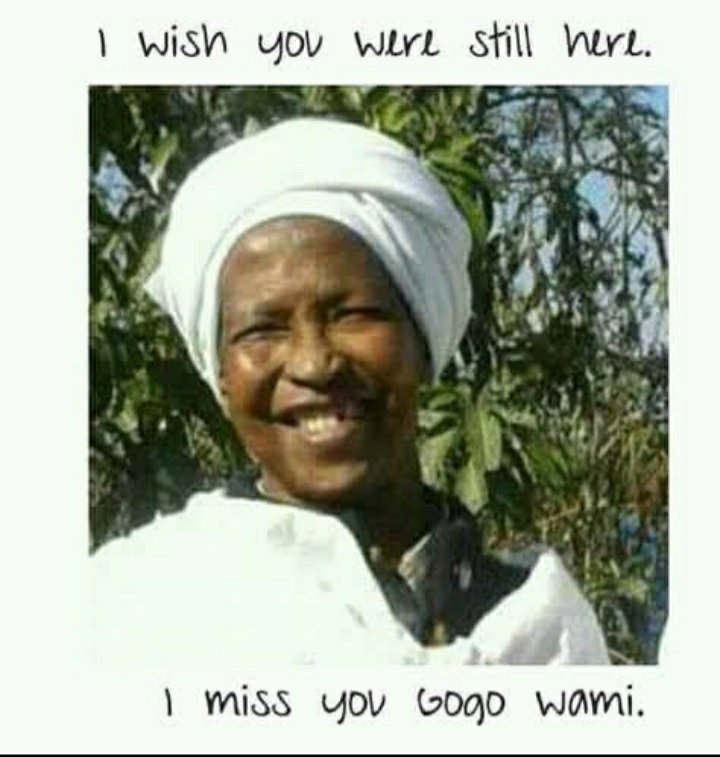
What’s the moral of this story?
Don’t let grief be the thing that shows to you what you should have valued.
Love one another.
We don’t have forever.
Dedicated to A.B.M. This one’s for you.

 wiseMusings
Leave a comment