Conspiracy theories.
The first thing that probably comes to mind, as you read that term, is this meme.
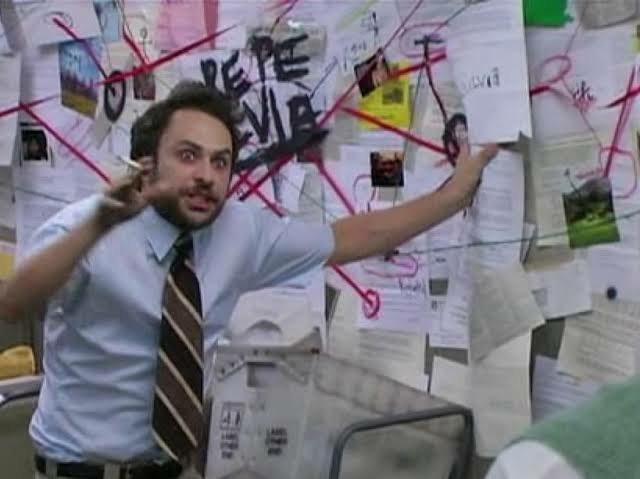
Or people talking about the Earth actually being flat, or about various UFO sightings throughout the years.

And sure, I’ll give it to you. Those can be classified as conspiracy theories. But what if conspiracy theories also exist in our political discourse? And what if a prominent South African politician is delving into those waters, in a way that seeks to threaten one of our most important institutions?
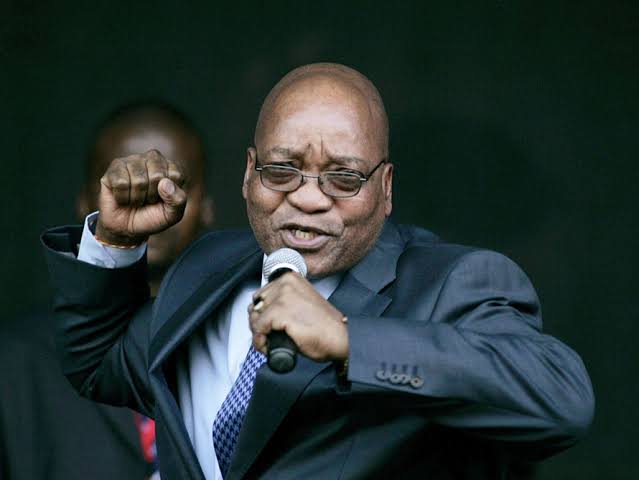
One and all, let’s discuss the recent Jacob Zuma saga for a minute.
JACOB’S CROSS
For those of you completely out of the loop, there is a commission of inquiry that is underway in South Africa. That commission (called the State Capture Commission) seeks to investigate allegations of ministers being handpicked by a certain family from India, the Guptas.
Now, the presidency hasn’t suddenly become a monarchy, by any means. If these Gupta claims are true, then that means the president at the time, Jacob Zuma, surrendered his responsibility as appointer-of-Ministers to a private family.
It doesn’t end there. Accusations are also levelled at Zuma for making sure that those Gupta-appointed Ministers make sure that the Guptas receive every single tender that they bid for.
In essence, there are numerous individuals saying that the Gupta family had captured not only former president Zuma, but the entire state. They were using state institutions to get rich.

The Guptas have left the country. But former president Zuma has not. Therefore, he has a lot of explaining to do. Unfortunately, he doesn’t seem to be up to that task.
The Commission has been having trouble in getting the former president to co-operate with the process. He attended the Commission once, backed out, returned (because a summons compelled him to) with an application to have Deputy Chief Justice Raymond Zondo removed as Chairperson of the Commission, then went home when his application was dismissed.
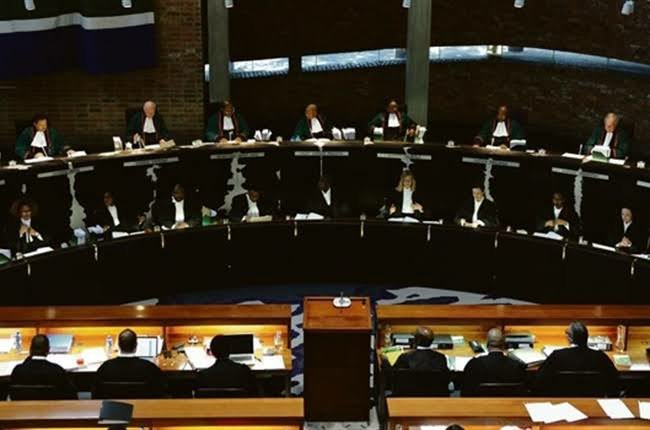
Of course, this didn’t please Zondo or the Commission. An application was put to the Constitutional Court. In it, they applied to compel Zuma to not only come to the Commission but co-operate fully. Proceedings occurred in December 2020, and Zuma was not part of the process at all.
In January 2021, the ConCourt made a ruling. It was in favour of the Commission. The Court ordered Zuma to obey the directives of the Commission – and that means coming when the Commission invites him. It also ruled that Zuma would have to answer every question put to him, except those that might incriminate him, according to section 3 (4) of the Commissions Act. Even then, he has to explain to the Chairperson how the question might incriminate him, and not just keep silent.
In a single judgment, the ConCourt said “no way you’re escaping the Commission, fam.”
In response to the judgment, Zuma wrote a statement which will probably be termed The Statement Read Around The World, when we look back on it. In the statement, Zuma criticises the former Public Protector, Advocate Thuli Madonsela , for not allowing him to choose the chairperson of the State Capture Commission. He even goes as far as to question the need for the Commission at all.
He paints Madonsela and Zondo, as chair of the Commission, as having created exceptions for him legally, so that he would be seen in a negative light.
In a funny bit, Zuma claims that he has no problem appearing before the Commission, in and of itself. The only reason he refuses to appear before the Commission, he writes, is because DCJ Zondo is the chairperson.
“UBaba” then sets his contempt towards the Constitutional Court. He claims that the Court violated his constitutional rights with the judgment, and likens it to the apartheid regime’s attitude towards Robert Sobukwe.
He then basically portrays himself as a martyr, claiming that he will defy the ConCourt ruling – meaning that he will not appear before the State Capture Commission. He writes that he isn’t afraid of imprisonment, and calls the entire sequence of events – from Madonsela recommending a commission of inquiry to the recent ConCourt ruling – an “injustice”.
So there you have it: in Zuma’s eyes, he is a morally upright citizen simply fighting against “the system”. Nothing to see here.
But there’s one line within the statement that stands out to me:
I am a target of propaganda, vilification and falsified claims against me for my stance on the transformation of the country and the economy.
That’s interesting. It seems as if Jacob believes that there is a conspiracy against him, and he has a theory that explains why it exists!
In other words, a conspiracy theory.
It’s time to answer the question: what is a conspiracy theory?
And more importantly: what is a Conspiracy Theory?
CONSPIRE WITH ME, DADDY
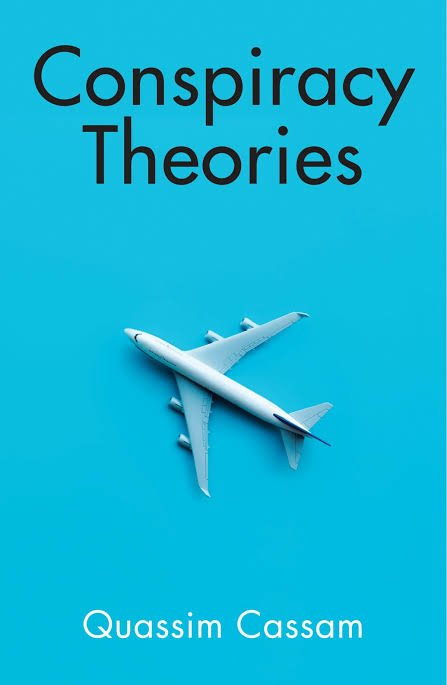
According to philosopher Quassim Cassim, a Conspiracy Theory (capital C, capital T) is different from a conspiracy theory (lowercase c, lowercase t). What we call conspiracy theory argues that an accepted narrative about the world is not true.
Let’s take an example of a conspiracy theory. My sister believes that rapper Tupac Shakur is still alive. Now let’s deconstruct that belief.
What we know about Tupac Shakur is that he died in Las Vegas in September 1996, due to gunshot wounds (thanks Wiki!). That is the accepted narrative surrounding Shakur’s mortality.
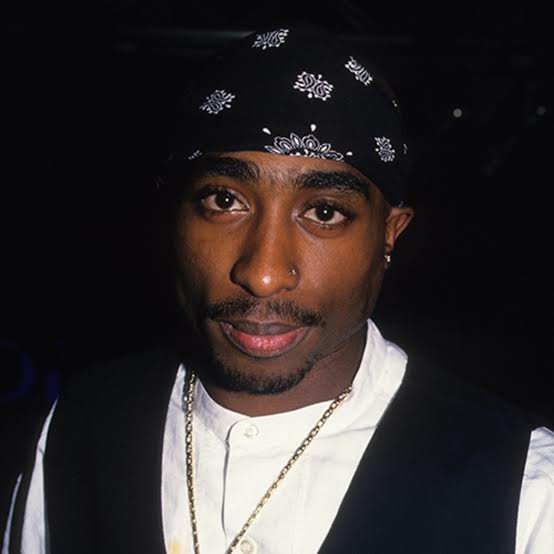
In other words, this is the story that authorities on Tupac’s death (those who saw Shakur with gunshot wounds, those who pronounced him dead, those who cremated him, etc.) have told others. Therefore, that is the story we accept as fact. And that’s why we call it an “accepted narrative”.
But my sister believes that this explanation of Shakur’s mortality does not line up with reality. For her, in reality, Tupac is very much alive.
That can only mean one thing – the accepted narrative regarding Shakur’s mortality is not a narrative she accepts. She has another narrative that corresponds to reality, according to her: Tupac Shakur is alive, and the narrative that he is dead is a false one.
Long story short, she buys into the Tupac Shakur conspiracy theory.
(In defense of my sister, this is the only conspiracy theory she seems to buy into. I can assure you, she’s of sound mind.)
What I have just explained is slightly different from a Conspiracy Theory.
Much like a conspiracy theory, a Conspiracy Theory also refers to accepted narratives not corresponding with reality.
The world tells us this, but the truth is that.
But what makes the Conspiracy Theory different is that it is a “political gambit whose real function is to promote a political agenda”, as Cassim argued. Basically, a Conspiracy Theory is political propaganda.
There is one example of a Conspiracy Theory that Cassim uses in his book that I’ll also borrow to illustrate this.
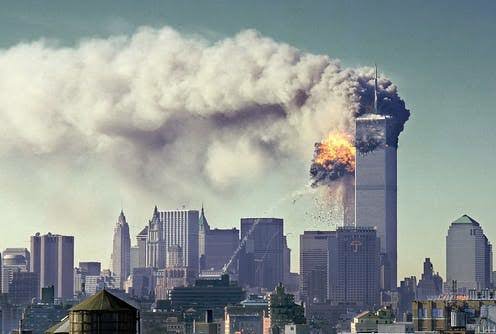
There is an accepted narrative that the Al-Qaeda terrorist group flew airplanes into the twin towers of the World Trade Center on September 11, 2001, and crashed the buildings. But there are people who believe that this narrative is false.
Instead, they believe that the actual reality is this: the George W. Bush administration were behind the events of 9/11. They also staged the attack to make it seem as if Al-Qaeda was responsible. The administration did all this, in order to justify the Iraq War.
It’s clear to see how political this Theory is.
Firstly, it portrays the U.S government – and specifically George W. Bush – in a negative light. They appear to be cold-hearted, duplicitous, two-faced, and evil.
Secondly, it portrays Al-Qaeda as victims. In this narrative, they were accused of a crime they did not commit.
Such a framing has huge political implications – no matter what your personal thoughts are on the U.S government, or Al-Qaeda.
By contrast, the Tupac conspiracy theory has no political overtones. The furthest that one can go is to ask who orchestrated the faking of Tupac’s death, and why.
One could say – the U.S government did. But for what? What was the political motive behind that?
It would not take long before we hit a wall.
So we can safely conclude that the Tupac-is-alive narrative is conspiracy theory, while the 9/11-was-organised-by-Bush narrative is Conspiracy Theory.
But what’s the difference between political bullshit and Conspiracy Theory? Where is the line between “playing politics” and Conspiracy Theory, which is far more insidious?
Cassim has got us here, too. He’s got five features that we can use to identify Conspiracy Theories (and conspiracy theories too, if we’re being honest).
1. Conspiracy Theories are speculative. A Conspiracy Theory is not based on any evidence. It is just one person – or a group of people – speculating that a fact about the world is a lie. Conspiracy Theories don’t say “here’s my claim, and here’s the evidence for it.” Instead, they say “here’s my claim. Connect the dots!”
2. Conspiracy Theories are contrarian. For Conspiracy Theorists (the people who start these narratives, and those who spread them), the accepted narrative is a cover-up for the “actual truth.” So it doesn’t matter how logically you can prove how wrong their Theory is. In fact, that only serves to reinforce what they believe. Remember this: the goal of a Conspiracy Theory is not to be factually correct, it is to advance a political agenda. This is especially true if that agenda doesn’t have mass public support. The Conspiracy Theory is a way to achieve this.
3. Conspiracy Theories are esoteric. If you set aside the political character of Conspiracy Theories, you will often find extremely outlandish, amusing ideas that would be right at home in The Onion. Take the Conspiracy Theory of Bill Gates supposedly creating COVID-19 in a lab, because he had a vaccine for it that would make him rich. As if he is not already one of the richest people in the world.
4. Conspiracy Theories are amateurish. Going back to the 9/11 Theory, people with zero background in engineering or architecture chime in, with the greatest of confidence, about how experts are wrong about the planes destroying the twin towers. Their sources? YouTube videos also made by non-experts. There is no expertise, just the idea (however faint) of expertise. They debunk facts, but do not have the expertise to do so well.
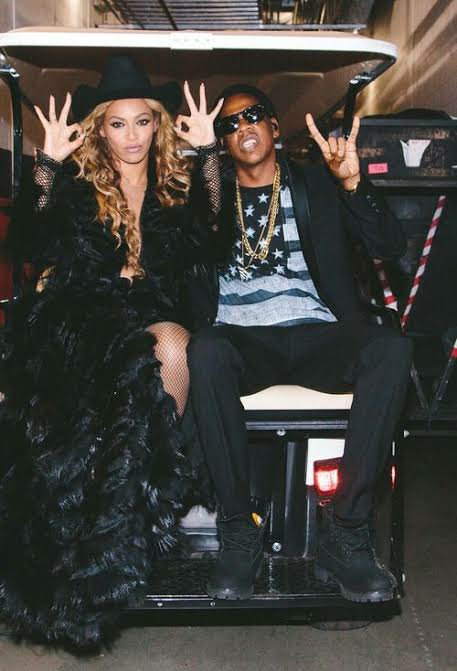
5. Conspiracy Theories are premodern. Another amusing feature of Conspiracy Theorists is how they obsessively pore over small details, and see “clues” in meaningless things. Another way to read this is when the meaning of something is given another meaning that fits in with the Theory. An example is the hand gestures of entertainers JAY-Z and Beyoncè during their performances. These hand gestures are.. hand gestures. But to the Conspiracy Theorist, the hand gesture is a channel of communication between them and the Illuminati, the secret society that controls the world or whatever. The Theorists have given a meaning to the gesture that exists only in their minds. Maybe Beyoncè uses it because she thinks it looks cool. But a Conspiracy Theorist will think she’s saying “hail Satan” with her fingers.
Those are your 5 features of Conspiracy Theories. Now here’s one important caveat: a political narrative can have one or two of these features, and be true. But if a political narrative has all five of these features, it is most likely to be false. Common sense would dictate that you should not believe such a political narrative.
And this goes for conspiracy theories, in general. If a narrative is speculative, contrarian, esoteric, amateurish and premodern, then it is unwise to believe such a narrative. It is definitely unwise to spread such a narrative.
But what if you have a narrative, and you’ve found it to be false, but you don’t know where to categorize it?
When you are in doubt over which category an unorthodox narrative might fall under, look at the motives. If they involve portraying a political institution – usually a government – as either good or bad, then that is a Conspiracy Theory. If there is no link to any government, or if it’s not clear, then that is garden-variety conspiracy theory.
To recap: both conspiracy theories and Conspiracy Theories argue that a truth about the world is actually false. They both offer an alternative truth that they say is actually true.
They’re both speculative, contrarian, esoteric, amateurish and premodern.
The difference is that Conspiracy Theories have a political agenda. They try to portray a political institution, or specific politician, in either a positive or negative way (it’s usually negative, though). We can’t say the same about conspiracy theories – they’re usually silly. Holding them doesn’t make much of a difference, in the grander scheme of things.
Got it? Good.
And now, back to uMsholozi.
NARRATIVE OR THEORY, SIR?
As you might have guessed, I’ll argue that Jacob Zuma’s attack on the judiciary, in particular, is a Conspiracy Theory.
First, let’s see if the narrative possesses the five features of all Conspiracy Theories.
1. Is Jacob Zuma’s narrative speculative? Zuma claims that the Constitutional Court violated his constitutional rights. He gives no justification for his claim. No specific section, no rebuttal to the Court’s legal reasoning. Nothing.
The right to remain silent that he so often invokes is only applicable to accused or arrested persons. Zuma has not been outright accused of anything related to state capture under a court of law. He also has not been arrested. Therefore, the right to remain silent does not apply to him here. So how can the Court violate a right that never applied to him?
He’s shooting in the dark and hoping to land on something with his vague claim. We can’t possibly call that reasonable. It’s more than fair to call it speculative.
2. Is Jacob Zuma’s narrative contrarian? In a single word, yes. It is clear to anybody following this saga that appearing before the State Capture Commission does not suit the former president, or his agenda. That is why he chose not to co-operate with the Commission during the times he did appear before it. This is why he conveniently had an issue with DCJ Zondo chairing the commission despite him being the one to officially hire him. For him, the accepted narrative – that Zondo wants him to appear before the Commission because he is at the centrepoint of every major claim put before it – is undesirable. So it is more convenient for him to play contrarian.
3. Is Jacob Zuma’s narrative esoteric? On its own, it certainly does have esoteric elements. The idea that the former Public Protector, the Deputy Chief Justice, and the entire Constitutional Court can conspire against one individual is certainly farfetched. But if you look at Zuma outside of this specific narrative, the amusement level increases. This narrative is one in a long line of narratives that all have the same starting point – Zuma is a victim of X person/X group who want to see his reputation tarnished.
The question ‘wenzeni uZuma?’ has become a parody of itself, because it is asked so often. In an interview with analyst and scholar Sizwe Mpofu-Walsh, Zuma discussed a supposed document that came before him in 1990, imploring the ANC to get rid of Zuma. Yet those same unnamed forces behind the document sat by and watched while he became the president of the ANC, and then the country, for almost a decade.
The overall narrative borders on the fantastical, and so does the specific narrative here. So esoteric? Definitely.
4. Is Jacob Zuma’s narrative amateurish? You can bet your bottom dollar it is. As I alluded to when I addressed his claims, Zuma makes huge claims but does not back them up in any sustained way. This is rather wise as Zuma is not a lawyer (as an aside, one would hope his lawyer would give him sound legal advice, but that’s neither here nor there). At best, Zuma is thumb-sucking justifications of his claims. At worst – and this is where I am at – Zuma isn’t even trying to justify his claim.
5. Is Jacob Zuma’s narrative premodern? Zuma’s attempted discrediting of Advocate Thuli Madonsela is a prime example of how the former president takes one meaning, and ignores it to concoct another meaning in line with his narrative. The reason that Madonsela chose the Chief Justice to select a Chairperson for the commission (a Chairperson that Zuma would, and did, officially appoint) was because Zuma had a conflict of interest. He was directly implicated in Madonsela’s investigation. For him to pick the Chairperson of a commission investigating serious allegations against him is highly improper.
But in Zuma’s narrative, Madonsela did so in order to undermine and desecrate Zuma’s reputation. He ignores a perfectly sound explanation in order to advance an explanation more in line with his narrative. That’s premodern.
It seems as if his narrative meets all five features. That means we can safely say that it should not be believed.
With his statement (and specifically his attack on the judiciary), Zuma took the accepted narrative and set it aside for his own narrative – a narrative that did not stand up to scrutiny.
But is Zuma a conspiracy theorist, or a Conspiracy Theorist?
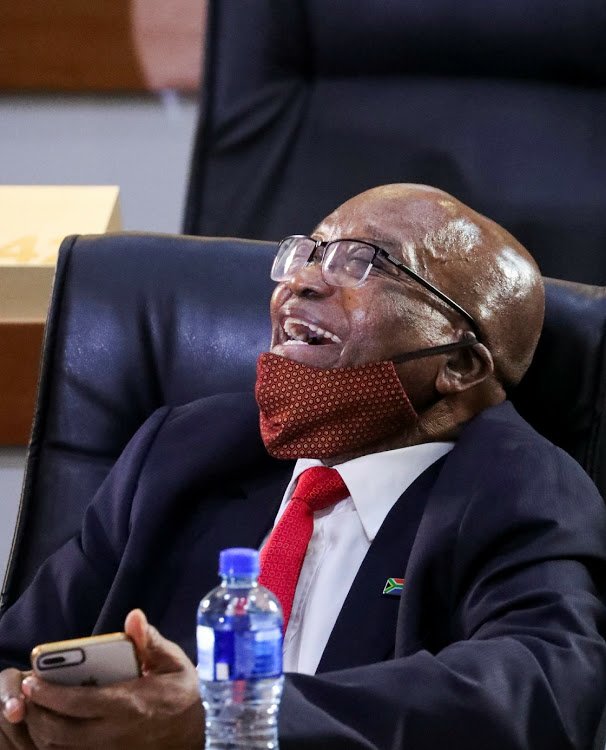
It all lies in the intention. And Zuma’s intention is quite clear. It is to evade accountability. Jacob Zuma does not wish to appear before the Commission, because he knows that he would be compelled to reveal certain events involving himself and the Guptas. Those are events he would prefer to keep confidential.
In essence, that means that the former president of South Africa does not want to account for large-scale corruption that is heavily alleged to involve him. That is a bad thing, whether you like Zuma or not.
It is also a political thing. Zuma is a politician. His narrative portrays the judiciary in a negative light. His motives are to escape accountability for a very political crime (allegedly but also probably). If the judiciary is discredited, then any ruling that they make against him will be tainted. In this way, Zuma is the good guy resiliently battling the bad judiciary.
Zuma looks good. A part of our government machinery looks bad. If that isn’t political propaganda, I don’t know what is.
So we’re justified in calling Jacob Zuma a Conspiracy Theorist.
But now the question is: so what?
SO WHAT?
I have (hopefully) made the point that Jacob Zuma’s statement carries, within it, a Conspiracy Theory about the judiciary that attempts to delegitimize the courts to make a political argument for his innocence.
That’s all well and good, but so what? Will this lead to a constitutional crisis (as political analyst and broadcaster Lukhona Mnguni asked in a heated radio debate a few weeks ago)?
All signs point to no.
So then, why does it matter what he said? As I previously argued, Zuma using Conspiracy Theories is a certainty right next to death and taxes. If that is the case, then why make this specific attack on the judiciary any different? Wouldn’t it be better to ignore Zuma altogether instead of drawing attention to his outrageous mutterings?
That argument is compelling. Zuma is, indeed, a master of Conspiracy Theory. An article like this would, indeed, draw attention to Zuma that perhaps shouldn’t be there.
But I don’t agree entirely with that argument. And here’s why: somewhere within the past five years or so, there has been a shift in political discourse in South Africa.
Instead of using white lies or distortions of the truth like politicians usually do, there is now a growing culture of conspiracism. A narrative is constructed that sees “our side” as victims of an invisible but orchestrated plan by “the other side”. That is bad, in and of itself.
But instead of colouring between the lines of fact and truth, Conspiracy Theories erase those lines completely. Instead of there being objective facts which cannot be disputed, there is now an insistence that leaders dictate reality.
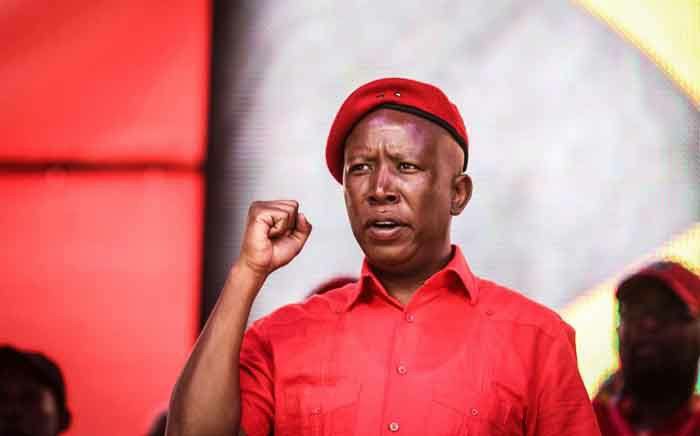
It is the exact same phenomenon that beset the United States of America when Donald Trump was its president. Trump would say something obviously false. On the surface, the comment would seem outrageous for the sake of being outrageous. But the comment was communicating something to his supporters.
A few days later, he would be asked about the comment, and he would deny ever making that comment. And his supporters would never take issue with that. It’s absolutely ludicrous.
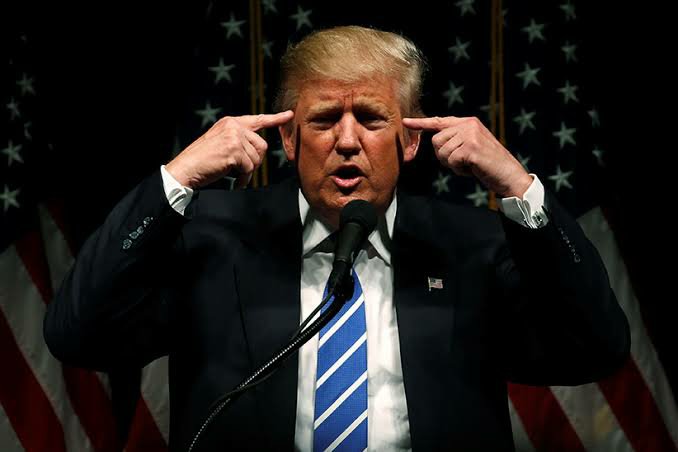
What Trump was doing was much more than political propaganda. Perform Conspiracy Theory enough times, and you start assaulting the truth.
Donald Trump made himself the arbiter of truth for his supporters. He set the terms for what was fact, and what was fiction. It didn’t matter that Trump’s idea of fact often didn’t correspond with reality. He was “on our side” against “the other side.” Before long, it created a country where citizens could not agree on basic facts just because they disagreed with each other politically.
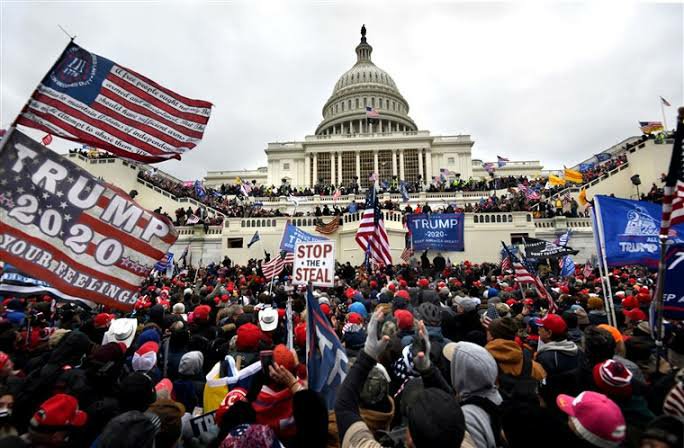
And before long, it created the conditions for the debacle at the Washington Capitol a few weeks ago.
While Jacob Zuma isn’t exactly Donald Trump, he is also an extremely charismatic and charming political figure with loads of popular support.
If he implies that the Constitutional Court is a biased court, then he’s saying something about the entire judiciary.
If the highest court in the land can unanimously violate the rights of one man, then the High Court can just as easily violate the rights of other prominent politicians. And down the rabbit hole we go.
Zuma’s supporters probably have similar attitudes as Zuma about the judiciary, and that is a dangerous thing. It creates a stink around the judiciary. And that stink won’t go away even if Zuma has a “come to Jesus” moment and retracts his statement. That stink sure as hell won’t go away if constitutional law experts explain exactly how wrong Zuma’s statement was. And that stink certainly won’t go away if any member of the Radical Economic Transformation (RET) faction loses a court case, in the near future.
And that’s my fear. If we don’t take insidious lies by powerful people like the former president seriously, we run the risk of seeing a similar insurrection as the Capitol ambush. We run the risk of seeing Zuma supporters cause chaos, in the name of their leader. Should Jacob Zuma be jailed at any point in the future, we cannot be certain that his fervent supporters will not make life very difficult for the judiciary.
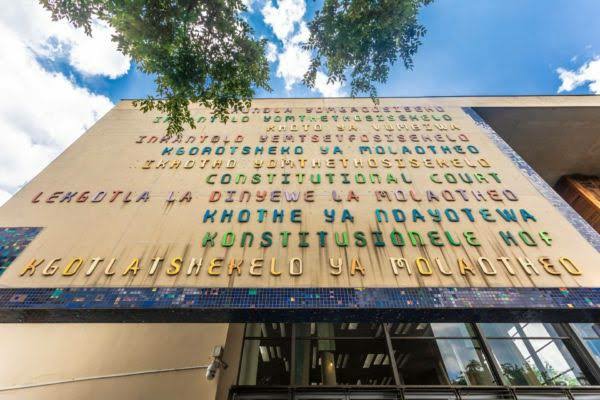
That is a scary thought. And that starts with Jacob Zuma being allowed to freely spread propaganda, while us liberal types shake our heads and talk amongst ourselves about how shrewd Zuma is as a politician.
We should be talking to Zuma supporters. We should be deconstructing the RET faction in a way that doesn’t take their political views for granted. We should be addressing Jacob Zuma’s supporters at a political and epistemic level, yes. That means doing what I just did – showing, through reason, how he is a destructive force that cares about nothing except saving his own skin.
But that’s not enough. We should also be addressing them at the emotional level. We should also understand why Zuma appeals to them in the way that he does, and addressing them from that vantage point.
There are Zuma supporters who travel across provinces to attend every single court case of his. That’s deep commitment. And we would be naïve to believe that only “superior logic” would be what makes them sever their commitment.
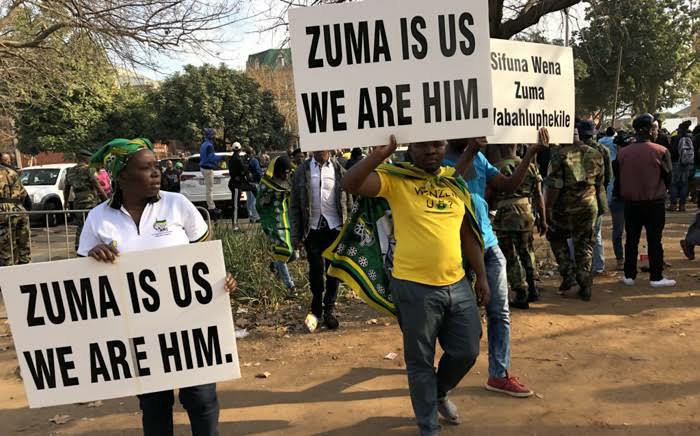
Because Conspiracy Theories inject people with a sense of purpose. The more their Theories are debunked with “superior logic”, the more fervently they believe. And the more they reinforce each other’s belief in the Theories. And the more willing they are to listen to more “truth” by their leader.
And the tipping point might not be this specific matter. But in such a scenario, when the stakes are this high, it is impossible to predict what lengths the former president will go to, to evade accountability.
We know one thing for sure, though: he’s not above being a Conspiracy Theorist.
 wiseMusings
Leave a comment