
“But that’s politics!”
That was my initial thought upon seeing certain leftist, or progressive, individuals criticize U.S politician, Alexandria Ocasio-Cortez (AOC) on Twitter, for failing to advocate for overtly progressive issues even when her political party, the Democratic Party, holds political power. As a prominent leftist politician, her actions as a politician seemed to be proof that she has been corrupted by the system, and was yet another reminder that politics is poisonous.
I do not think that politics is poisonous. In fact, I think that there are two conceptions of the word politics. One of them is sociological, the other formal. I will define them here. And then I’ll explain where exactly the conflict between these two conceptions are. After that I’ll offer a possible solution that reconciles the two concepts for leftists and progressives.
Now a couple of caveats: This article is not necessarily about AOC. I will locate it in South Africa, because I’m far more aware of the sociological and formal political processes here than I am of the USA.
It also is not about AOC, because the conversation is bigger than her, in this specific scenario. However, it made me think and write about the issue, so it is a starting point.

Also: I’ll use the often-derogatorily-used term “social justice warrior”, or SJW, in a positive light. Mainly because I think it is a cool term which should not have any shame attached to it.
Aaaaand I’m a leftist. Sue me.
Now let’s begin with what politics, in the sociological sense, is all about.
The “political”, as a sociological term, refers to any interaction that has an opportunity for social power to be used. Which is basically every interaction.
For instance, your relationship with your mother when you’re a young child is political, in that there is a social understanding of mothers as carers and nurturers of their children, just as there is a social understanding of children as obedient at all times. That is the social background that underpins that specific relationship (along with many other aspects, but this is just an example). Your mother holds social power over you as she is older, and as she has an obligation to protect and nurture you. And if she does not hold up to her responsibilities, there are legal consequences for her.

You also have a relationship with your employer, your colleagues, your partner, your children, and so on. Even an interaction with strangers holds an opportunity for you or the stranger to use their social power to attain whatever is at stake.
This is where the term “the personal is political” comes from. It basically states that interactions that seem exclusive to you as an individual are influenced by your social standing (class is just one part of social standing, by the way). If you are a black woman who works as a domestic worker, and you are rudely shouted at by your white middle-class employer for something that did not warrant such a response, then yes, the interaction is an individual one. But the interaction is shaped by factors that come into play way before that day. And your employer shouting at you was her using her social power to elicit a desired response (intentionally or otherwise).
Because of that, using social power to get a specific response is often looked at in negative terms by leftists, as it creates the impression that some people are more deserving of respect and access to goods and services than others. And that is contrary to the idea of equality as a leftist founding principle.
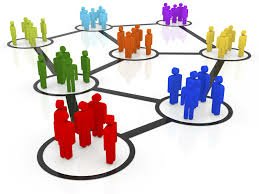
Let’s get to describing the word “politics” in its formal sense.
Now, while the political-as-a-sociological-term is connected to formal politics (because the conditions that creates X group to have social power over Y group were made possible by formal politics, in some way, shape or form), it is not politics as we ordinarily understand it.
Most people (who are not SJWs like me) use the word “political” to describe the institutions, individuals, and organisations that have been entrusted with organising society. That’s the formal definition of politics that – I think – is widely acceptable as a working definition.
Now I will get to the conflict between the two terms.
To be honest, the people who think of politics as the sociological rarely engage in politics as the formal. Especially not in a prominent role.
This is because of one reason: formal politics requires compromise. In becoming a politician, there are lots of different, and sometimes conflicting, interests you have to balance. Everybody has different interests, and they would like to see those interests preserved or furthered. And unless you are not an outright fascist, those are the people who you need votes from. So ensuring that their interests are being taken care of is extremely important so you can get their votes.
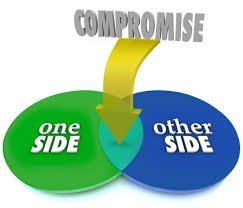
This is not me saying that all politicians do this. This is me saying that politicians won’t always like what they say or do. But with the opportunity to actually change people’s lives for the better (and hopefully that is their aim), compromising here and there is nothing to write home about, in the grand scheme of things. Is that good or bad? You decide.
But it is a lot to write home about if you are a leftist like me. Because when you espouse leftist politics, and truly believe that personal interactions influence, and are influenced by, social and political power, then getting an opportunity to change society must be used fully and completely. If you were talking about constituting a wealth tax as a leftist reading Popkin in university, then you better be rallying against tax cuts for the rich, even if your political party has made that one of their policy. If you are all for Universal Basic Income, then you should be agitating the powers-that-be about it incessantly, because you hold an exorbitant amount of social power relative to the average leftists. You can change things. So use your social power and change them!
Unfortunately, this runs counter to how formal politics really works.
We live in an international system that isn’t particularly kind to the global South (the covid-19 “vaccine apartheid” is a not-so-great case in point).
We live in a constitutional democracy. That means that drastic political change can never come from an individual, nor can it be instantaneous. It must follow a process laid out by the Constitution.
We also live in an era when most politicians are in political parties, and those political parties depend on donations to survive. It is naïvete to think that those private donations – likely from wealthy individuals – do not come with implicit or explicit price tags.
The truth is that being a politician, especially in South Africa, is to be subject to many limitations. And those limitations might influence the way that you bring about the change you desperately desperately want to bring about.
Formal politics is about gradualism. It is about compromise. It is about picking your battles. This is in stark contrast to the politics of the sociological sense, where every interaction is a fight to the death, because lives are literally on the line.
And guess what??
They actually are.
Every day that the government fails to provide resources and brainpower towards the issue of intimate partner violence (IPV) as a symptom of the pathological violent society we inhabit is a day in which lives are lost.
As we speak, there have been spates of homophobic killings in KwaZulu-Natal and the Eastern cape in the past couple of weeks. But the government has largely kept mum on the problem of violence against LGBTQ+ people, nevermind dedicating some time and effort to formulate a solution.
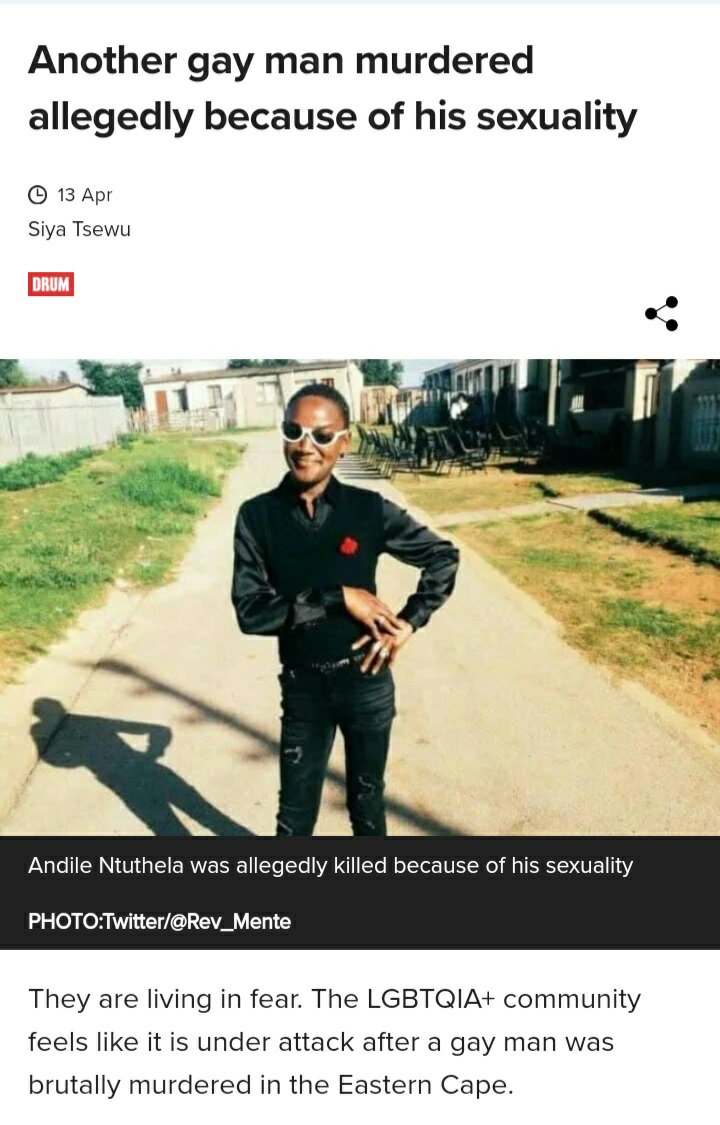
So agitators are needed. They are necessary to draw attention to issues often relegated as “secondary issues”.
But those agitators, I argue, won’t be found in politics. They will be found on the streets, in non-governmental organisations (NGOs), in activist spaces, in the academy, and even in the arts. The people who can draw attention to social issues without having to compromise are outside of politics.
And we have seen a lot of agitation from outside the corridors of power, over the years. It was the people of South Africa who forced the National Party’s hand towards a negotiated settlement with the African National Congress (ANC), and other political parties to put an end to apartheid.
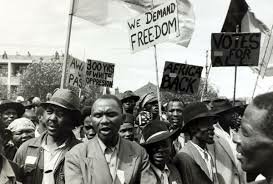
The people have a lot of power. And those who are in a position to hold the attention of political leaders – whether through the media or through their analyses or through their policy presentations to Parliament – have the best opportunity out of all of us. Because like it or not, it is in the corridors of power that true change that reaches everyone can come about.
But we have to mention that the process from citizen uprisings to the negotiated settlement was decades-long. And that is because the people had no political power. Even though they were the numerical majority, they had no power to reorganize society. And this is what political power by leftists affords us: the opportunity to be in the room. To amplify what people outside the corridors of power are saying. I think that most leftists do not understand this.
But wait – Wisey’s got a solution!
The best way to ensure that a progressive agenda prevails in formal politics is not to label a progressive politician as a “sellout” when she is unable to be as forthcoming with her politics as she would like. That is the epitome of defeatism.
The better option would be to work in conjunction with progressive politicians. Organise with your community, craft a set of concerns and possible solutions, identify progressive politicians who are able and willing to listen to communities, sit down (even if it is over Zoom because the vaccine rollout will likely coincide with the return of the mythological Jesus Christ) with your politician, or politicians, choice, let them know what your problems are, and how they can be rectified.
In other words, use your politics in the sociological sense to directly influence the politics in the formal sense.
And here’s the most important part: you agitate from the outside. You make the politician’s job easier. You make your position undeniable. Because one of the young progressive politician’s complaints is that there are not enough people making noise for the issues they want to raise. Not in an organised, coherent, consistent way, anyway.
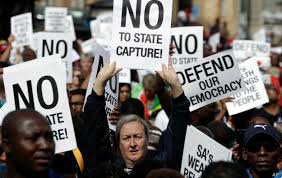
This is not a foolproof plan – as I said, we do live in a multiplicity of systems that do not have our best interests as their first priority. And I accept the critique that I perhaps might be putting too much faith in the system, and not enough on activists on the ground.
But the truth is that I can own an NGO. I can be a philanthropist. But I won’t have the infrastructure and resources to reach as many people as the state can. Why would I call that structure “useless” when it’s one of the most useful structures to have on your side, combined with a vibrant and active civil society?
In conclusion, we, as progressives, are in a much better place politically than we were 30 years ago (whether we’re defining politics sociologically or formally).
Using our relative gains to achieve more games as a strategy worth considering.
And all it takes is playing politics.
 wiseMusings
Leave a comment