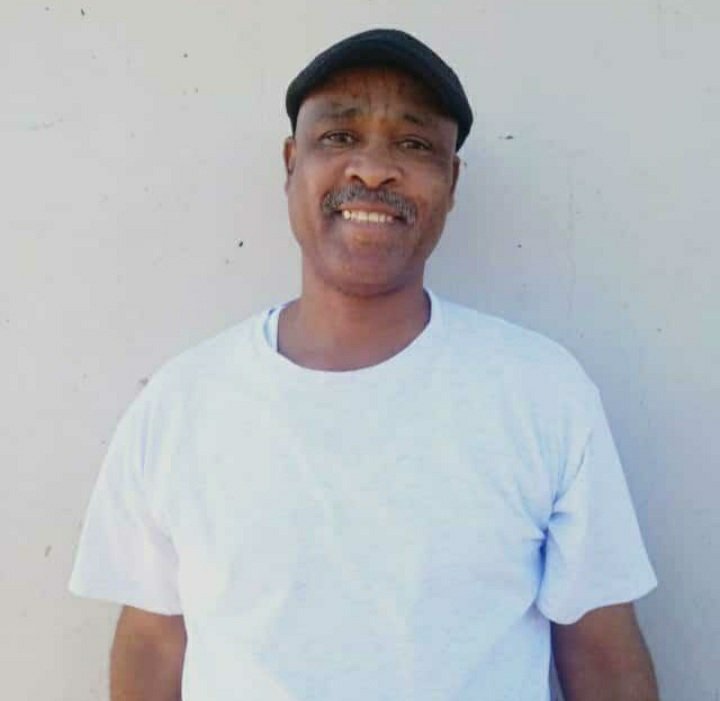
I never started caring about Father’s Day until my father died.
There are many reasons for this. For one, fathering a child biologically is relatively easy. Being a dad or a father figure is much more difficult. At least, that was the case for my biological father when it came to me. I have no problem calling him my father, because biologically, that’s what he is. He slept with my mom some night in 1996, and I’m the result of that bout (or bouts, who knows?) of intercourse.
But Dad? Father figure? Those are not terms I would ever use to describe him.
There a gazillion reasons why, but they boil down to one thing…. my father hated me.
Yep, you got that one right.
My father, Solomon Zondi, really hated my guts, man.
It’s interesting that I say that because Solomon always presented an image to the world of himself as a devoted father. There was a way he’d interact with me in front of people that wasn’t the same as how he’d react when it was just us talking. The former was P.R, the latter was the reality.
He did a good job of performing for the proverbial audience, who hung onto his every word. But I knew the put-downs, the threats, the ridicule, the violence, the intentional attempts to humiliate.. I knew all of those very intimately.
And I guess I caused some of it because I didn’t take kindly to having a deadbeat suddenly take control of my life when I was 18. But Solomon wanted that control, and so he took it when he couldn’t have it, simply by virtue of being my father.
I’m glad I was able to withstand his (thankfully limited) presence in my life. I’m glad I didn’t see so much as a glimpse of him for the last 3 years of his life. And yet – there will always be that thought. There will always be that question that I ask myself.
I interrogate that even more when I realise that damn, his other kids really loved him. They revered him, almost. My younger brother even spoke about having a tattoo of Solomon on his chest to honour him. On New Year’s Eve, one of my sisters wrote a heartfelt WhatsApp status update about how he would call her to come get money to buy fireworks every single NYE. His stepchildren cried the hardest at his funeral.
And there I am, ironically Solomon’s spitting image but also the one child who meant the least to him. And it showed.
I remember how my sister M called me just after 5pm to inform me that Solomon had passed. It was a brief call. I was stunned for a bit afterwards. I wrote about it a little, in part to digest the news. Then I carried on with my day. And that day, I was doing some work for an organization – work that required me to read a report. I was procrastinating the entire day.. until I heard that my father had just died. By 6pm I’d read it all (a relatively lengthy document) and had a laundry list of questions and notes.
That’s my coping mechanism – I work my tail off. I’ve rationalised it by saying that work is the one thing that won’t leave me, whereas people prove to be (mostly) temporary. Therefore, I must immerse myself in it. This approach has brought me great academic success. This approach has also brought me great personal failure, because I use work to escape from my real life. It was no different that evening in July 2020.
I used work to escape the conflicting emotions I was feeling surrounding Solomon’s death. They’d catch up with me the next morning. I woke up and after some unexpected emotional upheaval, I almost immediately started watching the hit show BoJack Horseman. I had an episode in mind.
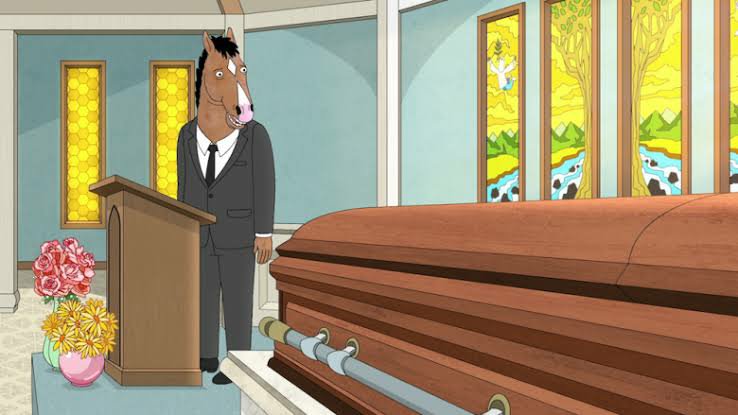
“Free Churro” is my favourite BoJack Horseman episode ever. The entire episode (aside from a brief flashback that BoJack has of some perverted life advice that his father gave him as a child) is literally BoJack Horseman eulogizing his deceased mother, Beatrice Horseman, who had ill-treated him throughout his life.
I needed to get the perspective of someone who was not going to idolize their dead parent even though they were a piece of shit. I needed to get the perspective of someone who acknowledged the pain, the damage, the heartache caused by their dead parent – like I would do.
I wasn’t going to look past Solomon’s treatment of me, but I also did not want to pretend that I didn’t feel a very negative feeling upon hearing of his passing. Where I thought there would be carthasis, there was crying. Where I expected indifference, I found a very real difference in my perspective of him. At that moment, BoJack was my best guide through that complexity.
There were a lot of gems in the monologue. But this specific part draws out the best and worst of the death of a parent you had.. difficulties with:
“Suddenly, you realize you’ll never have the good relationship you wanted, and as long as they were alive, even though you’d never admit it, part of you, the stupidest goddamn part of you, was still holding on to that chance. And you didn’t even realize it until that chance went away.
My mother is dead, and everything is worse now, because now I know I will never have a mother who looks at me from across a room and says, “BoJack Horseman, I see you.” But I guess it’s good to know. It’s good to know that there is nobody looking out for me, that there never was, and there never will be. No, it’s good to know that I am the only one that I can depend on. And I know that now and it’s good. It’s good that I know that. So… it’s good my mother is dead.”
Indeed, it’s good my father is dead.
But that doesn’t mean it didn’t hurt like hell.
I was actually mourning. I was mourning because I lost something when Solomon Zondi took his last breath. But that something wasn’t a dad. Like Frank Ocean’s (real or imagined) friend opined, “you can’t miss what you ain’t had”. Right?
“Well”, like Frank Ocean, “I can.”
But that’s a wound I’d been tending to, for years up to that point. I knew he wasn’t Dad of the Year. So why this specific reaction? Why did I mourn for Solomon? What did I lose?
Unlike BoJack, I wasn’t upset over the loss of a potential relationship. I was upset because I lost my final chance at accountability. His death shut the door on any possibility of him sitting me down and saying, “Wise, I did you wrong.” I didn’t realize the importance of that hypothetical acknowledgement until then.
This is why: we live in a society that doesn’t recognise parental wrongdoing. It is swept under the carpet, or it is covered with explanations and obfuscations, or it is quickly seen but just as quickly buried under a gazillion other theories that absolve the parent.
I understand this. The consequences of a large-scale recognition of parental wrongdoing would be massive. It would solidify the mortality of our parents. While we intellectually know that our parents are three-dimensional people too, there are emotional and psychological sides to us that expect them to always “act like parents”. Have more knowledge. Do the morally correct things. Advise us when we’re falling short. The better your parent is, the higher the standard of parenthood you place on them.
The very existence of parental wrongdoing would mean that actually, our parents sometimes don’t act like parents. Our parents may be mean. They may be hurtful. They might not be aware of much. They might be very bad people. The possibility of that truth alone, never mind it being actually true, is jarring to many people.
And then there are those of us who have had to face that reality – who know that our parents were, quite frankly, assholes. The widespread recognition of parental wrongdoing would hurt us, too. It would hurt us because we would have to reckon with the reality of our parental hurts. We would have to fully and completely accept that the people who gave us life were also responsible for some of the misery we found within it.
It’s one thing to say “my father sexually abused me”, it’s another thing to sit with that statement and its implications. That’s what parental wrongdoing would lead to.
It would lead to something else, too. It would lead to us wanting an apology. It would lead to us wanting our pain to be heard, and recognized as pain. We would confront our parents in the old age homes and the family homes where only they stay, now. We would interrogate them about days long past and how they left scars on our souls. And then they’d probably look us right in the eye, and add one more scar.
Their indifference, their hyper-rationalization, their anger or, god forbid, their delight as you speak – that would all add up to one more scar. And maybe we’ve suffered too many scars at this point. Maybe the possibility of being hurt again, at this level outweighs the possibility of getting a heartfelt apology, and acknowledgements that yes, they did you dirty. Knowing them the way we do, one outcome is likelier than the other.
So instead, we paint a picture of perfection. We drudge up one almost-funny story from the past, and package it to the world as the comprehensive story of that parental relationship. In private, we tell our friends and our lovers about the lingering pains and hurts. They tell us to “forgive”, because “it’s all in the past” and that “besides, you don’t have to see them all the time, so what’s the big deal?”
I experienced that a lot with some of my friends. People I know to be no-nonsense, critical folks who engage with tradition in an active way just turn into jelly when there’s a person who dares to put any problematic parent in the metaphorical dock. Because “he’s still my father”, after all – as if I also wasn’t his son who deserved to have a father who loved me.
But apparently, my experiences of him as a father aren’t as important. His image is important. Him being seen as “ubaba ongazange aphike neyodwa ingane yakhe” is important. His ability to stand up top and recite a few verses at the church he occasionally went to is important.
Never his son. Never his son. Never his son.
This falls under the rubric of what author Leonard Pitts Jr. called “no-fault fatherhood” which he described as a way of fatherhood where “fathers are allowed to be only tenuously connected to their families, if at all, allowed to be drop-in visitors on their children if they are there at all, with no social stigma attached to this behavior, no sense of failure or shame.” The rules are relaxed for fathers. If they perform the bare minimum requirement of admitting paternity, then they have earned the keys to the no-fault fatherhood kingdom.
Either way, it is he who benefited, and me who lost out.
Probably, people are waiting for that kind of resolution where I “forgive” him in the tune of “letting things go” and “moving on with my life”. I’m not going to do that. That’s not my resolution. I do not forgive him. I do not forgive my father.
And the neat, tidy narrative of forgiveness-as-resolution is the companion to overlooking parental wrongdoing. It is the idea that one can only find peace and serenity in one’s life by forgiving the cause of your trauma. If you do not forgive, you then hold grudges. If you do not forgive, you’re the person Buddha refers to who squeezes a lump of coal with their hands with the intent to pummel another person. If you do not forgive, you are now the monster.
For me, the language, although not victim-blaming in its intent, can lead to situations where persons feel obligated to forgive, otherwise they’re inherently bad human beings. The case gets even murkier when the person in apparent need for forgiveness is a biological family member. Let alone a biological mother or father.
That is not my position. For me, a story does not necessarily have to end in forgiveness. Forgiveness, in some cases, is used as a tool to subjugate. It is used as a weapon with which to silence and to absolve. When the onus is on the wronged to forgive, and there is no onus on the wrongdoer to do anything, then the power dynamics shift back onto the wronged to summon up the energy to put this bad thing behind them. And the condition that always goes along with this conditional kind of forgiveness: one must also never bring the bad thing up ever again. Hence, the phrase “forgive and forget”.
I am a soft man with a soft heart. I am hard to anger, and I am quick to forgive. People close to me can confirm this. The downside to that is obvious. My nature has led to people taking advantage of that softness. In response to that, I could have become a hard man to everyone I met, or I could have become a hard man only to those that deserved my hardness. I chose the latter. The latter included, and continues to include, Solomon.
That harshness wasn’t always there. I once loved Solomon. I loved Solomon with the heart of a naïve, hopeful child. My heart expanded to fill my chest everytime he would call, and promise to come the next day. I would wake up that day excited. I would dress up in my Sunday best. I would be deflated when he failed to show up. Gogo would make excuses for him. She’d say he called and said he was busy, but I had never heard the telephone ring. I knew he had never called. But my 5-year-old heart wanted to believe that my father loved me, so I chose to believe Gogo that time, and the next time, and the next time, and the next time.
By the time I began to be aware of what was happening, Gogo had stopped covering for him. She could see my scowls. She could see my disappointment. On the one year he remembered my birthday (and when cellphones were now a thing), he called on Gogo’s cellphone and as usual, he would ask to speak to me. I refused because I knew what was coming, and while my head could sniff out the entire sequence of events, my heart was not quite there. And so I had to protect it.
By the time I was forced by circumstance to stay in his house in the late 2010s, I pictured him in my mind’s eye as a distant relative – my mother’s cousin’s brother’s mother’s uncle’s son, or something convoluted like that. He was a man I had my looks and my surname in common with, and that was it. Other than that, he was just another middle-aged cop who was gracious enough to open his doors to me. I had to create a narrative that would make him someone only tangentially related to me.
Because only someone who wasn’t my father would treat me the way he did. Only someone who didn’t see me as a son would humiliate me for sport the way that man did.
And you know what? I owe it to myself to remember all of those incidents. I won’t recount them all here, partly because they’re irrelevant to the point I’m making and partly because thinking about them in too much detail triggers the feelings I felt during those dark days. But remember them, I do. And I will remember them so that I always know the importance of being a hard man to people who deserve it. I will remember them so that I can recall how bad it got, how useless I felt, how eroded my self-esteem was, around him.
The last time I saw him alive was late 2017. The last in-person discussion we had was me telling him I was leaving his house that day. Even then, I was cowering at every turn. I was speaking in hushed tones. That was how I was around Solomon. That was how insecure in my own being he made me. In as much as I hated him, I also feared him because he knew how & where to attack. He’d created those wounds himself, so there was no way for him not to know.
How do you begin to forgive that? Perhaps there is a way. I’m not going to look for it. As far as I’m concerned, Solomon can forever have my hardness.
But it’s Father’s Day. He’s dead. And for once, I care about the day.
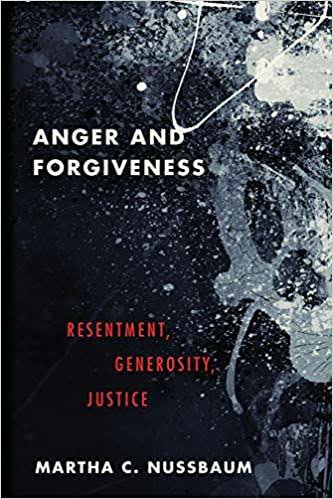
We read the book “Anger and Forgiveness” by philosopher Martha Nussbaum for one of our modules. And in the book, Nussbaum argues that apologies are tantamount to grovelling, and are a form of humiliation. In her own words, she labels the act of apology and forgiveness as “transactional forgiveness” – as forgiveness given in exchange for something, namely an apology. This is itself a worrying indication of her thoughts on this sort of human interaction.
Nussbaum relies on the general understanding that human beings are not fond of explicitly commercializing their relationships, and interactions, with one another. By calling it “transactional forgiveness”, she is already planting the seed for that vulgar taste in one’s mouth to inevitably follow.
She also writes that this form of forgiveness is “perfectionist and intolerant in its own way” because “it’s all too easy for victims to be self-righteous and wait for propitiation, secure in the feeling that they are the wronged party.” For Nussbaum, apologies create victims, and you’re not a victim, goddammit! You’re an active member of the world, so stop crying and whining and trying to get people to apologize!
My point of departure, as it pertains to Nussbaum here, is her portaying apology and forgiveness as something unnecessary, or as something we should not want. In good conscience, I cannot agree with that.
If I got an apology from Solomon, I would have found that extremely helpful. Whether I would have forgiven him is a different matter.
But it would have been vindicating for me, as a victim, to hear Solomon admit that he hated me. It would have been reassuring to me, and my ability as a knower of things, to hear him confirm what I thought was going on. At some point, amidst all the people encouraging me to let go of my grudges, and amidst him being able to seem like the Father of the Year to the world, I began to wonder if I was imagining things. If he had sat me down and confirmed all I knew, that would have bolstered my capacity to trust in what I was seeing & hearing, especially because I was not being treated right.
It would have been equally vindicating to hear him acknowledge the wrongness of his behaviours towards me. Laying out the facts, bare as they are, was not going to be enough for me. I would’ve also wanted the moral accountability that he would have given himself – that he did all these things, and that these things were wrong for him to do. That it should not have happened to me. That he was at fault, and not me. That if he could have a do-over, he would not have made my life a living hell. It would have made some efforts towards remedying his continual erosion of my self-esteem.
Not receiving an apology bruised my ego. But it was at least somewhat expected. My expectations were tempered. So while there’ll always be a part of me that will forever yearn for Solomon’s “sorry”, the very same part of me knew how improbable that was.
But I often wonder if it did come, despite the odds. I think receiving an apology would have helped in many ways. An apology would have confirmed that what I felt was true. An apology would have honoured my feelings and my humanity as someone who was harmed, and who did not deserve to be. And an apology could have been the first step towards repairing our father-son relationship (or creating it, if we’re being real), not unlike BoJack and Beatrice. It could have, but it never happened. So we’ll never know.
And you know the worst part? This man had cancer. The man did not die in a sudden accident. It was a long, protracted process. He knew what was coming. And despite all these meditations and deliberations on his death, it never occurred to him to ask his son for forgiveness. Why? Because he saw nothing wrong in his actions. For him, it was just how I deserved to be treated. That is the killshot, really. There’s nothing more to be said.
I don’t like trying to psychoanalyze people who hurt me. The emotional labour I must now put in to try and understand the inner life of someone who failed to consider my feelings isn’t worth it. But in my less rational moments, I’ve tried. And it goes back to the one and only conversation we had about my sexual orientation, although it didn’t seem that way.
He was drunk (because that’s what it took for him to have conversations that involve emotions). He sat down and asked me to sit next to him. I remember him asking me “ufuna ukuba yintombazane?” Apparently, committing the mortal sins of singing along to Taylor Swift and insisting on urinating in the toilet instead of yanking out my penis everywhere were sufficient grounds to prove my desires to be gay, which he presumably equated with womanhood.
I said no, I didn’t want to be a girl. He obviously did not believe me, but he reluctantly accepted what I said. I say “reluctantly”, because he would go on to talk about hiring a woman to forcefully have sex with me in a locked room. If there was one constant fantasy in that man’s mind, it was me in an uncomfortable sexual situation. But I digress.
I often think about how his hatred for me was fuelled by his desire to have a son who acted like a boy. I’ve written about my struggles with masculinity and failing to meet the standard that society set out for me, by virtue of being a person born with a dick. Thankfully, my grandparents (aside from a quip here and there) mostly understood this about me. That wasn’t the case with Solomon.
Did he see something in me during the times he bumped into me and uGogo at the supermarket? Was he so disgusted by what he saw that he decided to ignore my existence? And when everyone else had passed away and it was his responsibility to take over, perhaps he decided to shame me into being the son of his dreams? I’ll never know, and there’s no use wondering. Psychoanalysis of a dead person is a fruitless endeavour.
But was that all there was? Were there good times?
Yes, they were. Solomon had his moments of goodness. He once went with me all over Pietermaritzburg for three full days so that we could find a school for me to do my grade 12. On one New Year’s Eve, I found him outside my gate. He offered for me to enter the New Year with him and the rest of his family. He made me the centre of attention during his 50th birthday party, because he was genuinely happy that I attended it. There are probably other instances of Solomon showing kindness towards me. They are there, and I acknowledge them.
But they are overshadowed by the many moments of meanness and humiliation that outnumber the “good times”. All in all, being a good person is not about grand gestures done periodically. It is about showing care and consideration during the mundanity that makes up life. If I had a partner who was only kind to me when he deemed fit, then that person wouldn’t be my partner for very long. Because not every day is a birthday bash.
Some people would have their hearts melt because I seemed to humanise Solomon. Some would even say that he was trying his best with the emotional toolkit he had at his disposal. To that, I answer: fuck his best. If he could give consistent parental love to his other children, then he could have given consistent parental love to me. At the bare minimum, his best shouldn’t have involved wearing me down psychologically.
So yes, he could’ve kept the New Year’s celebrations for his daughter that year, as he usually did. He could’ve shone a light on his other sons during his birthday party. I would’ve much preferred those things to him calling me “useless” or asking what my use is, in this world. I would’ve much rather gotten no good moments if the bad moments were the price I had to pay for them.
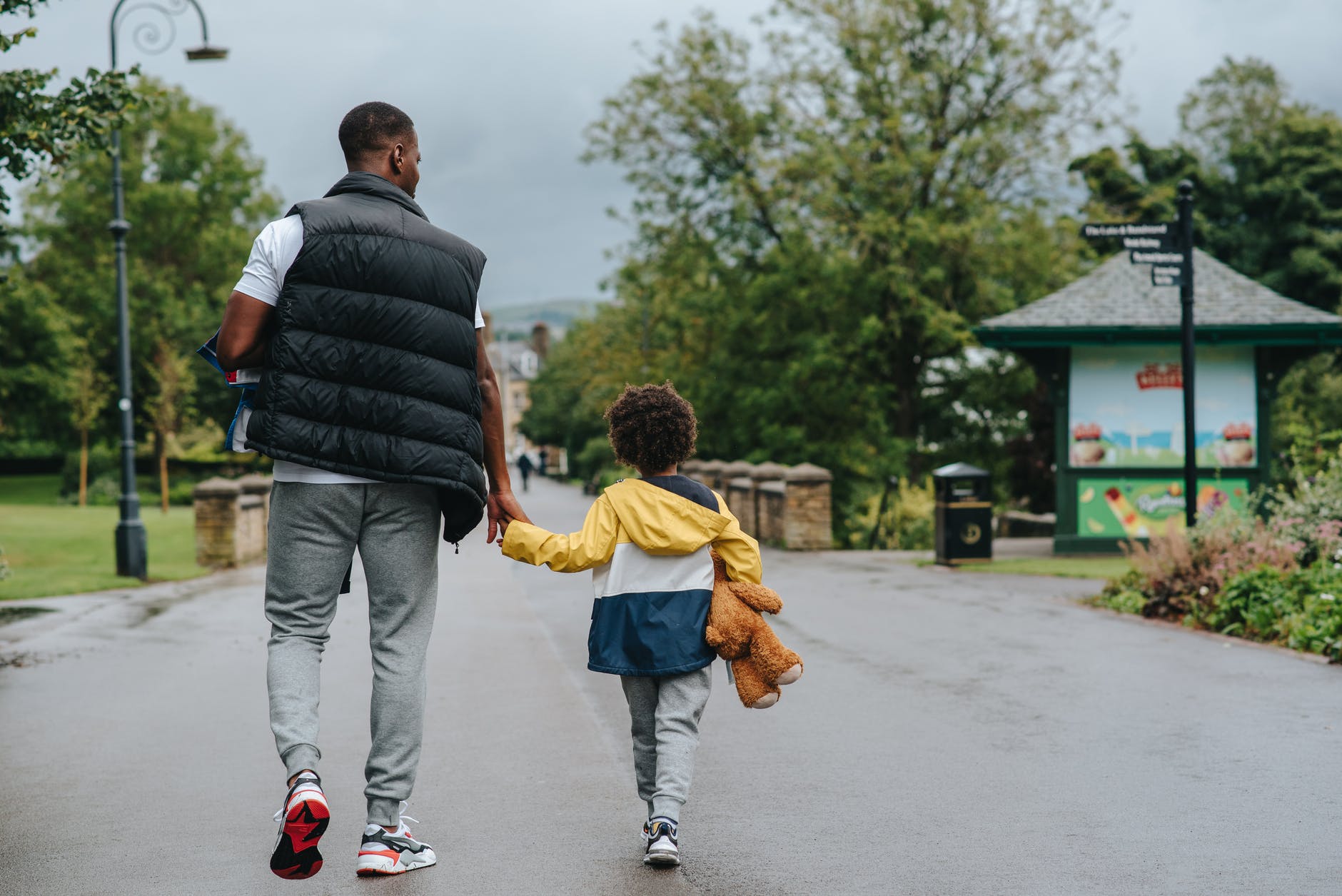
So what do I think about Father’s Day – the first one since my father died?
I think it’s a net positive. The benefits of having such a day outweigh the drawbacks. Like Mother’s Day, I think Father’s Day shines a light on the importance of parenthood and how its presence (or absence) affects a person. No matter how averse we are to commercialism, we cannot escape the adverts and the social media posts. And so we start thinking, even if only for a second, about the role our mother or our father played in our lives, if at all. Even then, we meditate on their absence and ask ourselves what could have been.
That is why some people speak about their mothers in reverent tones when Father’s Day rolls around, claiming that “she was both my mother and father.” They’re communicating something there. They’re saying that they acknowledge the importance of fatherhood in a person’s life, and that they wish they had a father figure to dote over. But for whatever reason, there isn’t a father figure to speak of. Therefore, they’ll celebrate the one parent who actually performed the duties of parenthood to the best of their ability. It’s a glance at fatherhood, then a quick turn back to the expansiveness of motherhood. It’s how people cope. I will not deny them their mechanisms.
Previously, my approach was to ignore the void altogether. I had a grandfather, and that was good enough for me. My family is not big on sentimentality (which makes my bleeding heart all the more odd). Also, we were poor. So when Father’s Day came around each year, I would just say “happy Father’s Day” to Oupa and that was it. I would think of Solomon for a single moment, then remember that he had a gazillion other children who would surely wish him a happy Father’s Day. He wasn’t just their father, he was their dad. He wasn’t my dad. So it wasn’t my place to wish him anything.
After Oupa passed away, there was no longer anybody to wish a happy Father’s Day to. So the day faded into insignificance, more so than it ever had. When the second or third Sunday of June came around, I would treat it as a regular Sunday. I wouldn’t even acknowledge the day on my social media feeds. I’d see the happy posts, and I’d “like” them all, because it’s nice to see people celebrating.
But now my father, the man who hated me, is 6 feet underground. And that brings up a lot. It brings up the pain of my early days, when I thought my father loved me. Facing the reality – that he actually hated me – is a bitter pill to swallow. It’s a pill I’ll have to continue swallowing for the rest of my life.
I’ve been swallowing it more and more, recently. Solomon’s mannerisms, his tone of voice, his inability to speak about tough emotional matters without alcohol, his penchant for ukuzithakazela – that’s all becoming mine. It’s tragicomic that after so many years of wanting to be the complete opposite of Solomon Zondi, I met my fate in the same place I sought to avoid it. And the pill grows more bitter by the day.
I vow to be the last one to swallow it. My decision not to have children of my own is 100% motivated by Solomon Zondi, and my insistence on not inheriting his traits so much that I end up as a bad memory on a growing mind’s emotional canvas. That’s a blessing and a curse – a blessing, in that I don’t have to deal with the constant self-beratement that would come with being someone’s father. It’s also a curse for the same reason. Whenever I think about fatherhood, my own father (and his failure to be my dad) will be the first thing that comes to mind.
I don’t have a father. I never had a dad.
That is what will whisper back to me when I see all the Father’s Day hoopla on social media and elsewhere. I won’t acknowledge the day in public, but deep inside, nothing else will matter.
Because for the fatherless among us, that’s what Father’s Day is – a day when despite what we tell others, we care a little too much.
Originally published at https://wisemusings.substack.com/
 wiseMusings
Leave a comment