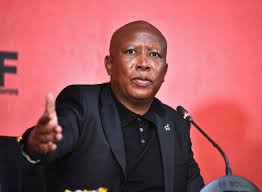
The leader of the Economic Freedom Fighters (EFF), Julius Malema, is an extremely controversial political figure. Over the course of his career, he has said and done a number of ethically questionable things. But he has always attracted a sizable number of (predominantly) black South Africans, because notwithstanding the political theatre, there is a man who understands the lived experience of many people who feel left behind by the democratic dispensation.
I write this in the context of the EFF/Afriforum case that is awaiting judgment before the Equality Court over the EFF’s use of the struggle song “Dubul’iBhunu”. Afriforum seeks to have the song declared as hate speech because it has apparently led to multiple murders of white farmers. When giving testimony, Malema has said that the song that the EFF has been singing translates to “Kiss the Boer”, and that the song symbolises a society in which black and white people are able to kiss one another.

This testimony is hard to believe. The character of the individual, and of the party of which he is a leader, does not subscribe to the notion of non-racialism. Malema subscribes to African nationalism as a political ideology, which centres black Africans as the true inheritors of the continent. This does not necessarily mean that Malema believes white people must leave South Africa. However, African nationalism has often perceived white people as descendants of colonialists who came to Africa with the purpose of subjugating black people.
I believe that Malema and his EFF supporters did sing “Dubul ‘iBhunu”, and that the song literally translates to “Shoot the Boer”. But this does not explain the social and political context that underlies the history of the song, and what it means for black South Africans.
The context in which the song is sung is one of massive inequalities (namely the legacy of the Natives Land Act of 1913), and the song metaphorically adddresses those inequalities. Political songs – particularly those taken from the anti-apartheid movement – are indicators of a fractured society and the anger of the marginalised at still being marginalised. It is a part of the South African story: we have Nelson Mandela, we have Archbishop Desmond Tutu, and we have black anger at white injustice. Taking offense to that anger is one thing, but claiming that the expression of that anger as “hate speech” is appalling, to say the least.
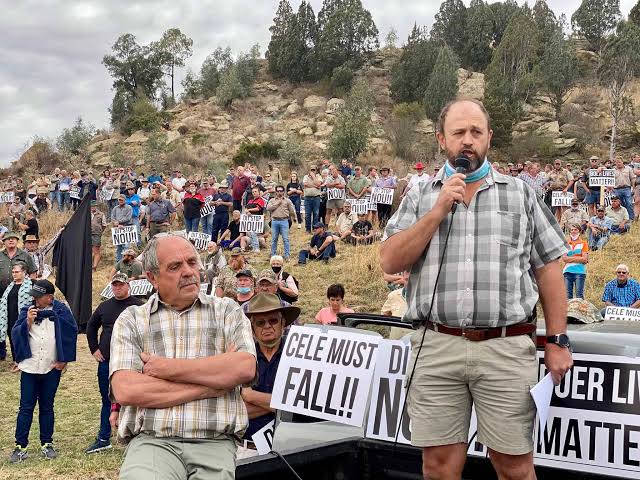
This court case has some positives, though. If nothing else, we can now begin to ask questions about the structure of our society, and have meaningful discussions in our social and political circles. White South Africans should ask themselves why their lives are, on average, easier than those of black South Africans. They should read up on the nature of systemic oppression, and how an individual white person may not hold racist beliefs but participate in, and benefit from, a racist system. They should show humility and understanding in the face of black anger.
White South Africans should also acknowledge that so-called “civil society” organisations such as Afriforum are an obstacle towards the sort of multi-racial society that we want to achieve as South Africans. This is because they play to white people’s fears of being exterminated as part of a “white genocide”. This kind of propaganda is taken right out of the “Swart Gevaar” (black danger) playbook that portrays black people as intrinsically primed towards violence aimed at innocent white folks. This narrative was popular in the early 1990s, during the transition from apartheid to democracy – and it has never really died out. Needless to say, this is the sort of racist propaganda that the country must resist at all costs.
It is most likely that farm murders can be explained as a consequence of the incredibly high crime rate in South Africa. Crime affects white farmers. But crime also affects the predominantly black farm workers that reside on these farms, as well. Crime affects everybody. Because of that, it is difficult to see how crimes that affect white farmers are more deserving of condemnation than, say, the atrocities that occur in the Cape Flats. While these murders are incredibly unfortunate and regrettable, the real solution to the problem isn’t targeting Julius Malema as the reason for these murders. The real solution is lobbying government to have a responsive and competent police service, which will ensure everyone’s safety. Crime isn’t exclusive to white farmers. The implication that it is, isn’t helpful to the kind of society we want to live in.

This also gives us an opportunity to think about what we want hate speech laws to do for our society. The nature of hate speech legislation is such that it dismantles oppression that already exists. In the words of academic Caitlin Ring Carlson, “[h]ate speech represents a structural phenomenon in which those in power use verbal assaults and offensive imagery to maintain their preferred position in the existing social order.” What position in the existing social order do black South Africans have to maintain? How do black South Africans benefit from a number of dead white farmers? Is the structure of South Africa’s economy and society dependent on whether or not white farmers are killed – or kissed, depending on which version you prefer? Would it not be nonsensical to go kill white farmers out of hatred, when the farm will not automatically fall into the hands of a black South African if a white one dies?
Answering these questions earnestly and honestly would allow us to understand the fallacies in Afriforum’s arguments, and to ensure that the Equality Act (and the Prevention and Combating of Hate Crimes and Hate Speech Bill, whenever it is enacted) does not become a tool with which privileged people can say that them taking offense to speech means that the speech qualifies as “hate speech”. Hate speech legislation must not be applied absent-mindedly without the social context that makes South Africa the country that it currently is. It must be cognisant of social inequalities and take them into consideration when applied. If this is not done, then we would be applying law to a set of facts without contextualising the power dynamics that are always at play.
Hate speech feeds off of existing widespread discrimination, and attempts to rationalise its continuation. Because of this, it’s important – necessary, even – to differentiate speech directed towards an unjust system, and speech that seeks to malign the character of an already underprivileged group. The wise thing to do is to always ensure that hate speech legislation protects marginalised groups. Sometimes, that means identifying a specific form of speech as hate speech. Sometimes, that means explaining that marginalised groups do not have the structural power to do anything to a privileged group’s dignity. They can offend a privileged group. But when it comes down to it, marginalised groups cannot ensure the continued suffering of privileged groups. I speak at the level of groups, because bodies are gendered, classed, racialised, and so on by other people even if we do not want this to be true.
The people who would love us all to stop going on about race can afford not to think about race. That isn’t so for people who walk out into the world with all sorts of falsehoods about their morality and character immediately attributed to them because of the colour of their skin. Because of this, we have no choice but to give group analyses when speaking about hate speech. It is not about some loose sense of “hatred” that an individual might feel for another. It is about a clearly defined, empirically sound system of oppression that is furthered by utterances that malign an oppressed group of individuals.
Singing “Dubul’iBhunu” does not go this far. If we understand the song for what it is – a political struggle song that seeks to express discontents with the state of land reform post-1994 – then we can clearly understand the ridiculousness of Afriforum’s arguments in this case. We can also understand that this case is part of Afriforum’s broader agenda to further the clearly false narrative of innocent white people being slaughtered for the colour of their skin. These understandings can only improve our lens of South African society, and what role hate speech legislation can play in making South Africa a country that isn’t just equal, but a country that is also just.
In this, Julius Malema the controversial political figure is correct. He sings with black South Africans who aren’t naïve as much as they are angry. Their anger is legitimate. And the more that white South Africans point to Julius Malema as a divider of people rather than pausing to self-examine, the more that they, inadvertently or otherwise, sow the division which they speak of.
 wiseMusings
Leave a comment