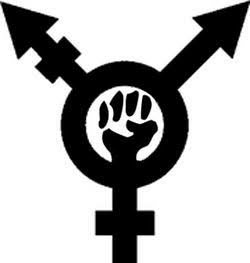
Social and political movements are often seen as unified echo chambers where there is unanimous agreement among the members within them. At least, this is the view from outside, and rightly so. A movement can only gain traction when there is a single purpose, and methodology that unites each of the members. But this doesn’t mean that there is no dissent; no disagreement; no inner conflict.
To better show the internal battles that often occur within social and political movements, I’ll bring focus to one of many social movement most maligned by the average man: the feminist movement.
One of the main divisions (though far from being the only one) in the feminist movement originates from the advent of “white feminism” and its pervasive influence on the feminist movement as a whole.
“White feminism” is a very interesting term. In defining the term, we begin to better understand the interplay between privilege and oppression.
The specific definition of white feminism speaks to the politics that often play out in mainstream feminist organizations. In these, certain women assume leadership positions in these organizations, while displaying attitudes that erase the different experiences that race – among other social markers – causes, even among feminist women.
To illustrate this, if a feminist movement were to begin tomorrow, it would likely be headed up by a white woman, due to her likely heightened resources and influence in society. That’s neither here nor there. The problem would come when this white woman gets invited to talk shows and writes think pieces for publications. She would likely profess to speak for “all women” but would likely list problems that are mostly experienced by white heterosexual middle-class women, and would ignore the issues of women who do not fit this model.
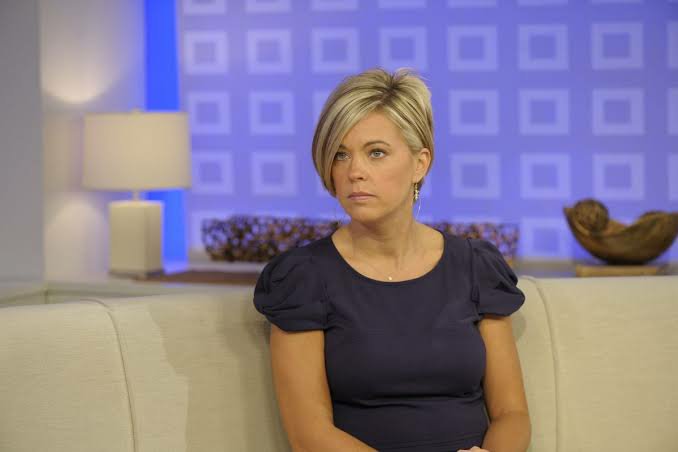
This would lead a divide between white women who identify as feminists and feminists of colour. If the latter would speak up about their erasure, they would be seen as “divisive” and “creating problems where there are none”.
Except there would be a problem. A huge one, in fact.
The problem would come from a white woman who takes it upon herself to represent all women without educating herself on issues that actually represent all women. This is particularly problematic when one realises that white feminists tend to keep silent when issues of racial inequalities rear their ugly head. To feminists of colour, this attitude isn’t just self-serving. It is downright dangerous (as the Amy Cooper saga showed).
When taken in a broader context of more than just feminism and internalized white supremacy, White Feminism has even more terrible consequences.
When read broadly, white feminism encompasses all the complexities that exist between oppressed and privileged people. In fact, the very term shows that both can co-exist in the same person, at the same time. In other words, being oppressed by society in one way does not prevent you from oppressing others in the very same society – just in a different way.
White feminism shows that, even in social movements where equality is strived for, a hierarchy seems to appear that often replicates the very social order that the movement opposes. Good intentions aren’t enough to make the world better. At a fundamental level, we must understand our positions in society and understand how we (maybe unintentionally) hold power over others in it. That is the first step. Otherwise we’re creating different versions of the same oppression, and deluding ourselves into thinking that we’re the “good guys”.
This mirrors so much of what happens within single-issue movements that attempt to appeal to everyone. Eventually, a segment of that movement will get fed up of the comments that either render them invisible or actively discriminate against them. They will break away to build a new movement that will better represent them. Until there are others within that movement who feel silenced – and the cycle repeats itself.
The fundamental problem is not “identity politics”, as some would have you believe. As I’ve written before, every person in the world has an identity and brings it into the political spaces that they participate in. The fundamental problem is actually an insistence on universality and not enough recognition of overlapping, even seemingly paradoxical, identities.
In one word – intersectionality.
Intersectionality is a concept created by law professor Kimberlè Williams Crenshaw to explain the limits of seeing the world through one lens, or ideology. One ends up missing the nuances of individual experiences, and zeroing in on one part of the individual instead of the complete human being, and the complexities that make them up.
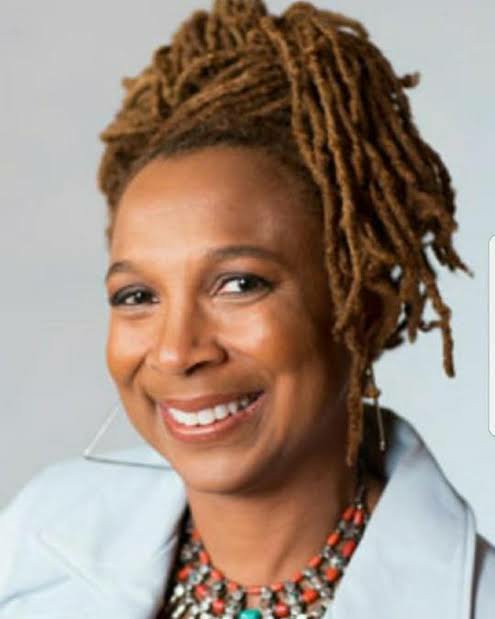
The truth is that we aren’t just our race, or our gender, or our social class, or our age, or our sexual orientation, or any other social markers we use to describe ourselves. We’re more than that, and then some. That is what intersectionality seeks to promote. That is what intersectionality seeks to make us understand. It is a way of thinking that is broad and inclusive of all people.
Of course, there are people who then wonder how this seemingly utopian concept can be applied in reality. There are three steps to doing so – firstly, leaders of social movements must be aware of the ways in which they are privileged, in very acute ways.
1. Recognize your privileges
In a world where there is so much focus on the oppressions that we suffer, we often forget that we have a relatively better social standing than somebody else. Recognizing that, and doing the work to learn more about how your privileges obstruct you from seeing the struggles of others unlike you, is step one towards being more intersectional in your politics.
Because we cannot help but bring ourselves into the room, I will use myself as an example. I can speak about how my race, my sexual orientation, my social class and my HIV status do not lend themselves well to privilege. But that would be only half the story. I am a man who is (mostly) masculine-presenting. I am fluent in English. I am well-educated. I do not have any physical disabilities. I am privileged in those ways, and probably many more, as well.

Just the acknowledgement of that, however, is not enough. My next step is to seek out information about those who aren’t privileged in the ways that I am.
2. Find out about those that are different to yourself.
How are women and gender non-conforming people oppressed? How are people who aren’t fluent in English oppressed? People who couldn’t access a tertiary education? People with disabilities? How do these people navigate the world?
I must find that out, using a variety of sources. I’m lucky enough to have access to the Internet. I can go to my local library and pull up a few books on these topics. I can talk to people unlike me (all the while remembering that they’re under no obligation to teach me). Off the top of my head, those are just three of the infinite ways I can educate myself on the lived experiences of people who do not live as I do.

But my journey does not just stop at education. It continues into my daily life.
3. Live out what you have learned.
Most importantly, I must apply what I have learned to my actual politics. This needs to be said, in light of a dangerous trend that happens in social movements. I have been to many conferences where people easily rattle off terminology and concepts that make them appear “progressive” and “intersectional”. But when one looks at their lives outside of those conferences, one finds little to no allusion of these buzzwords translating into lived action.
So it bears repeating: live out your intersectional politics. Don’t have them remain in the literature you read, or the terminology you spout. Use your voice, as a heterosexual person, to shine light on the absurdity of homophobia. If you’re able-bodied, address the issue of people with disabilities. Use whatever platform you have to ensure that the totality of the lived experience is addressed, as much as you can.

Give credit to the activists on the ground that talk about these issues on a daily basis. Mention them, cite them in your research, amplify their voices. And always be open to learning from them whenever you make a mistake, because you likely will mess up, and people will address it.
And if you hold a position of power, and can actually change things? Then change things.
These three steps – recognizing our privileges, learning about those who aren’t as privileged, and using our privilege to raise them up – is the essence of intersectionality in practice. These three steps are the difference between dogmatically assuming that your experience is the absolute correct one, and understanding that one person may have many identities all working concurrently.
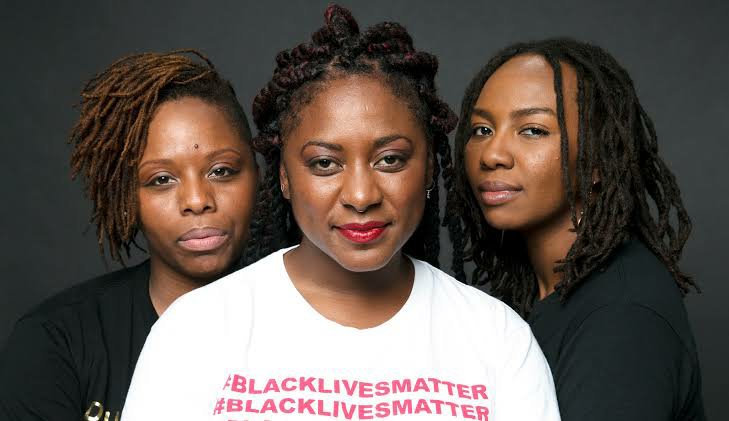
This problem has been seen most recently in the Black Lives Matter movement, which emerged as a result of police brutality against black Americans but quickly became a hotbed of homophobia and transphobia (In a cruel twist of irony, the originators of the hashtag – Alicia Garza, Patrice Cullors and Opal Tometi – are black queer women). This is the result of “struggle essentialism” – where a person has to pick one “struggle”, or oppression, to fight against. This has the potential to leave them vulnerable to attacks upon other parts of their identity within the movement, and lead to infighting and fragmentation.
While many people claim that an intersectional approach filters the essence of a movement, I’d argue that it has the opposite effect. It creates a sense of belonging and camaraderie among the members of a movement when they know they’re explicitly told they belong (it’s even better when they’re represented, but that’s a story for another day).
Going back to the white feminist example – if feminist movements were intersectional in their approach, then the white women in charge of these movements would know about the social and economic inequalities between white and black women. They would educate themselves about them, and ensure that black women receive the equality that they deserve. But because they remain silent due to being epistemically ignorant on these disparities, choosing instead to focus on their own issues, black women don’t see themselves in the movement. They don’t feel like they belong. That causes friction and dissent – avoidable friction and dissent.
How is that good for the cause at large?
To be clear, the problem would not lie with the underprivileged who do not feel like they belong. The fault would lie squarely on the shoulders of those who created an exclusive club of elites, then marketed it as an inclusive movement that accommodates everybody.
So in many ways, movements fail because they are not intersectional enough and not because they are too intersectional.
Intersectionality, of course, is not a silver bullet. It does not solve every single issue that exists within movements, and across society at large. However, it is an essential part of any toolkit that has the interests of people at its core. It invites us to see ourselves not as coldhearted oppressors or defenseless victims. Instead, we can better understand the complexities that make us up, and organize accordingly.
Without the binary of the good people on one side and the bad ones on the other, there exists a world of nuance and multiplicity. Between black and white, there are a variety of colours. Intersectionality’s only purpose is to reveal those to us.


 wiseMusings
Leave a reply to mhlengizama Cancel reply