
Now that the dust has settled and the engagement has come in, let me say something that might surprise people who’ve read my previous writing on the DA: Geordin Hill-Lewis was the right choice. Quite frankly, except for Chris Pappas, he was the only real choice they had. He is a competent politician, and he brings more intelligence – in every sense of that word – than his predecessor, John Steenhuisen, who I have been extremely critical of.
Over the past five years or so, Steenhuisen didn’t do much. The party would have been the second-largest party in the 2024 elections regardless of who was leading it. They essentially installed a mannequin as leader, and they still made it into government. That, credit where it’s due, says something real about the DA – about how much the party has grown and resonated with more voters over time than most people thought possible.
So yes: Hill-Lewis is better. With him at the helm, the DA is in a stronger position to advocate for more inclusive policies, to build a more formidable party ahead of the local government elections, and to make the 2029 ambition feel like something other than a fantasy. He is, by any reasonable measure, exactly what the DA has been trying to produce for twenty years.
Young, credible, warm, telegenic. A man who can point to a city (a functioning, visible, actually-working city, at least to some people) and say: we did that. He speaks the language of competence without making it sound like a threat. He is precisely calibrated for the moment the DA finds itself in.
And that is exactly the problem.
Because the DA’s crisis has never been a competence problem. It has been a trust problem. And those are not the same thing. They have never been the same thing. And electing the most compelling embodiment of the DA’s competence argument does not solve a trust problem. It just makes the competence argument more attractive…. to the people already persuaded by it.
THE THEORY OF CHANGE THAT ISN’T WORKING
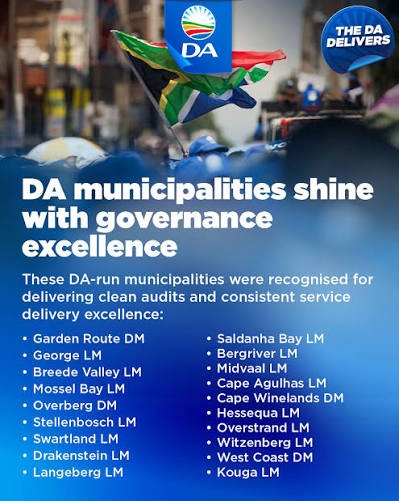
The DA’s working assumption (shared across the new leadership, articulated most clearly by Hill-Lewis himself) is that service delivery is the bridge to black voters. Show people a well-run city, the argument goes, and they will draw the obvious conclusion. Cape Town works. The DA runs Cape Town. Therefore, given the chance, the DA will make your city work too. It is a coherent theory. It is also, at this point, empirically falsified.
Cape Town has been well-run for the better part of fifteen years. The DA’s Black voter share has not transformed in any meaningful way. What this tells you, if you are willing to look, is that people are perfectly capable of holding two thoughts simultaneously: Cape Town works and the DA does not work for people like me. These are not contradictory. They describe two different things. One is an assessment of administrative competence. The other is a judgment about belonging. About whose interests a party instinctively serves. About who it sees when it looks at South Africa.

Competence and trust are not the same thing. Delivery and belonging are not the same thing. The DA has spent fifteen years proving the first half of each equation, apparently hoping the second half would follow. It hasn’t. And so Hill-Lewis arrives – the most persuasive possible advocate for the competence argument – at precisely the moment the party needs to solve a completely different problem.
He is the right answer. To the wrong question.
WHAT THE WRONG QUESTION LOOKS LIKE IN PRACTICE
Consider what Hill-Lewis actually said in the days after his election. He spoke about service delivery. He spoke about crime. He spoke about winning metros. He spoke about reaching black voters by demonstrating that the DA “cares about their advancement.” All reasonable things to say. All things that presuppose the audience is primarily asking: can the DA govern?
But a significant portion of black South Africa is not asking that. They already know the DA can govern; they’ve watched Cape Town. The question they are asking is older and harder: is this a party for us?
Not: can they run a city? But: do they see our history, our pain, our specific position in this country, as something that makes legitimate claims on their politics?
That is a cultural question. A relational question. And it cannot be answered with a PowerPoint about refuse collection schedules.
This matters because the gap between the two questions is exactly where the DA keeps losing people it could have won. It is not that black South Africans are irrational or tribal. It is that they are reading the party correctly, and what they are reading is a party that is institutionally most comfortable when it is defending what it has built, rather than genuinely reckoning with why so many people have never felt welcome inside it.
THE TELLING SLIP
There was a moment last year – low-profile at the time, but worth returning to – when a documentary about Cape Town made reference to the lingering effects of apartheid-era spatial planning on the city. Hill-Lewis’s response was to call such framing “propaganda language.”
It was an odd response. Not because the documentary was beyond criticism, but because of the emotional register of the pushback. It wasn’t analytical. It was defensive. It was the response of someone who experiences references to apartheid’s ongoing legacy as an attack on something he has built, rather than as context he must absorb and work with.
For a man whose stated political mission is to win over voters who still live where apartheid put them – in townships and informal settlements that remain geographically isolated from economic opportunity – that instinct is, at minimum, a significant liability. You cannot credibly tell people that you understand their lives while simultaneously reaching for “propaganda” to describe the history that shaped those lives.
This is not a character assassination. Hill-Lewis is, by all accounts, a decent man with genuine governing instincts. But political leaders are not just administrators. They are also symbols. They communicate, through every instinct and reflex, what a party thinks reality looks like. And that moment revealed something real about what this particular leader’s reality looks like.
THE STRUCTURAL TRAP
There is also a structural dimension to this that goes beyond Hill-Lewis as an individual. He has chosen to remain mayor of Cape Town while leading the party nationally. This decision is popular with the existing DA base – it says: we will not abandon the thing we built; we will govern well and let that be our argument. It is a consolidating instinct dressed up in the language of growth.
Think about what it would have meant to make the opposite choice. To sacrifice the mayorship. To move to Johannesburg. To plant a flag in Soweto or Tembisa or the East Rand, and spend three years genuinely trying to make the DA legible to people who have never considered voting for it. That would have been a growth choice. A genuinely uncomfortable, base-unsettling, you-might-lose-some-people choice.
He didn’t make it. And the party didn’t ask him to. Because the DA, when forced to choose, will almost always choose its comfort zone – Cape Town, the Western Cape, the existing coalition, the base – and call that comfort zone a platform for future expansion.
It may yet prove to be. But it has not been so far.
WHAT GROWTH ACTUALLY REQUIRES
The 2029 ambition – largest party in South Africa, leading the national government – is either the most exciting political project in the country or the most elaborate form of wishful thinking currently available. Whether it becomes the former depends on a question the DA has not yet answered honestly.
Growth, for this party, does not require better service delivery in the places it already governs. It does not require a younger or more diverse leadership cohort, though that helps. It does not require sharper rhetoric or a more assertive posture in the GNU.
It requires the DA to do something it has never meaningfully done: to go into communities where it is not trusted and earn that trust on those communities’ terms. Not on the DA’s terms. To talk about land not as a legal question but as a wound. To talk about unemployment not as a policy failure to be fixed by deregulation but as a lived catastrophe that structural inequality created and sustains. To acknowledge, without defensiveness, that the city it runs most beautifully is also a city where the spatial logic of apartheid remains, literally, visible from the air.
That would be growth. And it would be uncomfortable. It would unsettle parts of the base. It would require the party to hold the tension between what it believes and what the electorate it is trying to reach has experienced. It would demand of its leader not just competence but something closer to conversion: a genuine reorientation of whose reality he takes as the default.
Hill-Lewis may be capable of that. The genuine warmth is there. The intelligence is evident. The team around him – Gwarube, Sarupen, Malatsi – brings credibility the party has never had in this configuration. Perhaps the rhetoric about reaching “communities that have never considered voting for the DA” will translate into choices, not just speeches.
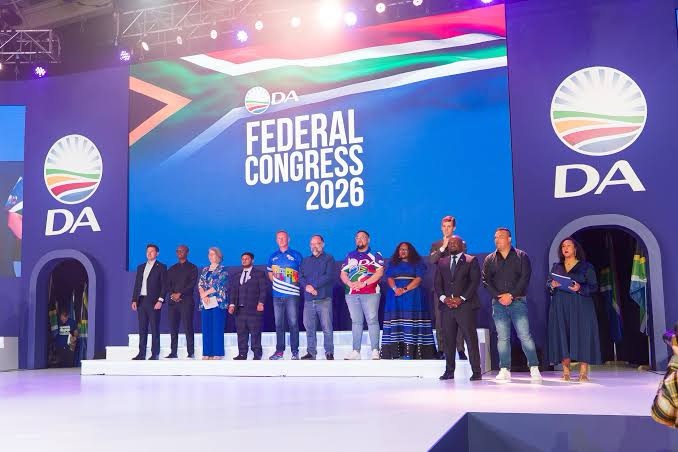
But the early signs suggest a man more comfortable defending what the DA has built than genuinely questioning why so many South Africans experience what it has built as someone else’s project.
THE BOTTOM LINE
Steenhuisen, for his many faults (and there are many), was a consolidator who understood he was consolidating. He made one genuine growth bet – the GNU – and it cost him politically within his own party, which tells you something about the DA’s instincts. Hill-Lewis is a consolidator who believes he is a grower. That gap between self-perception and structural reality is where his leadership will be tested.
The 2026 local elections will tell us something. If the DA makes serious inroads in eThekwini, in Ekurhuleni, in parts of Gauteng it has never reached before, then the growth thesis has legs. If it holds Cape Town, strengthens Tshwane, and broadly maintains its existing footprint with better optics; that is consolidation. Successful consolidation, perhaps. But not the revolution the party is promising itself.
The DA has spent thirty years learning to govern. That is not nothing: in a country where governance has been so catastrophically absent, it is actually quite a lot. But governance and legitimacy are different things. You earn the first by delivering services. You earn the second by making people feel that the project is theirs too.
Hill-Lewis can deliver services. Whether he can make the project feel like theirs….. that is the question his leadership will answer.
And on that question, the jury is not just out. It hasn’t been selected yet.


Leave a comment